We're loading the full news article for you. This includes the article content, images, author information, and related articles.
Despite a new national safety plan, Kenya's rising road death toll, exceeding 3,300 by September 2025, exposes critical gaps in traffic laws and a persistent failure to enforce them, costing the economy Sh450 billion annually.
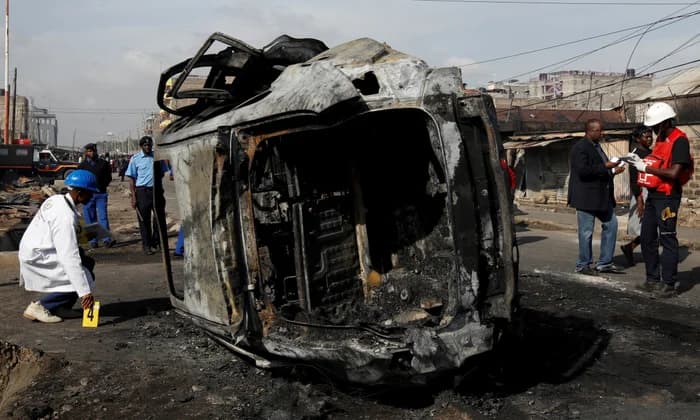
NAIROBI, KENYA – Kenya is grappling with a severe and escalating road safety crisis, with official data revealing a staggering loss of life and a significant drain on the national economy. According to a September 2025 report from the National Transport and Safety Authority (NTSA), 3,397 people were killed in road accidents in the first nine months of the year, a slight increase from the same period in 2024. The total number of people affected by road crashes, including those with serious and minor injuries, reached 17,270. This crisis inflicts an annual economic cost of approximately Sh450 billion, equivalent to three percent of Kenya's Gross Domestic Product, as stated by the Ministry of Roads and Transport.
The grim statistics paint a clear picture of the most vulnerable road users. Pedestrians account for the largest portion of fatalities, with 1,285 deaths recorded by September 2025, followed by motorcyclists at 858 deaths. Data from the 2024/2025 financial year (ending March 2025) further underscores this, showing pedestrians (1,342) and motorcyclists (939) were the hardest-hit groups. This persistent carnage continues despite numerous government interventions, pointing to deep-seated issues within the country's legal and enforcement frameworks.
On Friday, August 22, 2025, the Ministry of Roads and Transport, led by Cabinet Secretary Davis Chirchir, released findings from crash investigation reports that identified three primary contributors to the fatalities: reckless driver behaviour, poor mechanical condition of vehicles, and inadequate road infrastructure. While these causes are well-documented, they are symptoms of a larger problem rooted in legislative loopholes and a systemic failure of enforcement.
A critical gap has been the inability to effectively prosecute key offences like drunk driving. The previous use of 'Alcoblow' breathalyzers was suspended by the courts due to the lack of a solid legal framework for their enforcement. This highlights a reactive rather than proactive approach to traffic legislation. Furthermore, enforcement remains critically weak. A 2023 NTSA report revealed that 52 percent of drivers found to be over the legal alcohol limit in Nairobi never appeared in court, exposing a significant breakdown in the justice chain. This culture of impunity is further compounded by corruption. A University of Nairobi study noted that mandatory vehicle inspections have a limited impact on reducing accidents, as drivers often resort to bribery to bypass checks, even when their vehicles comply with safety standards.
In response to the mounting crisis, the government has launched the National Road Safety Action Plan (2024-2028), an ambitious strategy aiming to halve road fatalities and serious injuries by 2028. This plan, unveiled on April 17, 2024, by President William Ruto, shifts focus towards a multi-pronged approach encompassing infrastructure redesign, enhanced enforcement, and public education.
Central to this new strategy is a raft of proposed traffic regulations for 2025, announced in June 2025. These include:
Alongside legislative reform, the government is undertaking significant infrastructure projects, including the dualling of the Rironi-Mau Summit and Kwa Jomvu-Mariakani highways and upgrading key blackspots like the Ngata Bridge in Nakuru.
While the new action plan and proposed regulations are a significant step, experts and data suggest that legislative changes alone are insufficient. A persistent challenge lies in altering road user behaviour. NTSA data from 38 blackspots in Nairobi revealed that only 24 percent of pedestrians use designated crosswalks. Similarly, while 82 percent of motorcyclists wear helmets, only 26 percent of their pillion passengers do, despite helmets reducing fatalities by 41 percent.
The ultimate success of Kenya's fight against road carnage will depend not only on the passage of new laws but on the political will to rigorously enforce them, dismantle corrupt practices that enable non-compliance, and foster a nationwide culture of safety and accountability. Until then, the nation's roads will likely remain a place of peril, with a tragically high cost in both human lives and economic potential.
Keep the conversation in one place—threads here stay linked to the story and in the forums.
Sign in to start a discussion
Start a conversation about this story and keep it linked here.
Other hot threads
E-sports and Gaming Community in Kenya
Active 9 months ago
The Role of Technology in Modern Agriculture (AgriTech)
Active 9 months ago
Popular Recreational Activities Across Counties
Active 9 months ago
Investing in Youth Sports Development Programs
Active 9 months ago
Key figures and persons of interest featured in this article