We're loading the full news article for you. This includes the article content, images, author information, and related articles.
“I Slept in Bush Camps…What Did you Do?”: Kindiki Hits Back After Gachagua’s 10-Day Ultimatum. The political rift deepens amid a security crisis.

The political friction between former Deputy President Rigathi Gachagua and his successor Kithure Kindiki has reached a volatile flashpoint, with the two leaders clashing publicly over the deteriorating security situation in Meru North. The dispute, triggered by a 10-day ultimatum issued by Gachagua, has exposed deep-seated fractures in the political leadership of the Mount Kenya region, turning a humanitarian crisis into a theater for high-stakes political maneuvering.
This confrontation matters because it signals a fundamental breakdown in the cohesion of the region’s ruling alliance, just as the government grapples with persistent cattle rustling and banditry that have paralyzed economic activity in the Meru-Isiolo border belt. With thousands of residents displaced and agricultural output dwindling, the escalating war of words between these two political heavyweights threatens to distract from, if not exacerbate, the security challenges on the ground.
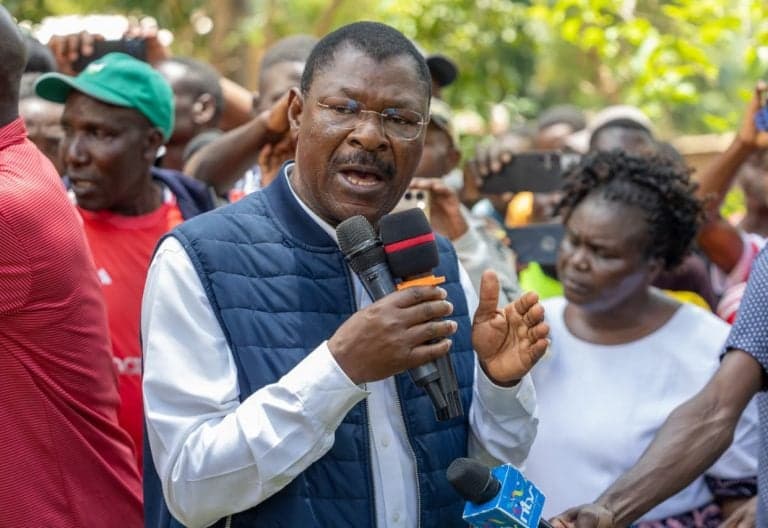
Rigathi Gachagua, speaking during a tour of the region, demanded an immediate end to the violence, setting a rigid 10-day deadline for the government to restore order. Gachagua’s rhetoric was pointed, framing the administration’s response to the insecurity as lethargic and disconnected from the harsh realities faced by constituents in the volatile northern zones. His move appeared designed to capitalize on growing public frustration, positioning himself as the primary defender of the marginalized rural population.
Kithure Kindiki, known for his methodical and often stoic administrative style, rejected the ultimatum with an uncharacteristic display of public aggression. During a security meeting, Kindiki dismissed the deadline as political theater, delivering a stinging retort that questioned the commitment of his critics during the height of the crisis. "I slept in bush camps while the operations were being planned. What did you do?" Kindiki stated, effectively questioning Gachagua’s credibility and personal investment in the security of the region.
The security situation in Meru North is not merely a political talking point it is a profound economic and humanitarian disaster that has persisted for years. Reports from regional administrators and humanitarian NGOs reveal a grim reality that persists despite the shifting political narratives:
Analysts suggest this public spat is the latest manifestation of a wider struggle for control of the Mount Kenya voting bloc. Gachagua, who relies on populist rhetoric and grassroots mobilization, is increasingly at odds with the technocratic, institutional approach favored by Kindiki. The former seeks to maintain relevance by acting as an opposition-style voice within the broader political apparatus, while the latter operates as a central pillar of the current executive establishment.
This dichotomy is not new to Kenyan politics, but its application to national security challenges is particularly damaging. Professor Wambua Mutua, a political scientist at the University of Nairobi, argues that when security becomes a political weapon, the operational response inevitably suffers. "When leaders focus on winning the optics war rather than coordinating a unified security strategy, it creates intelligence gaps and operational silos that bandits and criminal cartels exploit with devastating efficiency," Mutua noted.
For the residents of Meru North, the political drama is an expensive luxury they cannot afford. The insecurity is not just about cattle theft it involves sophisticated cartels that have integrated illicit livestock trade with other organized criminal activities. These groups capitalize on the lack of permanent police infrastructure and the inconsistent patrolling of the vast, rugged terrain separating Meru from Isiolo.
The central government faces a critical choice: either reconcile these internal power struggles or risk losing control of the narrative in the region entirely. If the security situation does not improve significantly within the timeframe established by the public discourse—regardless of which leader takes credit for it—the resulting public disillusionment could lead to a significant shift in political allegiance during the next electoral cycle. The people of Meru, caught between the promises of one leader and the administrative defenses of the other, remain the ultimate casualties of this ongoing political impasse.
As the 10-day clock continues to tick, the nation watches to see if this public confrontation will force a substantive improvement in security, or if it will merely serve as a footnote in the growing chronicle of political infighting that characterizes the current parliamentary term. The outcome will likely determine not only the stability of the northern corridor but the future political standing of both men in the region.
Keep the conversation in one place—threads here stay linked to the story and in the forums.
Sign in to start a discussion
Start a conversation about this story and keep it linked here.
Other hot threads
E-sports and Gaming Community in Kenya
Active 10 months ago
The Role of Technology in Modern Agriculture (AgriTech)
Active 10 months ago
Popular Recreational Activities Across Counties
Active 10 months ago
Investing in Youth Sports Development Programs
Active 10 months ago
Key figures and persons of interest featured in this article