We're loading the full news article for you. This includes the article content, images, author information, and related articles.
The minister commended FAAN personnel and other first responders for what he described as the swift activation of established emergency procedures.
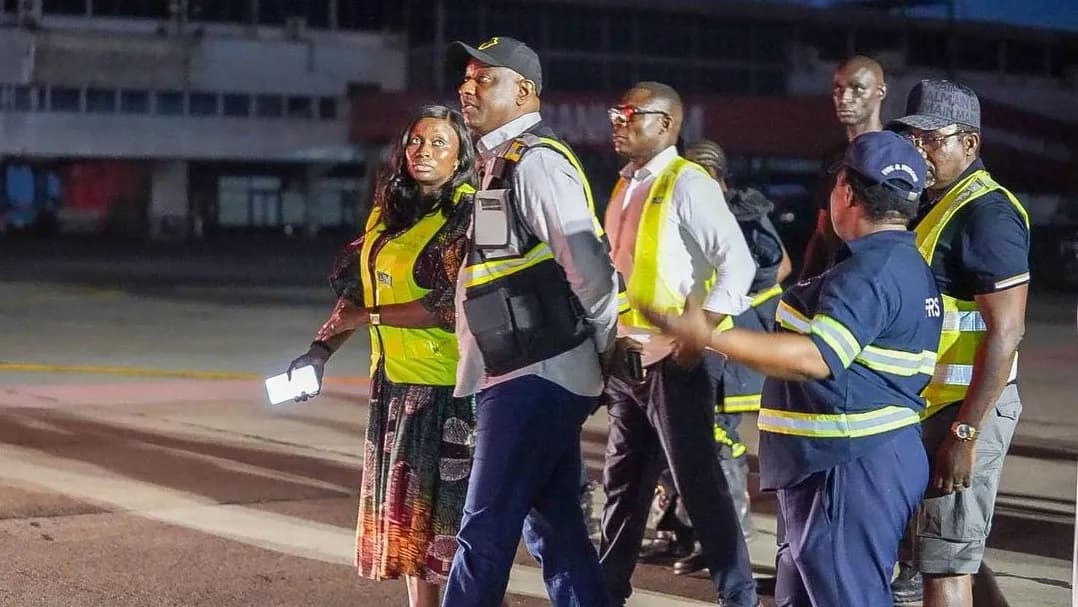
Nigeria's Aviation Minister Festus Keyamo has highly commended emergency first responders following a terrifying fire outbreak at Terminal 1 of the Murtala Muhammed International Airport (MMIA), an incident that violently underscores the catastrophic infrastructure deficits plaguing major African transit hubs.
The sudden, blazing inferno that engulfed sections of West Africa's premier aviation gateway triggered a massive emergency evacuation, forcing the temporary but total shutdown of the Lagos airfield. While the rapid deployment of firefighting units successfully averted a mass-casualty disaster, the chaos left six individuals requiring urgent medical treatment and completely crippled international flight schedules.
This emergency matters intensely because the systemic failure of critical infrastructure at an airport of MMIA's magnitude inflicts devastating reputational and economic damage on the entire continent. It loudly broadcasts to global investors and international airlines that African governments are failing to adequately maintain the most fundamental logistical arteries of the modern economy.
Minister Keyamo's midnight emergency inspection of the charred terminal was an exercise in urgent political damage control. By publicly praising the Federal Airports Authority of Nigeria (FAAN) personnel, the administration attempted to pivot the narrative from a story of gross infrastructural decay to one of highly effective crisis management. However, the underlying reality cannot be obfuscated by political rhetoric.
Aviation experts have continuously warned that legacy terminals across the continent are operating dangerously beyond their architectural lifespans. The MMIA facility, heavily burdened by antiquated electrical grids, chronic power fluctuations, and chronically underfunded maintenance protocols, was a disaster lying in wait. The fire is not an isolated anomaly; it is a glaring symptom of a deeply entrenched culture of reactive, rather than predictive, infrastructure maintenance.
The distressing scenes of smoke billowing from the Lagos terminal resonate with painful familiarity in Nairobi, Kenya. Jomo Kenyatta International Airport (JKIA), East Africa's busiest hub, has suffered its own humiliating series of infrastructural catastrophic failures in recent years. From total, crippling power blackouts that plunged immigration halls into absolute darkness to embarrassing, viral videos of rainwater pouring through terminal roofs, Kenya's aviation pride has been severely battered.
When continental hubs like MMIA and JKIA fail, the economic shockwaves are instantaneous. High-value perishable exports rot on the tarmac, lucrative tourism sectors take a massive reputational hit, and international insurance premiums for operating in these airspaces skyrocket. The failures in Lagos should serve as a terrifying, final warning to the Kenya Airports Authority (KAA) to ruthlessly overhaul its own risk mitigation strategies.
As the African Union aggressively pushes for the implementation of the Single African Air Transport Market (SAATM) and the broader Continental Free Trade Area (AfCFTA), the absolute reliability of aviation infrastructure is no longer negotiable. Seamless, hyper-efficient connectivity is the undisputed lifeblood of intra-African commerce.
African governments must cease treating airport maintenance as a secondary budgetary item vulnerable to corruption and political neglect. The path forward dictates the aggressive pursuit of public-private partnerships (PPPs) to inject the massive capital required to demolish and rebuild legacy terminals. It demands the immediate installation of state-of-the-art, AI-driven predictive maintenance sensors and the enforcement of a brutal, zero-tolerance policy toward safety protocol violations.
"An international airport is the ultimate proxy for a nation's competence; when it catches fire through preventable neglect, it is the country's economic future that truly burns."
Keep the conversation in one place—threads here stay linked to the story and in the forums.
Sign in to start a discussion
Start a conversation about this story and keep it linked here.
Other hot threads
E-sports and Gaming Community in Kenya
Active 9 months ago
The Role of Technology in Modern Agriculture (AgriTech)
Active 9 months ago
Popular Recreational Activities Across Counties
Active 9 months ago
Investing in Youth Sports Development Programs
Active 9 months ago
Key figures and persons of interest featured in this article