We're loading the full news article for you. This includes the article content, images, author information, and related articles.
The return of 208 Kenyan police officers from Haiti signals a critical rotation in a complex mission that continues to test regional strategic capacity.
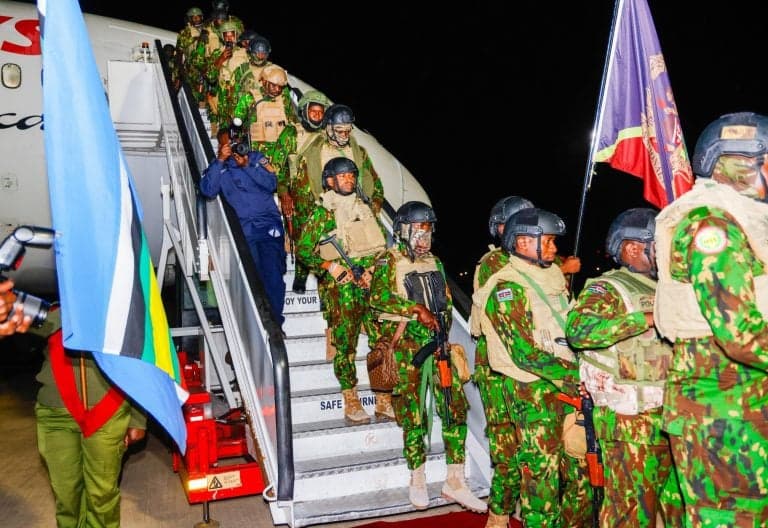
Two hundred and eight Kenyan police officers stepped onto the tarmac at Jomo Kenyatta International Airport on Tuesday, their uniforms bearing the dust of an overseas mission that has tested the logistical and tactical limits of East African peacekeeping. The return of the third contingent of the National Police Service marks not only a routine personnel rotation but a critical milestone in the Kenya-led Multinational Security Support mission in Haiti.
The arrival of these officers serves as a pivot point in one of the most scrutinized international security operations in recent memory. As these personnel transition back to domestic duty, the mission in Haiti remains locked in a high-stakes struggle against gang-controlled urban environments. The stakes are immense, impacting not only the stability of Port-au-Prince but also the international reputation of the Kenyan security apparatus and the broader strategic influence of East Africa on the global stage.
The mission in Haiti, sanctioned by the United Nations, has been characterized by its asymmetric nature, where standardized policing tactics often collide with entrenched, well-armed gang coalitions. The returning contingent of 208 officers had been deployed to provide tactical support, infrastructure security, and to bolster the operational capacity of the Haitian National Police. This rotation follows a predetermined operational cycle designed to mitigate fatigue and maintain optimal readiness in a high-stress environment.
According to security analysts monitoring the mission, the turnover of personnel is essential for sustaining the physical and psychological well-being of the officers. However, the rotation also invites scrutiny regarding the continuity of intelligence and tactical rapport built with local Haitian authorities. The mission’s operational tempo has been relentless, with the security climate in Port-au-Prince oscillating between periods of relative calm and intense, localized combat.
For Nairobi, the stakes are both diplomatic and strategic. By leading the mission, Kenya has positioned itself as a critical node in the global security architecture, asserting its role as a stabilizer in the Global South. This is not merely a matter of police work it is a manifestation of soft power. The government has navigated significant domestic criticism regarding the allocation of resources, particularly given the concurrent needs of local security within Kenya’s own borders.
Critics often point to the KES 50 billion (approximately $380 million) estimated global funding requirement for the mission as a point of contention. Some analysts argue that these resources could have been redirected to local urban security initiatives in Nairobi or rural development in northern regions. Yet, the Ministry of Interior maintains that the mission is vital for maintaining international standing and fostering stronger ties with Western partners who provide essential equipment and logistical support for the force.
The operational environment that the returning officers left behind is starkly different from the policing landscape in East Africa. The gangs operating in Haiti have effectively weaponized the geography of Port-au-Prince, utilizing narrow alleyways and dense slums to nullify conventional policing advantages. The returning officers now bring back specialized experience in urban insurgency tactics—knowledge that may prove invaluable to the National Police Service.
However, the humanitarian situation in Haiti remains the primary metric of success for the international community. Despite the efforts of the Kenyan-led force, the distribution of aid remains hampered by gang activity that targets convoys and key transit routes. Observers from international humanitarian organizations note that while the security presence has prevented a total collapse of the state, the transition from a police-led security phase to a sustainable political transition remains elusive.
As the third contingent reintegrates, the focus shifts to the incoming rotation and the long-term sustainability of the mission. The international community is under pressure to provide consistent funding, as gaps in financial support have previously hindered the deployment of specialized equipment and technology. Without a significant infusion of resources and a clearer political roadmap from the Haitian government, the mission risks becoming a perpetual fixture rather than a catalyst for genuine structural reform.
The return of these officers is not the end of the story, but merely the conclusion of one chapter in a long, arduous book. Whether the experience gained by these men and women will fundamentally alter the operational doctrine of the Kenyan police, or whether the Haiti mission will be remembered as an overextension of limited national resources, depends on the next six months of operations. For now, the officers are home, but the echoes of their mission will reverberate through the halls of power in Nairobi for years to come.
Keep the conversation in one place—threads here stay linked to the story and in the forums.
Sign in to start a discussion
Start a conversation about this story and keep it linked here.
Other hot threads
E-sports and Gaming Community in Kenya
Active 10 months ago
The Role of Technology in Modern Agriculture (AgriTech)
Active 10 months ago
Popular Recreational Activities Across Counties
Active 10 months ago
Investing in Youth Sports Development Programs
Active 10 months ago
Key figures and persons of interest featured in this article