We're loading the full news article for you. This includes the article content, images, author information, and related articles.
The Agriculture and Food Authority (AFA) has warned avocado exporters and processors that handling immature fruit will lead to severe market penalties.
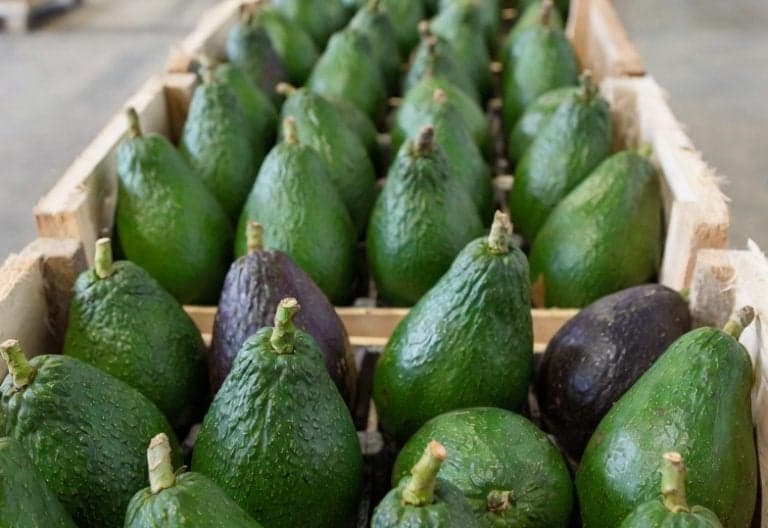
At the bustling Jomo Kenyatta International Airport cargo terminal, inspectors from the Horticultural Crops Directorate (HCD) are no longer just checking manifests. They are slicing into shipments of green gold, verifying oil content percentages, and turning back trucks that fail to meet the state-mandated maturity threshold. This crackdown signals a definitive shift in how Kenya polices its multi-billion shilling avocado export sector, as authorities move to protect the nation’s hard-won reputation in competitive global markets.
For the thousands of smallholder farmers across Murang’a, Nyamira, and Kisii counties, the Agriculture and Food Authority (AFA) directive is a matter of economic survival. With global demand for the Hass and Fuerte varieties surging, the temptation to harvest prematurely—driven by high prices and pressure from brokers—has created a volatile cycle of boom and bust. Industry experts warn that exporting immature fruit does more than just ruin a single shipment it risks blacklisting Kenyan produce in premium markets across the European Union and China, potentially wiping out the gains of a decade of market development.
At the heart of the regulatory intervention is the rigorous enforcement of dry matter content standards. Avocados are unique fruits that do not ripen on the tree their post-harvest quality is determined entirely by their maturity at the time of picking. When farmers harvest early to capitalize on early-season price spikes, they invariably ship fruit with low oil content. This fruit fails to ripen properly, turning rubbery and tasteless rather than creamy, which inevitably leads to rejection by supermarket chains in London, Paris, and Shanghai.
The AFA has established clear guidelines for what constitutes a marketable export. The maturity standards are not arbitrary bureaucratic hurdles but scientifically backed benchmarks intended to ensure consistent quality. According to data provided by horticultural analysts, the economic stakes are substantial:
While large-scale estates have the infrastructure to conduct in-house testing, the supply chain for smallholder farmers remains dangerously opaque. Middlemen and brokers often descend on rural farms, offering cash advances to desperate farmers who are pressured to harvest fruit regardless of its maturity. These brokers then aggregate the produce, mixing mature and immature fruit to evade initial inspections at the farm gate.
Dr. Samuel Gitau, an agricultural economist at the University of Nairobi, argues that the problem is structural rather than purely agricultural. He notes that without organized cooperatives, farmers lack the bargaining power to wait for the optimal harvest window. They are price-takers in a market where the broker holds the liquidity. Consequently, the government’s enforcement strategy must expand beyond just policing the ports it must address the lack of cold-chain storage facilities at the county level, which would empower farmers to store their harvest rather than selling it to the first buyer with a truck.
Kenya currently holds the title of the largest avocado exporter in Africa and is consistently ranked among the top ten globally. However, the international market is increasingly crowded. Major producers in Latin America, particularly Peru and Mexico, have aggressively expanded their supply chains to meet European and North American demand. Kenyan exporters are now operating in a landscape where consumers have alternatives if a shipment of Kenyan avocados arrives in the Netherlands and turns out to be inferior, buyers will not hesitate to pivot to South American suppliers.
This competitive pressure explains the severity of the AFA’s recent pronouncements. The regulator is effectively acting as the guarantor of quality for the entire country. Every substandard crate that slips through the net weakens the ‘Made in Kenya’ brand equity. In sectors ranging from tea to coffee and now horticulture, the state is realizing that reputation is a finite, non-renewable resource.
As the AFA continues its enforcement campaign, the focus is shifting toward implementing ‘Export Windows.’ These are seasonal bans on harvesting that align with the biological maturity of the fruit, forcing a synchronized approach to the harvest cycle. While this has caused temporary friction with growers eager for liquidity, the long-term objective is market stability. The strategy relies on digital traceability, where every shipment can be tracked back to the specific growing region and the date of harvest.
Ultimately, the crackdown on immature avocado handling is a painful but necessary evolution for Kenya’s agricultural sector. It forces a transition from an opportunistic, fragmented model to one defined by quality assurance and brand integrity. For the farmer in Murang’a and the exporter in Nairobi, the message from the AFA is clear: the era of harvesting by chance is over. Future profits will depend not on how quickly a crate can be filled, but on the quality of the fruit hidden within.
Keep the conversation in one place—threads here stay linked to the story and in the forums.
Sign in to start a discussion
Start a conversation about this story and keep it linked here.
Other hot threads
E-sports and Gaming Community in Kenya
Active 10 months ago
The Role of Technology in Modern Agriculture (AgriTech)
Active 10 months ago
Popular Recreational Activities Across Counties
Active 10 months ago
Investing in Youth Sports Development Programs
Active 10 months ago
Key figures and persons of interest featured in this article