We're loading the full news article for you. This includes the article content, images, author information, and related articles.
President William Ruto has initiated high-level negotiations with the International Finance Corporation to establish a massive infrastructure fund aimed at financing critical national projects without exacerbating public debt.
President William Ruto has initiated high-level negotiations with the International Finance Corporation to establish a massive infrastructure fund aimed at financing critical national projects without exacerbating public debt.
In a decisive move to overhaul national development financing, the Kenyan government is collaborating with global financial institutions to structure an unprecedented KES 5 trillion investment vehicle.
This strategic shift represents a critical departure from traditional sovereign borrowing. By pivoting towards a hybrid model that attracts private capital, Kenya seeks to sustain its ambitious development agenda while navigating severe fiscal constraints and rising debt-servicing costs.
The conceptualization of the National Infrastructure Fund (NIF) emerges directly from a period of profound economic recalibration within Kenya. For well over a decade, the nation relied heavily on commercial bank loans, aggressive Eurobond issuances, and bilateral credit to finance sprawling mega-projects, including the transformative Standard Gauge Railway and highly expansive road networks. However, this debt-driven model has culminated in a stifling fiscal environment, where mandatory debt servicing now consumes a vastly disproportionate share of ordinary government revenue.
As of late 2025, Kenya's public debt had swelled by KES 1.37 trillion, pushing the total to a staggering KES 12.30 trillion and elevating the debt-to-GDP ratio to an alarming 67.5 percent. This precarious financial position has heavily prompted the government to urgently explore alternative, sustainable funding models. The proposed NIF is expected to adopt a highly sophisticated hybrid structure, effectively blending minority government participation with substantial private and institutional capital, thereby removing direct liabilities from the national balance sheet.
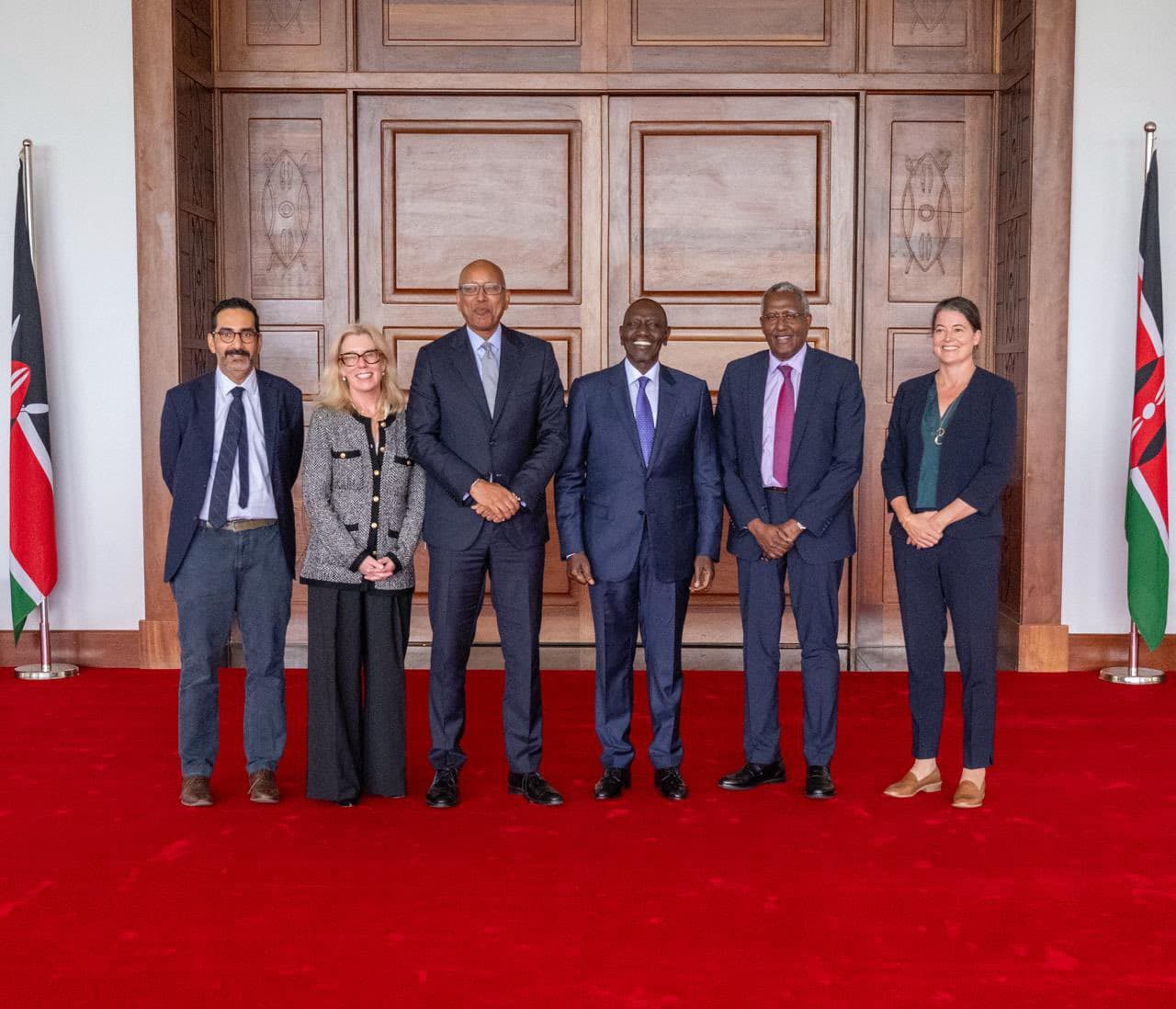
The strategic involvement of the International Finance Corporation (IFC) brings unparalleled technical expertise and immense global credibility to the NIF initiative. During recent, intensive deliberations held at State House in Nairobi, President William Ruto and a high-level IFC delegation—led prominently by Vice-President for Africa Ethiopis Tafara and Vice-President for Products and Clients Mohamed Gouled—outlined the foundational architectural framework of the proposed fund. The IFC's wealth of experience in structuring complex financial vehicles in emerging markets is viewed as the cornerstone of this ambitious endeavor.
President Ruto, reflecting on the productive meetings, explicitly emphasized that the IFC's vast expertise will be absolutely instrumental in building a strong, globally credible vehicle. This vehicle must be fully capable of actively mobilizing the targeted KES 5 trillion required to finance the administration's ambitious, nationwide infrastructure programme. By carefully leveraging the IFC's extensive global network, Kenya hopes to confidently signal to international investors that the NIF will be governed by the highest possible standards of financial transparency and rigorous risk management.
The massively mobilized capital is strictly earmarked for transformative, large-scale projects across multiple economic sectors that are fundamentally crucial for Kenya's long-term socio-economic advancement.
These highly targeted investments are expected to generate profound economic multiplier effects, creating thousands of jobs and drastically lowering the cost of doing business across the wider East African region.
Unlike conventional, taxpayer-funded government expenditure, the NIF is intentionally structured from the ground up to act as a powerful magnet for vast, untapped pools of private capital. These highly specialized funds are meticulously designed to attract long-term capital from deep-pocketed pension funds, global insurers, sovereign wealth investors, and prominent development finance institutions. By efficiently shifting the primary funding burden to these institutional investors, the government can successfully lengthen financing tenors and significantly spread project risks.
Crucially, at the very heart of the establishing legislative Bill is a strict, non-negotiable brake that explicitly prohibits the proposed National Infrastructure Fund from actively issuing its own bonds, taking direct commercial bank loans, or inappropriately leveraging itself to raise capital. This vital, foundational safeguard is specifically engineered to ensure that the fund definitively builds Kenya's infrastructure purely through genuine equity and private investment, rather than surreptitiously accumulating hidden, off-book public debt.
For an infrastructure fund of this unprecedented magnitude to genuinely succeed, the underlying governance and regulatory structures must be absolutely unimpeachable. Historical precedents observed in various emerging markets clearly demonstrate that massive infrastructure funds can easily become opaque conduits for financial mismanagement if incredibly stringent oversight mechanisms are absent. Success is therefore entirely dependent on fiercely strong governance, total operational transparency, crystal-clear project pipelines, and highly stable, predictable regulatory frameworks.
Government officials have proactively indicated that the initial proceeds from selected, highly strategic state asset sales could be efficiently utilized to capitalize the foundational tier of the fund. This process will strategically begin with the parallel, ongoing sale of a portion of the government's lucrative stake in Safaricom. As the NIF's founding bill steadily moves through the rigorous legislative process, intense parliamentary scrutiny will be strictly required to ensure that all financial safeguards are permanently enshrined in law.
"The ultimate success of this KES 5 trillion gambit will depend not just on clever financial engineering, but on an unwavering, ironclad commitment to transparent, accountable, and highly inclusive national development," observed a leading regional economist.
Keep the conversation in one place—threads here stay linked to the story and in the forums.
Sign in to start a discussion
Start a conversation about this story and keep it linked here.
Other hot threads
E-sports and Gaming Community in Kenya
Active 9 months ago
The Role of Technology in Modern Agriculture (AgriTech)
Active 9 months ago
Popular Recreational Activities Across Counties
Active 9 months ago
Investing in Youth Sports Development Programs
Active 9 months ago