We're loading the full news article for you. This includes the article content, images, author information, and related articles.
President William Ruto seals a strategic deal with Italy to upgrade 70 TVETs and launch joint Artificial Intelligence research, declaring that Kenya will be a "co-creator" of the future technology.
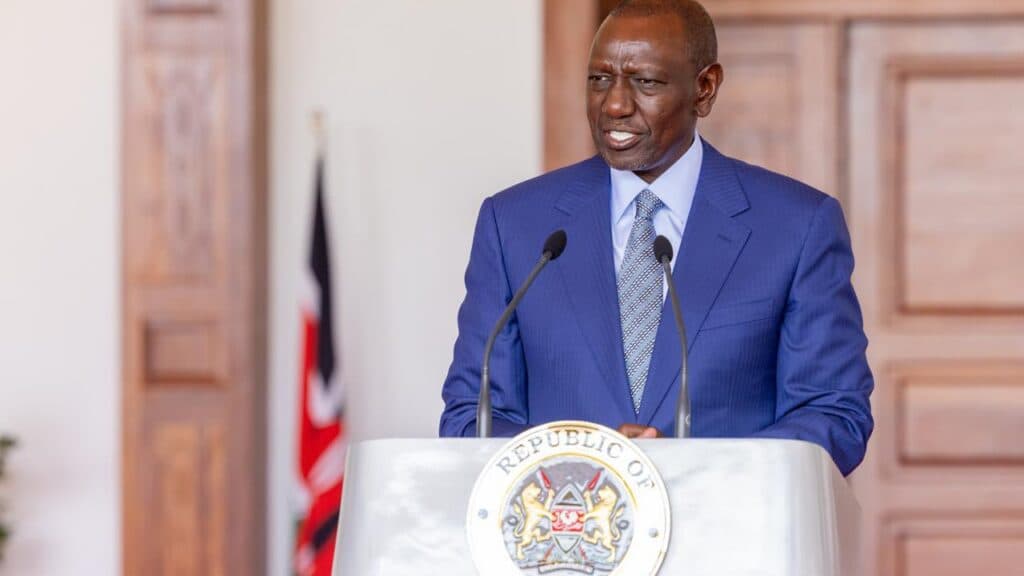
In a landmark move to position Kenya as a regional tech powerhouse, President William Ruto has presided over the signing of a sweeping Memorandum of Understanding (MoU) with Italy, aimed at revolutionizing higher education and artificial intelligence (AI) research. The agreement, signed at State House, Nairobi, signals a pivot from traditional diplomatic aid to high-level knowledge transfer and technological co-creation.
This partnership is not merely about funding; it is a strategic alignment to ensure Kenya does not miss the Fourth Industrial Revolution. By linking Kenyan universities with Italian research excellence, the state is betting on a future where Nairobi is a creator, not just a consumer, of global artificial intelligence technologies.
President Ruto made it clear that this collaboration is designed to break the cycle of technological dependency. "We will not be left behind this time in matters of artificial intelligence," Ruto asserted. "We will participate as co-creators of technology, governance, use, and benefits of AI." The MoU, signed by Education CS Julius Migos Ogamba and Italy’s Minister for Universities and Research Anna Maria Bernini, lays the groundwork for joint research projects that will see Kenyan scholars working side-by-side with their European counterparts.
The deal focuses heavily on practical application. It includes provisions for equipping 70 Technical and Vocational Education and Training (TVET) institutions with cutting-edge technology. This injection of hardware and expertise is intended to bridge the skills gap, ensuring that the Kenyan workforce is ready for the demands of a digitized global economy.
Beyond the high-level AI rhetoric, the agreement offers tangible benefits for the academic community. It establishes a robust framework for the exchange of researchers, faculty, and students, effectively opening the doors of Italian institutions to Kenyan talent. Furthermore, it promises the shared use of scientific infrastructure, a move that could drastically lower the cost of high-end research for Kenyan universities.
For Italy, this move deepens its footprint in East Africa, moving beyond infrastructure and trade into the soft power of education and ideology. For Kenya, it represents a diversification of its development partners, balancing Eastern infrastructure loans with Western technological partnerships. Minister Bernini reaffirmed Rome's commitment, emphasizing that the mobility of minds—researchers and academic staff—is the fastest route to enhancing human capital.
As the ink dries on this agreement, the challenge will shift to implementation. The promise of "co-creation" is bold, but it will require sustained investment and genuine collaboration to ensure that the benefits of AI and advanced research truly trickle down to the Kenyan economy.
Keep the conversation in one place—threads here stay linked to the story and in the forums.
Sign in to start a discussion
Start a conversation about this story and keep it linked here.
Other hot threads
E-sports and Gaming Community in Kenya
Active 10 months ago
The Role of Technology in Modern Agriculture (AgriTech)
Active 10 months ago
Popular Recreational Activities Across Counties
Active 10 months ago
Investing in Youth Sports Development Programs
Active 10 months ago
Key figures and persons of interest featured in this article