We're loading the full news article for you. This includes the article content, images, author information, and related articles.
Travelers intending to fly in or out of Jomo Kenyatta International Airport (JKIA) this week should pack extra patience as the standoff over the Adani Group takeover reaches a boiling point.
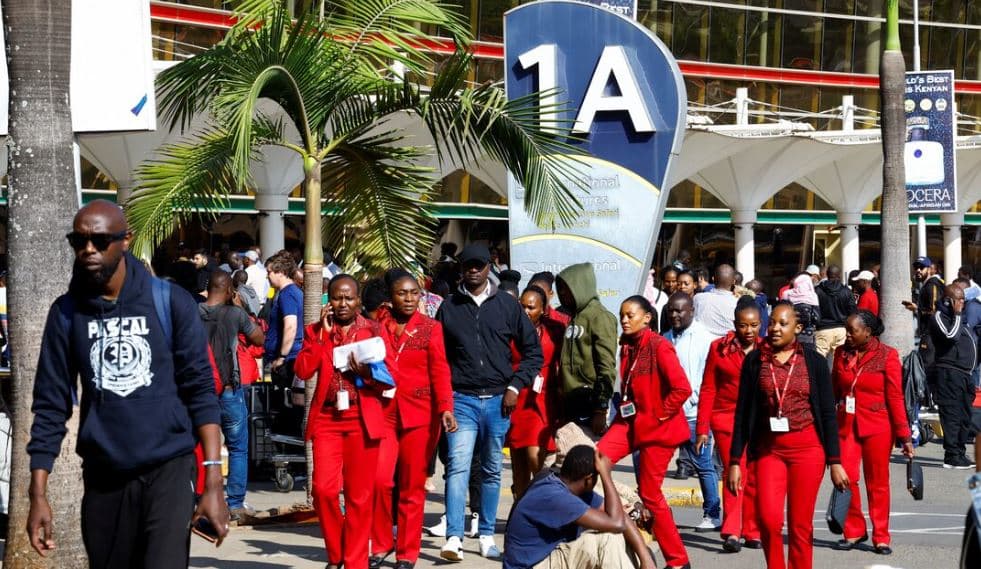
"Prepare for chaos." That is the blunt message from the Kenya Aviation Workers Union (KAWU) as the standoff over the controversial Adani Group takeover of JKIA reaches a boiling point, threatening to ground the region’s aviation hub.
Travelers intending to fly in or out of Jomo Kenyatta International Airport (JKIA) this week should pack extra patience—and perhaps a sleeping bag. KAWU Secretary General Moss Ndiema has issued a chilling advisory to the public: "We are going to have a tumultuous week." Despite a court order temporarily suspending the planned strike, the mood on the tarmac is mutinous. The workers are not just fighting for better pay; they are fighting against what they term the "selling of the family silver" to an Indian conglomerate.
The bone of contention is the proposed 30-year lease of JKIA to the Adani Group. The government argues the deal will bring in $1.85 billion in much-needed investment to modernize the aging facility. The workers, however, see it as a Trojan horse for mass layoffs, inferior contracts, and the loss of national sovereignty over a strategic asset.
While a full-blown strike might risk legal consequences, unions have other weapons. A "go-slow"—where workers follow every rule and procedure to the letter, agonizingly slowing down operations—can be just as crippling. If baggage handlers, security screeners, and air traffic controllers decide to work at 50% capacity, the queues at JKIA will stretch to Mombasa Road.
Ndiema’s rhetoric is combative. "We are not asking for impossible things... For an employee whose pay has not been reviewed for the past 12 or 15 years, how do you expect them to live?" This dual grievance—the Adani deal and stagnated wages—has created a powder keg. The union feels ignored by the Kenya Civil Aviation Authority (KCAA) and is ready to flex its muscle.
The tourism sector, still recovering from global shocks, is watching with bated breath. JKIA is the nerve center of East African trade and travel. A disruption here ripples out to flower exports, tourism bookings, and regional connectivity.
This week will be a test of wills. Can the government force through a deal that its own workers detest? Or will the power of organized labor force a rethink? For the passenger sitting on their suitcase in Terminal 1A, the politics matter less than the departure board. And right now, that board is flashing red.
Keep the conversation in one place—threads here stay linked to the story and in the forums.
Sign in to start a discussion
Start a conversation about this story and keep it linked here.
Other hot threads
E-sports and Gaming Community in Kenya
Active 9 months ago
The Role of Technology in Modern Agriculture (AgriTech)
Active 9 months ago
Popular Recreational Activities Across Counties
Active 9 months ago
Investing in Youth Sports Development Programs
Active 9 months ago
Key figures and persons of interest featured in this article