We're loading the full news article for you. This includes the article content, images, author information, and related articles.
A new study reveals Ethiopian women are changing their ethnic identities to secure jobs, exposing deep-seated tribalism and safety fears in the workforce.
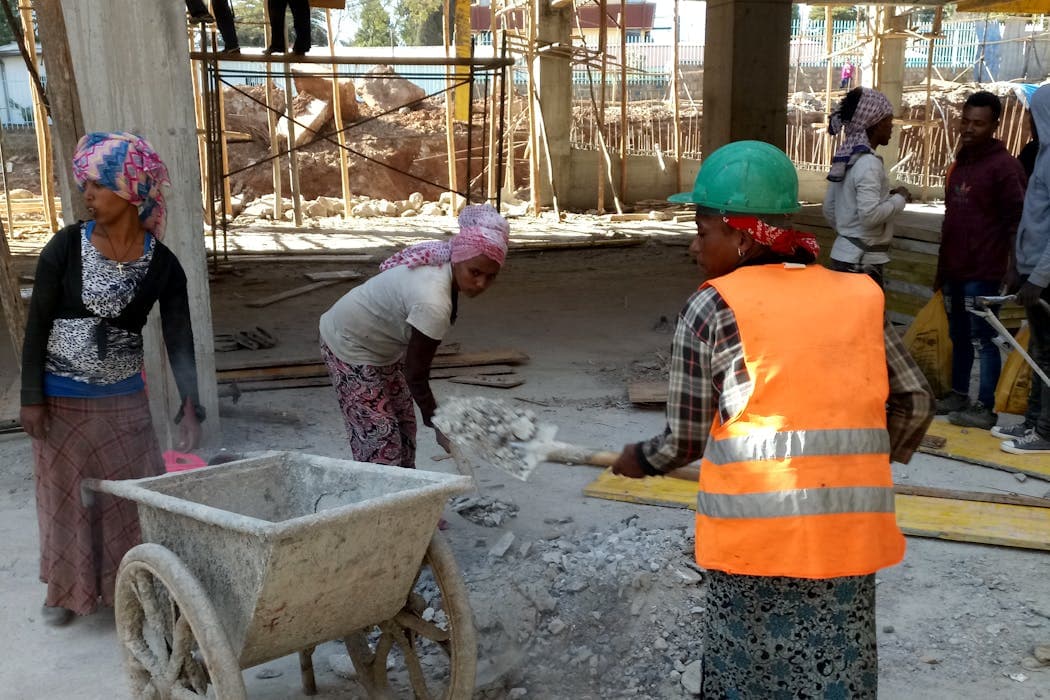
In a disturbing trend that exposes the deep fractures in Ethiopia’s social fabric, a new study reveals that young women are increasingly changing their ethnic identity to secure employment. It is a desperate game of survival where your name and your bloodline are liabilities to be hidden, not heritage to be celebrated.
The report, released this week, highlights a painful reality in the Horn of Africa: tribalism has infiltrated the Human Resources department. For these women, the choice is stark—starve as an Oromo/Amhara/Tigrayan, or eat as "Someone Else." It is a phenomenon that rings bells in Kenya, where our own history of "negative ethnicity" has often dictated who gets the job and who gets the door.
Researchers found that women entering the formal workforce are 4.3 percentage points more likely to alter their stated ethnicity than those who remain unemployed. This "Chameleon Effect" is most prevalent in Addis Ababa, a melting pot that is paradoxically becoming more segregated. "It is not just about a paycheck," explains Dr. Almaz Teferra, a sociologist involved in the study. "It is about safety. In certain neighborhoods, being the 'wrong' tribe makes you a target."
For a domestic worker earning the equivalent of KSh 5,000 a month, this deception is a necessary tax on their identity. They adopt new names, learn new dialects, and suppress their cultural mannerisms just to survive the workday.
While this study focuses on Ethiopia, the lessons travel south. In Kenya, we often speak of the "face of Kenya" in public appointments, but the private struggle of the job seeker often involves hiding one's surname to avoid profiling. The Ethiopian case is an extreme version of a common African ailment: the politicization of identity.
The economic implications are dire. When hiring is based on perceived ethnicity rather than merit, productivity suffers. Ethiopia is losing the potential of its women by forcing them to expend energy on masking their identity rather than building their careers.
"I have two names," confessed 'Meron', a waitress in Addis Ababa. "One for my boss, and one for my mother." Her story is the story of thousands. As Ethiopia grapples with its post-conflict healing, the workplace remains a battlefield where the casualties are truth and dignity.
This phenomenon serves as a grim warning: when politics divides, the economy does not unite—it merely forces the division underground, where it festers in the hearts of the most vulnerable.
Keep the conversation in one place—threads here stay linked to the story and in the forums.
Sign in to start a discussion
Start a conversation about this story and keep it linked here.
Other hot threads
E-sports and Gaming Community in Kenya
Active 9 months ago
The Role of Technology in Modern Agriculture (AgriTech)
Active 9 months ago
Popular Recreational Activities Across Counties
Active 9 months ago
Investing in Youth Sports Development Programs
Active 9 months ago