We're loading the full news article for you. This includes the article content, images, author information, and related articles.
In a powerful appeal for national healing, the former prime minister's widow acknowledges his human flaws, urging Kenyans to move past decades of political division following his passing.

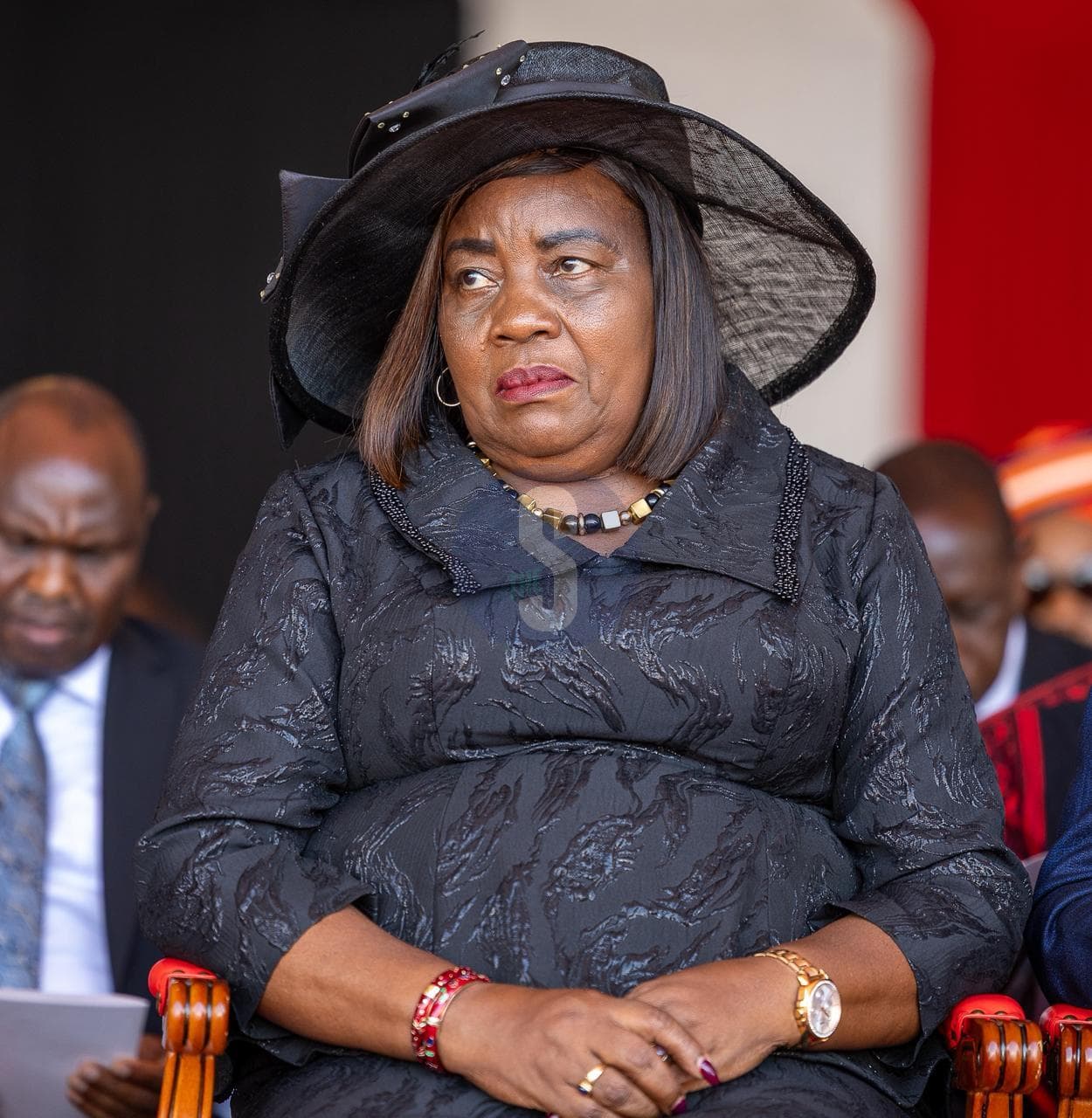
BONDO, SIAYA COUNTY – Mama Ida Odinga on Thursday, November 6, 2025, made a heartfelt appeal to Kenyans to forgive her late husband, former Prime Minister Raila Odinga, for any transgressions committed during his long and often polarizing political career. Speaking from the family’s Opoda Farm in Bondo, a site that has served as a center for Kenyan political discourse for decades, Ida's call is being interpreted as a significant gesture aimed at fostering national unity and reconciliation.
"As a human, he had his own weaknesses, which may have rubbed others in the wrong way," Ida stated, acknowledging the divisive nature of her husband's political journey. "With him gone, I take it upon myself to apologize on his behalf." Her remarks, delivered to mourners and dignitaries, signal a potential turning point for a nation grappling with the legacy of one of its most influential and controversial figures.
Raila Odinga, who passed away on October 15, 2025, was a central figure in Kenyan politics for over four decades. His career was defined by a relentless fight for multi-party democracy, a struggle that led to his detention without trial for six years in the 1980s under the Moi regime. He served as the Member of Parliament for Langata from 1992 to 2013 and as Prime Minister in the Grand Coalition Government from 2008 to 2013, a position created by the National Accord and Reconciliation Act to end the 2007-2008 post-election crisis.
Odinga's five unsuccessful presidential campaigns, in 1997, 2007, 2013, 2017, and 2022, were often marked by fierce political contests and allegations of electoral fraud. These campaigns pitted him against formidable rivals, including former presidents Daniel arap Moi, Mwai Kibaki, Uhuru Kenyatta, and most recently, President William Ruto. His political maneuvering saw him form and dissolve numerous alliances, from joining the KANU government as Energy Minister in 2001 to leading opposition coalitions like CORD, NASA, and Azimio la Umoja. For his supporters, he was a revolutionary hero, affectionately known as "Baba," who championed devolution and constitutional reform. For his detractors, he was a polarizing figure whose political tactics often deepened ethnic and political divides.
Throughout Raila's tumultuous career, Ida Odinga remained a steadfast, though often private, source of strength. An educator by profession who taught for over two decades, she was forced out of her job due to her husband's political activism. In 1991, she founded the League of Kenya Women Voters to promote female participation in politics. Her role as a businesswoman, activist, and matriarch who raised four children, often single-handedly during her husband's imprisonment, has earned her widespread respect.
Her public plea for forgiveness builds on this legacy, casting her in the role of a national unifier. By acknowledging her husband's human fallibility while emphasizing that he "never held grudges," she has extended an olive branch to former adversaries and their supporters. This act is particularly resonant in a country with a history of politically instigated violence and where reconciliation efforts, such as the Truth, Justice and Reconciliation Commission (TJRC), have had mixed success.
The timing and location of Ida's statement are highly symbolic. Opoda Farm has historically been a venue for major political delegations and decisions. As leaders like Wiper Party's Kalonzo Musyoka and others continue to pay tribute, her message of forgiveness sets a tone for the post-Raila era.
Analysts suggest this plea could have several implications for Kenya. It may serve to soften the Odinga political brand, potentially paving the way for a less confrontational style of politics from his successors within the Orange Democratic Movement (ODM). Furthermore, it provides a crucial opening for national dialogue, encouraging a move away from the personality-driven, often ethnically charged politics that have long characterized the nation's landscape. The appeal for forgiveness is not just about the past; it is a strategic call to reshape the future of Kenyan political engagement, urging a focus on unity over historical grievances.
Keep the conversation in one place—threads here stay linked to the story and in the forums.
Sign in to start a discussion
Start a conversation about this story and keep it linked here.
Other hot threads
E-sports and Gaming Community in Kenya
Active 9 months ago
The Role of Technology in Modern Agriculture (AgriTech)
Active 9 months ago
Popular Recreational Activities Across Counties
Active 9 months ago
Investing in Youth Sports Development Programs
Active 9 months ago
Key figures and persons of interest featured in this article