We're loading the full news article for you. This includes the article content, images, author information, and related articles.
While leaders signed the Washington Accord in a rebranded US institute, mortar shells in Eastern Congo exposed the fragility of a treaty that ignored the men with the guns.
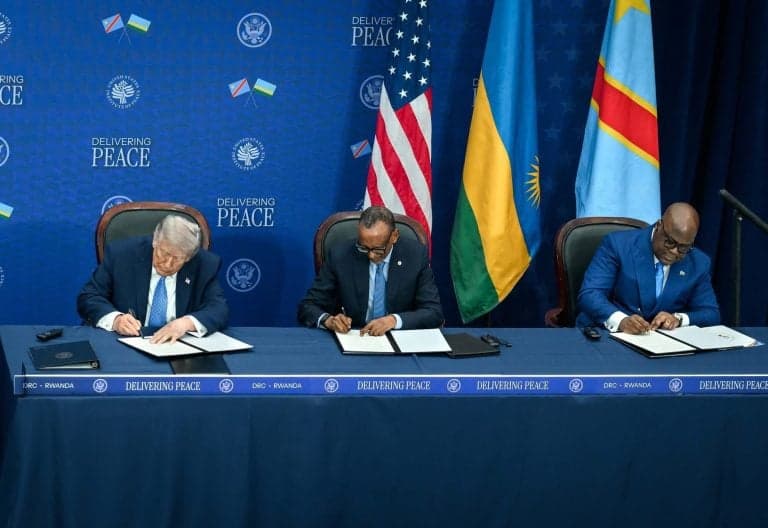
NAIROBI — The ink was barely dry on the "Washington Accord" before the familiar thud of artillery fire shattered the morning calm in North Kivu. On Thursday, President-elect Donald Trump hailed a "great day for the world" as he presided over a peace deal between the Democratic Republic of Congo (DRC) and Rwanda. By Friday, the reality of the eastern Congo—muddy, bloody, and stubbornly complex—had already violated the agreement.
For Kenyans watching from across the border, the dissonance was jarring. In Washington, D.C., the ceremony at the newly renamed Donald J. Trump Institute of Peace was a spectacle of high diplomacy. Presidents Félix Tshisekedi and Paul Kagame sat stiffly, avoiding eye contact and refusing to shake hands, even as they signed a document promising to end decades of hostility.
But 7,000 miles away, in the hills near Kibumba, the M23 rebels—who were notably absent from the Washington negotiating table—launched a fresh offensive. The disconnect raises a chilling question for the East African Community: Can a deal signed in an air-conditioned American boardroom stop a war fueled by local grievances and global greed?
The Washington Accord is ostensibly about security, but the fine print reads like a mining prospectus. The agreement opens the DRC’s vast mineral reserves—critical for everything from iPhones to electric vehicles—to American companies. President Trump was blunt about the economic incentives, promising that U.S. firms would soon be "sending some of our biggest and greatest companies" to the region.
For the Kenyan economy, which is deeply integrated with the Great Lakes region, the stakes are massive. A stable Congo means a flowing trade route; a warring Congo means refugees and disrupted supply chains. However, critics argue the deal prioritizes access to coltan and cobalt over genuine reconciliation.
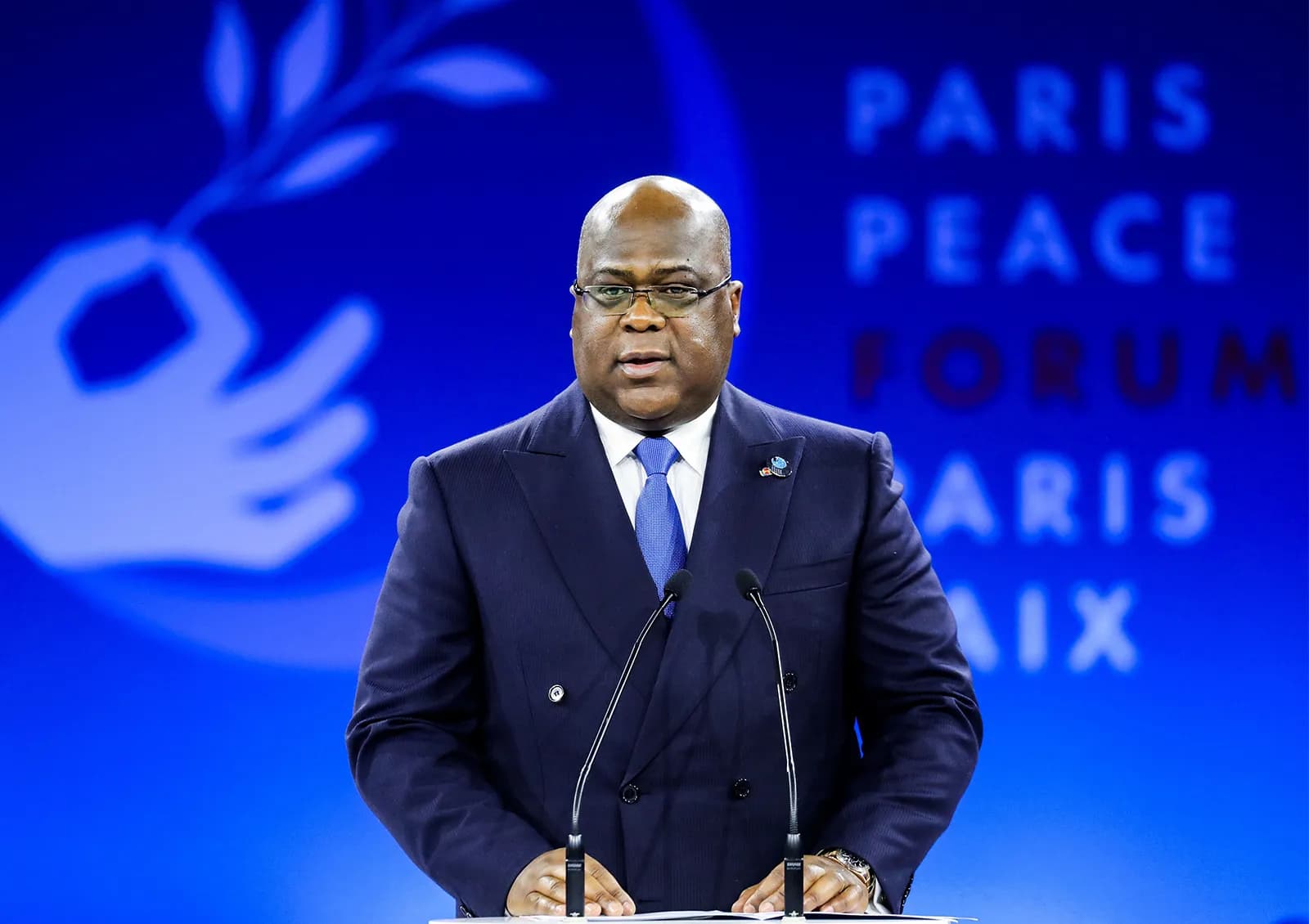
The reaction on the ground has been swift and cynical. Denis Mukwege, the Congolese Nobel Peace Prize laureate, dismissed the ceremony as a charade driven by the "scramble for minerals" rather than a desire to save lives. His sentiment was echoed by residents in Goma, who woke up not to peace, but to the sound of renewed combat.
"For me, it is clear that this is not a peace agreement," Mukwege told reporters in Paris. "The proof: this morning, in my native village, people were burying the dead while a peace agreement was being signed."
Reports confirm that fighting has intensified in South Kivu and around Goma. The M23, feeling sidelined by a process that treats them as mere proxies of Rwanda, has little incentive to lay down arms. Instead, they have accused the Congolese army (FARDC) of using the ceasefire as a cover to reposition troops.
Why should a shopkeeper in Nairobi or a farmer in Eldoret care? Because the instability in the DRC is an East African contagion. The renewed fighting threatens to spill over, straining the already fragile regional security framework. Furthermore, the aggressive entry of U.S. mining interests signals a new geopolitical tug-of-war with China right in our backyard.
As the dust settles on the Washington ceremony, the "Trump Peace" looks increasingly like a branding exercise for a conflict that refuses to be simplified. The suits may have agreed, but the soldiers are still voting with their triggers.
"They spent a lot of time killing each other," Trump remarked at the signing. "And now they're going to spend a lot of time hugging." In the hills of Kivu, however, the only embrace today is the deadly clinch of combat.
Keep the conversation in one place—threads here stay linked to the story and in the forums.
Sign in to start a discussion
Start a conversation about this story and keep it linked here.
Other hot threads
E-sports and Gaming Community in Kenya
Active 9 months ago
The Role of Technology in Modern Agriculture (AgriTech)
Active 9 months ago
Popular Recreational Activities Across Counties
Active 9 months ago
Investing in Youth Sports Development Programs
Active 9 months ago
Key figures and persons of interest featured in this article