We're loading the full news article for you. This includes the article content, images, author information, and related articles.
The Strait of Hormuz closure sends oil prices soaring, hitting Nairobi commuters and Florida motorists alike in a stark reminder of global interconnectedness.

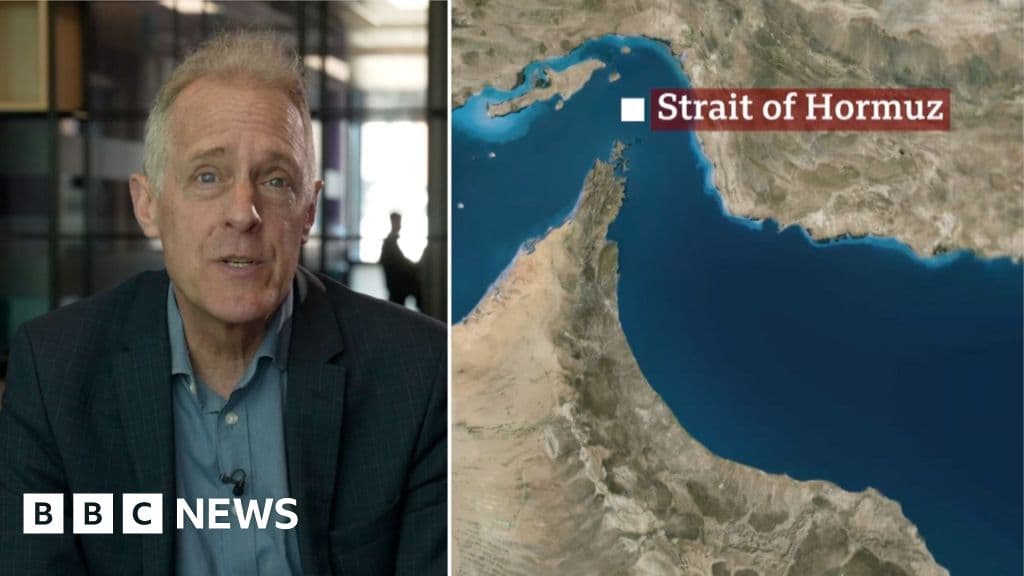
At a nondescript filling station on the outskirts of Jacksonville, Florida, the digital price display flickered before settling on a figure that caused passing motorists to slow their vehicles in disbelief. The rapid, upward adjustment of the fuel board—a phenomenon repeated across countless intersections from the United States to Europe and beyond—is not merely a reaction to local supply fluctuations. It is the visible symptom of a profound geopolitical rupture originating nearly 12,000 kilometers away, where the intensifying conflict between the United States, Israel, and Iran has effectively shuttered one of the world's most vital economic arteries: the Strait of Hormuz.
For global citizens, the current crisis represents more than a strategic military confrontation it is a direct assault on the mechanics of global energy. With the Strait of Hormuz, a 33-kilometer-wide maritime chokepoint, effectively closed to commercial tanker traffic, approximately 20 percent of the world's daily petroleum liquids consumption has been curtailed. The resulting supply shock has sent Brent crude futures skyrocketing, periodically breaching the 120 US dollar per barrel threshold in recent days. This volatility is not confined to the oil markets it is cascading through shipping lanes, manufacturing hubs, and the household budgets of families from Florida to Nairobi.
The International Energy Agency has characterized the current situation as the most severe global energy supply disruption since the 1970s. The logistical reality is stark: unlike the Suez Canal, which can be circumvented via the Cape of Good Hope, the Persian Gulf has only one exit. When the Strait of Hormuz is blocked or restricted, the impact is instantaneous and, for many, inescapable. Analysts confirm that at least 8 to 10 million barrels per day of output have been removed from the global market as producers scramble to manage limited storage capacity and navigate the high-risk maritime environment.
The economic ripple effects are categorized by the following systemic stresses:
For a reader in Nairobi, the connection to these distant events is not theoretical it is measured in the cost of a liter of diesel at the pump and the price of maize flour on the supermarket shelf. Kenya’s economy, as a net importer of petroleum products, is uniquely exposed to the dual shocks of rising global crude prices and the resulting pressure on the Kenyan Shilling. As the country must spend more dollars to secure its energy requirements, the local currency faces intense depreciation pressure, creating a reinforcing cycle of inflation.
The Energy and Petroleum Regulatory Authority faces an increasingly narrow path to shield the domestic economy from the global surge. When global oil prices jump, the landed cost of fuel in Mombasa rises immediately. For matatu operators, who typically run on narrow margins, this increase is not an abstract economic data point but a functional constraint. Fare hikes become inevitable, and as transport costs rise, the cost of moving goods from the port to the hinterland adds a premium to every product, from essential medicines to basic foodstuffs. Economists at the Central Bank of Kenya have repeatedly cautioned that sustained high energy prices act as a regressive tax, disproportionately burdening the most vulnerable populations while threatening to stall the fragile post-pandemic economic recovery.
The global response has been characterized by uncertainty and frantic attempts at mitigation. While some nations have tapped into emergency stockpiles, these measures provide only a temporary buffer. The fundamental challenge remains: modern economies are built on the assumption of frictionless trade and reliable energy flows. The 2026 conflict has shattered this assumption. As military tensions drag on, the prospect of prolonged high energy prices is forcing a painful re-evaluation of global supply chain resilience. Manufacturers and logistics firms are already reporting that they can no longer absorb these costs, forcing them to pass the burden directly to consumers who are already struggling with the increased cost of living.
Ultimately, the view from a Florida gas station, or a bus stop in Nairobi, is a singular narrative of global vulnerability. The era of cheap, reliable energy transit appears to be in an indefinite holding pattern, leaving markets and households alike to wait for a resolution that remains elusive. The question confronting governments today is not merely how to stabilize fuel prices, but how to ensure the structural integrity of an economy that is so easily unraveled by a conflict occurring thousands of miles away.
As diplomacy stalls and the drums of war continue to beat in the Middle East, the world stands at a critical juncture. The price of fuel is no longer just a number on a sign it is a bellwether for the geopolitical instability of an age that has yet to learn how to insulate itself from the volatility of its own dependencies. The ultimate cost of this conflict will be measured not in barrels of oil, but in the lost growth, eroded savings, and diminished prospects of a global population caught in the crossfire.
Keep the conversation in one place—threads here stay linked to the story and in the forums.
Sign in to start a discussion
Start a conversation about this story and keep it linked here.
Other hot threads
E-sports and Gaming Community in Kenya
Active 10 months ago
The Role of Technology in Modern Agriculture (AgriTech)
Active 10 months ago
Popular Recreational Activities Across Counties
Active 10 months ago
Investing in Youth Sports Development Programs
Active 10 months ago