We're loading the full news article for you. This includes the article content, images, author information, and related articles.
This year, the disconnect between ceremonial rhetoric and governance reality could not be more stark. While government officials and international stakeholders spoke of empowerment and progress, data from the National Gender and Equality Commission confirms that Kenya remains far from achieving the constitutional threshold of the two-thirds gender rule in both elective and appointive bodies.

The bouquets have wilted, the gala venues are empty, and the speeches delivered across Kenya on March 8 have largely dissolved into the background noise of the national political cycle. While International Women's Day is traditionally a moment for celebration, the reality in Nairobi and beyond this week is marked by a profound, simmering frustration. Fifteen years after the promulgation of the 2010 Constitution, the country finds itself in a state of institutional paralysis, where the promise of gender equality has been reduced to a recurring, unfulfilled legislative requirement.
This year, the disconnect between ceremonial rhetoric and governance reality could not be more stark. While government officials and international stakeholders spoke of empowerment and progress, data from the National Gender and Equality Commission confirms that Kenya remains far from achieving the constitutional threshold of the two-thirds gender rule in both elective and appointive bodies. The question today is not whether there is a desire for equity, but whether the current political machinery has any intention of allowing it.
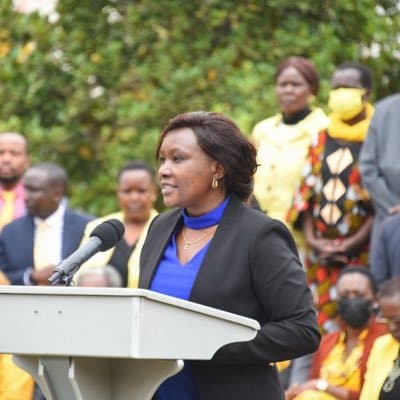
The urgency of the situation was laid bare in a recent, unscripted confrontation between President William Ruto and Embu Governor Cecily Mbarire. During a high-level meeting regarding the National Dialogue Committee report, Mbarire broke protocol to press the Head of State on the omission of the two-thirds gender rule from the reform agenda. It was a rare, public fracture in party cohesion that exposed the uncomfortable truth: the implementation of this gender rule is not a technical oversight, but a politically contested choice.
Legislative attempts to operationalize the rule have collapsed at least five times in Parliament. Each failure follows a familiar script: introduction, debate, lack of political will, and eventual burial in committee. Analysts point to a calculated resistance from incumbent power structures that view gender quotas not as a democratic imperative, but as a threat to established, male-dominated hierarchies. This is not merely a failure of policy it is the strategic maintenance of the status quo.
Beyond the corridors of Parliament, the economic reality for Kenyan women paints an equally sobering picture. While the narrative often focuses on "resilience" and "entrepreneurship," the hard data reveals a landscape defined by deep structural inequality. Women, who constitute roughly 48 percent of the labor force, remain overwhelmingly concentrated in the informal economy, an area characterized by minimal legal protections, erratic incomes, and limited access to formal credit.
The wage gap functions as a silent tax on women's productivity. Research indicates that, on average, women earn approximately 17.7 percent less per hour than their male counterparts. In specific high-value sectors, this disparity balloons to 30 percent or higher. This is not a matter of individual ambition it is the inevitable outcome of a system that extracts value from women's labor while failing to provide the infrastructure—such as accessible childcare, capital access, and secure property rights—required to translate that labor into wealth.
The reliance on the informal sector for 86 percent of working women is not a choice, but a consequence of exclusion from formal financial systems. When women are denied equal access to land and credit, their businesses are prevented from scaling. This limits not only individual growth but also the nation's overall economic velocity. Economists have consistently argued that closing the gender opportunity gap could unlock billions in GDP, yet policy has failed to pivot from tokenistic funding programs to meaningful systemic reform.
The theme of this year's International Women's Day, "Rights. Justice. Action. For ALL Women and Girls," served as a sharp rebuke to the status quo. It demanded a transition from the recognition of rights to the delivery of justice. Yet, as the calendar turns, the rhetoric of "giving to gain" faces the test of the 2027 General Election. If the political class continues to treat gender equality as a negotiable item rather than a constitutional non-negotiable, the next election will likely mirror the stagnation of the last decade.
The path forward requires more than annual commemorations. It demands rigorous enforcement of gender-responsive budgeting, the dismantling of discriminatory property practices, and the institutionalization of gender parity within political party registration requirements. The infrastructure for equality exists within the law what is missing is the political courage to enact it. As Kenya looks toward 2027, the question remains: will the nation finally choose to move beyond the gala and begin the difficult, necessary work of structural transformation?
Keep the conversation in one place—threads here stay linked to the story and in the forums.
Sign in to start a discussion
Start a conversation about this story and keep it linked here.
Other hot threads
E-sports and Gaming Community in Kenya
Active 9 months ago
The Role of Technology in Modern Agriculture (AgriTech)
Active 9 months ago
Popular Recreational Activities Across Counties
Active 9 months ago
Investing in Youth Sports Development Programs
Active 9 months ago
Key figures and persons of interest featured in this article