We're loading the full news article for you. This includes the article content, images, author information, and related articles.
Deputy President Gachagua rejects allegations of bribery within the Development Caucus of Parliament, labeling claims of executive overreach as baseless.

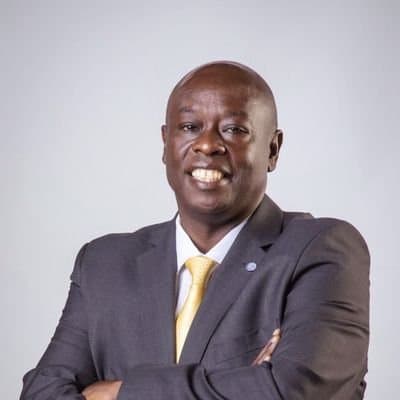
Deputy President Rigathi Gachagua has launched a blistering defense of the executive branch, categorically rejecting recent allegations leveled by Cabinet Secretary Moses Kuria regarding the alleged bribery of Members of Parliament within the Development Caucus of Parliament (DCP). The confrontation, which played out in a series of volatile exchanges, has laid bare the deepening fissures within the ruling coalition and ignited a firestorm of speculation regarding the integrity of legislative processes in Nairobi.
This political friction matters because it strikes at the core of Kenya’s legislative health. At stake is not merely the reputation of a political caucus, but the public’s eroding trust in the Parliament’s ability to act as an independent watchdog of the Executive. As the 2027 general election cycle looms, the mobilization of parliamentary blocs like the DCP has become a critical barometer of the government’s ability to pass contentious legislation, including tax bills and budget adjustments, which carry direct consequences for every household in the nation.
The core of the dispute revolves around claims—initially championed by Moses Kuria—that members of the DCP were being systematically induced by the Executive to support government-favored legislation through direct monetary payments. While such allegations of "checkbook diplomacy" are not novel in Kenyan political discourse, the specificity of the claims has forced the Deputy President to enter the fray to manage the potential fallout.
Gachagua’s rebuttal was stark. During a televised address on Tuesday morning, the Deputy President dismissed the narrative as a "desperate attempt to destabilize the government from within," emphasizing that the Executive holds no such leverage over independent legislative members. He characterized the DCP as a voluntary coalition focused on development metrics rather than patronage.
However, the skepticism remains widespread among observers. Analysts at the Institute for Public Policy point to several concerning indicators regarding the DCP’s voting record:
The broader implications of these allegations extend far beyond the interpersonal rivalries of senior officials. If the Executive is indeed utilizing financial incentives to secure legislative support, the economic ramifications are profound. Independent economists note that such practices distort the budgetary process, effectively "buying" passage for tax levies that may not align with the broader economic realities of the Kenyan populace. A KES 10 billion increase in discretionary spending, for instance, requires fiscal discipline that is often sacrificed when legislative majorities are artificially manufactured.
Historically, the Kenyan Parliament has wrestled with the specter of executive capture. From the early post-independence era to the constitutional reforms of 2010, the balance of power between the House and State House has consistently fluctuated. The emergence of the DCP represents the latest iteration of this tension, where modern digital-age politics meets the traditional patronage-heavy practices of the past. For a Nairobi resident, this means that the tax burdens and service delivery standards discussed in the National Assembly are increasingly disconnected from the reality of the street.
While the political elite trade barbs in the capital, the local impact is felt in regional hubs. Members of the business community in Westlands and the manufacturing sector in Mombasa have expressed concern over the climate of instability. "We need a parliament that scrutinizes fiscal policy, not one that operates as a subsidiary of the Cabinet," noted one senior analyst at a leading Nairobi-based research firm. The sentiment reflects a growing demand for transparency in the financial dealings of political blocs.
The DCP, for its part, has maintained that its activities are strictly within the mandate of constitutional legislative coordination. Spokespersons for the caucus have argued that their alignment with the Executive is a product of shared policy goals—specifically the implementation of the bottom-up economic agenda—rather than the result of any financial inducements. Yet, the persistent nature of the allegations has created a persistent "trust deficit" that the government is finding increasingly difficult to bridge.
As the standoff continues, the focus shifts to the upcoming plenary sessions in the National Assembly. If the government cannot definitively debunk these claims through transparent parliamentary oversight, the DCP risks becoming a liability rather than an asset. The political machinery of Nairobi is rarely forgiving of such scandals, and the longer the shadow of suspicion hangs over the caucus, the more volatile the legislative environment will become.
The coming weeks will reveal whether this is a genuine breakdown in coalition discipline or merely the opening salvo in a protracted campaign for dominance ahead of 2027. What is clear is that the public is watching closely, demanding not just political posturing, but a verifiable account of how the laws that govern their lives are truly being made. The integrity of the Parliament rests on the outcome of this investigation into the mechanisms of power, and Gachagua’s aggressive defense may either silence the critics or inadvertently amplify the search for the truth.
Keep the conversation in one place—threads here stay linked to the story and in the forums.
Sign in to start a discussion
Start a conversation about this story and keep it linked here.
Other hot threads
E-sports and Gaming Community in Kenya
Active 10 months ago
Popular Recreational Activities Across Counties
Active 10 months ago
The Role of Technology in Modern Agriculture (AgriTech)
Active 10 months ago
Investing in Youth Sports Development Programs
Active 10 months ago
Key figures and persons of interest featured in this article