We're loading the full news article for you. This includes the article content, images, author information, and related articles.
After 18 grueling months battling Caribbean gangs, the first batch of Kenyan police officers touches down in Nairobi—trading combat gear for ceremonial tunics just in time for the nation’s 62nd independence celebrations.
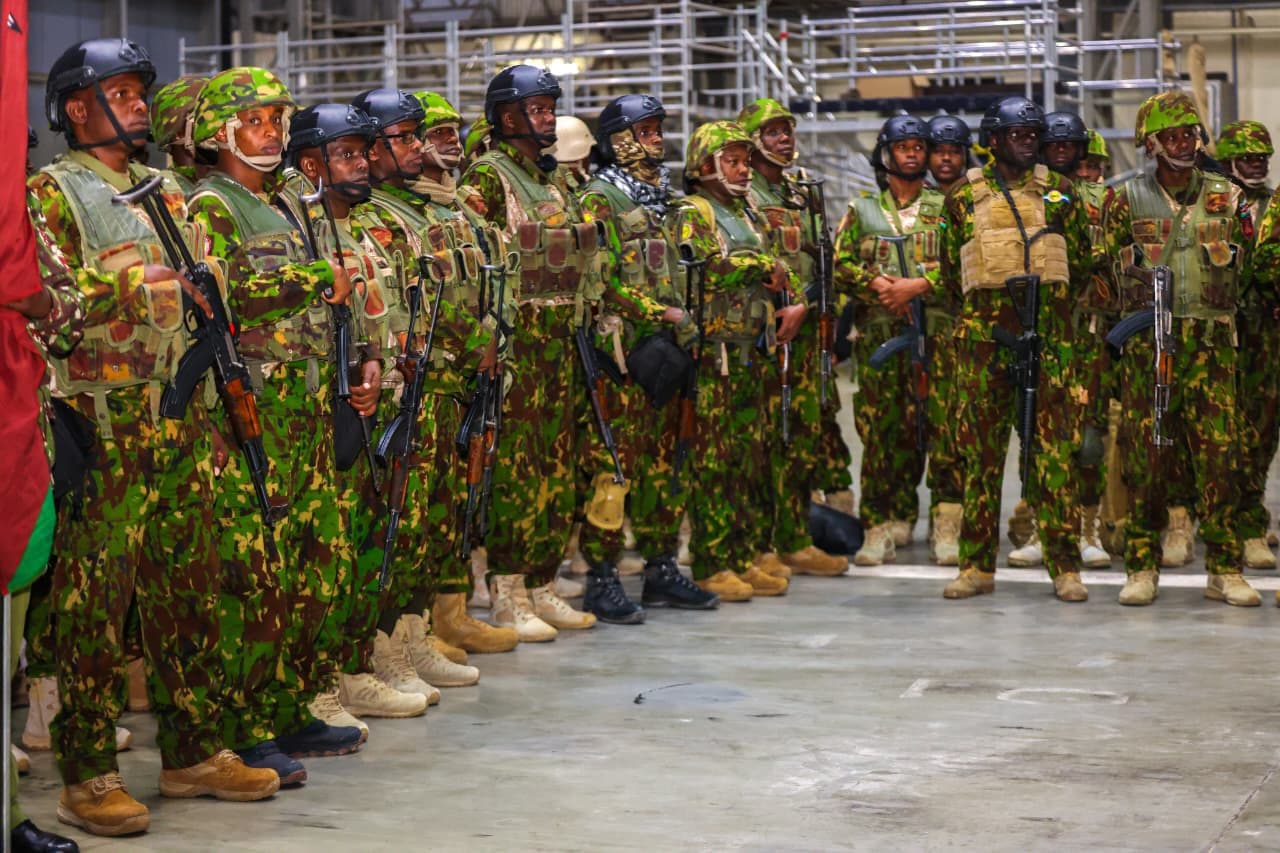
The tarmac at Jomo Kenyatta International Airport (JKIA) is usually a place of hurried transits, but on Tuesday evening, it became a theater of raw emotion. As the Kenya Airways charter flight touched down, 230 weary but proud officers stepped onto home soil for the first time in 18 months. They left as police officers; they returned as veterans of the world’s most dangerous beat.
Their arrival comes just 72 hours before they are scheduled to headline the Jamhuri Day parade at Nyayo Stadium—a symbolic homecoming that President William Ruto is expected to leverage as proof of Kenya’s rising clout on the global stage.
“Mission possible,” is how Senior Superintendent Clapperton Imbiru described the deployment, his voice thick with emotion as he embraced family members. But the celebration is tempered by the memory of three empty seats on that flight—colleagues who paid the ultimate price in the alleyways of Port-au-Prince.
While the returning officers were greeted with flower garlands and songs, the shadow of the mission’s cost looms large. The 18-month deployment, initially dubbed the Multinational Security Support (MSS) mission and later transitioned to the Gang Suppression Force (GSF), has been a baptism by fire.
National Security Advisor Ambassador Monica Juma, who led the reception, led a somber moment of silence for the fallen:
“They went to protect strangers, but they died as sons of Kenya,” Juma noted, her tone shifting from official to maternal. For the survivors, the mission has been life-changing in more ways than one. Beyond the combat experience, the financial incentives have been significant.
For the average Kenyan constable earning a modest local wage, the Haiti mission was a financial lifeline. Officers on the ground earned a monthly package of approximately KES 280,000 ($2,166), funded by the United Nations reimbursement framework. This includes a base salary and a Mission Subsistence Allowance (MSA).
“It puts a roof over my head and school fees for my children for the next five years,” one returning officer confided, asking for anonymity. “But money cannot buy the sleep you lose when bullets are flying in Artibonite.”
The economic ripple effect is real. With over 1,000 officers rotating through the mission since June 2024, hundreds of millions of shillings have been injected back into the Kenyan economy—a point government spokespersons are keen to highlight amidst criticism of the deployment’s risks.
Tomorrow’s Jamhuri Day celebrations at Nyayo Stadium—shifted from the under-construction Talanta Sports City—will feature a special segment for these returnees. They will march not just as law enforcers, but as Kenya’s primary export of stability.
The parade will contrast sharply with their reality just days ago. In Haiti, they patrolled streets where gangs controlled 90% of the capital. They reopened the Toussaint Louverture International Airport and the main port, lifelines that had been choked off by warlords like 'Barbecue'.
Interior Cabinet Secretary Kipchumba Murkomen emphasized the strategic victory: “The world doubted an African police force could stabilize the Western Hemisphere. These men and women proved them wrong.”
As the first batch reintegrates—undergoing mandatory counseling and debriefing—a fresh contingent of 230 officers has already landed in Haiti to replace them. The mission continues, now under the banner of the Gang Suppression Force, with a harder edge and a clearer mandate.
For the Kenyan on the street, the question remains: Does stabilizing Haiti make Nairobi safer? Critics argue that our best officers are abroad while local crime rates fluctuate. Proponents argue that a Kenya respected abroad is a Kenya secure at home.
As they march past the dais tomorrow, boots polished and heads held high, the officers offer a silent answer: they served where they were sent, and they made it back. For now, that is victory enough.
Keep the conversation in one place—threads here stay linked to the story and in the forums.
Sign in to start a discussion
Start a conversation about this story and keep it linked here.
Other hot threads
E-sports and Gaming Community in Kenya
Active 9 months ago
The Role of Technology in Modern Agriculture (AgriTech)
Active 9 months ago
Popular Recreational Activities Across Counties
Active 9 months ago
Investing in Youth Sports Development Programs
Active 9 months ago
Key figures and persons of interest featured in this article