We're loading the full news article for you. This includes the article content, images, author information, and related articles.
Privacy isn’t a preference for executives. It’s operational risk management

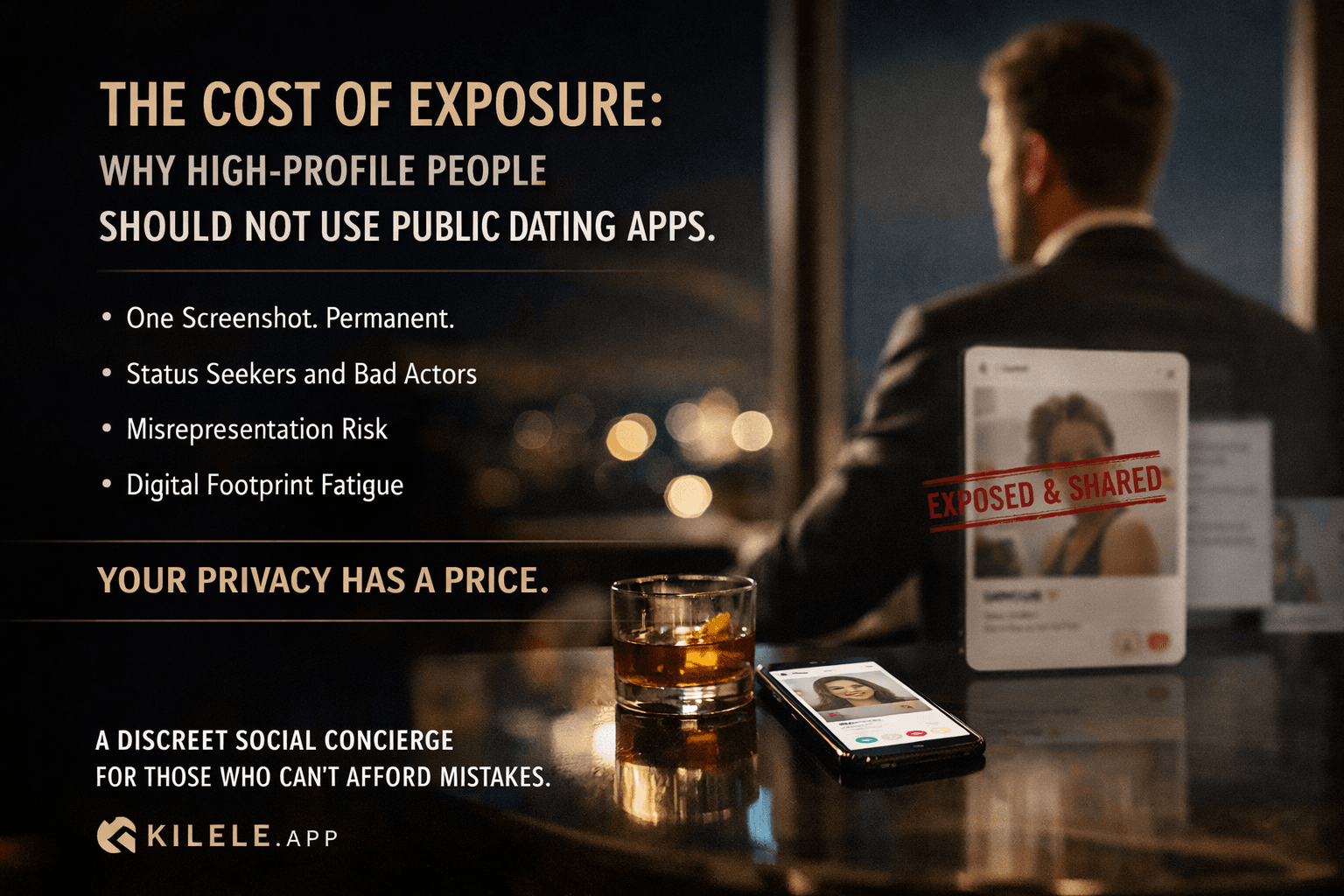
In today’s attention economy, the most expensive thing an executive can lose isn’t money—it’s control. A public-facing role comes with constant visibility: photos you didn’t approve, location tags you didn’t post, and narratives you didn’t choose. Yet modern leadership still demands presence—at dinners, launches, conferences, awards nights, and private rooms where relationships are built quietly.
This is where privacy-first social coordination is becoming a new standard: event companionship and high-trust social engagement without public exposure. Not as performance. Not as spectacle. As a disciplined, consent-led system—built around discretion, verification, and conduct.
Public platforms are designed for discovery. Executive life is designed for control. The mismatch creates predictable problems:
Public visibility by default: profiles, searchability, screenshots, and unintended reach.
Context collapse: one photo becomes a story; one appearance becomes “news.”
Weak verification: high-status targets attract impersonation, scams, and opportunists.
No conduct enforcement: bad actors can move freely; reputational consequences land on the visible person.
Executives don’t avoid visibility because they’re secretive. They avoid it because they understand how quickly visibility becomes liability.
In a privacy-first concierge model, event companionship is framed as social engagement and event attendance—a presence that supports real-world obligations: networking, hosting, attending, and moving through high-signal rooms with composure.
It is defined by three principles:
Consent-led expectations
Everything is agreed upfront—venue context, time window, dress code, boundaries, and communication etiquette.
Discretion as a rule, not a vibe
No posting. No location tagging. No recording. No sharing private details. Identity protection is the baseline.
Verification and accountability
Membership-based communities work because access is earned—and maintained through conduct standards.
This is not about creating drama. It is about removing it.
If you’re assessing a private concierge approach to social engagements, these are the non-negotiables:
No public profiles. No open browsing. Access and identity should be shared only when necessary and appropriate.
Politeness is not enough. The platform must define what’s acceptable—and what triggers enforcement: harassment, coercion, recording, doxxing, and boundary violations.
Identity confirmation protects both sides. Without verification, “privacy” becomes a loophole for misconduct.
The safest engagements are structured: public or professionally staffed venues, agreed timelines, and independent arrivals/departures by default.
High-trust communities survive on accountability. There must be an easy, taken-seriously reporting flow, with real consequences.
When privacy is the priority, vague plans create risk. Use clean, specific briefs:
Template A: Corporate dinner / gala
“Looking for a +1 for a corporate dinner. Dress code: formal. Venue: high-end hotel/restaurant. Time window: 7:30–10:30pm. Boundaries: no photos, no posting, discreet conversation.”
Template B: Conference week social slots
“I’ll be attending a conference and have two evening engagements. I need composed, professional presence. Public venues only. Clear start/end times. Discretion required.”
Template C: Brand event / launch
“Event attendance support for a launch. Venue staffed. Arrival window: 30 minutes. Depart independently. No filming, no tagging, no social media.”
Clarity protects everyone.
Even in a verified environment, basic executive safety remains essential:
Choose public or professionally staffed venues (hotel lounges, reputable restaurants, official event venues).
Agree on time windows and keep them.
Keep independent transport as default.
Avoid last-minute venue changes.
Do not share private residence details.
If anything feels off, end the engagement—politely and immediately.
Discretion without safety is incomplete.
For executives: privacy-first companionship isn’t a luxury add-on; it’s reputational governance. You’re choosing systems that reduce exposure, enforce conduct, and protect your time.
For platforms and brands: “membership” only means something when it’s defended. Standards must be explicit, visible, and enforced—or the promise collapses.
Keep the conversation in one place—threads here stay linked to the story and in the forums.
Sign in to start a discussion
Start a conversation about this story and keep it linked here.
Other hot threads
E-sports and Gaming Community in Kenya
Active 9 months ago
The Role of Technology in Modern Agriculture (AgriTech)
Active 9 months ago
Popular Recreational Activities Across Counties
Active 9 months ago
Investing in Youth Sports Development Programs
Active 9 months ago