We're loading the full news article for you. This includes the article content, images, author information, and related articles.
In a dramatic overhaul of American federal law enforcement, newly appointed FBI Director Kash Patel has summarily dismissed ten key agents involved in the classified documents probe against former President Donald Trump, sending shockwaves across the global intelligence community.
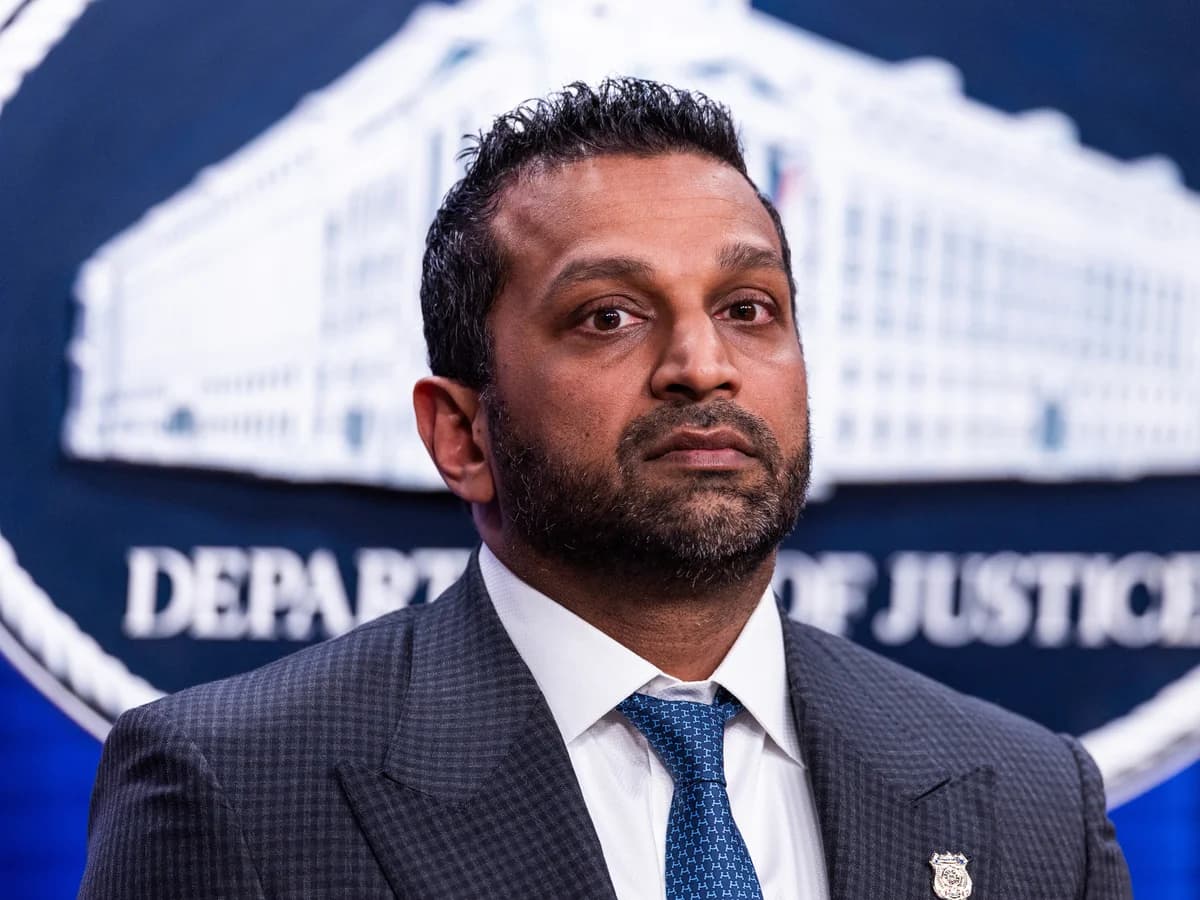
In a dramatic overhaul of American federal law enforcement, newly appointed FBI Director Kash Patel has summarily dismissed ten key agents involved in the classified documents probe against former President Donald Trump, sending shockwaves across the global intelligence community.
FBI Director Kash Patel has orchestrated a sweeping purge within the bureau, terminating at least ten veteran personnel directly connected to the criminal investigation into Donald Trump's handling of classified documents at his Mar-a-Lago estate.
This unprecedented internal reckoning raises severe alarms regarding the politicization of the United States' premier law enforcement agency. For observers in Kenya and across the developing world, the erosion of institutional independence in Washington serves as a cautionary tale about the fragile nature of democratic safeguards when executive power seeks retribution against its investigators, fundamentally altering the global perception of American justice.
In a move that has sent shockwaves through the global intelligence and legal communities, newly installed FBI Director Kash Patel has swiftly and decisively eliminated key personnel involved in one of the most high-profile investigations in modern American history. Multiple highly credible sources have confirmed the termination of at least ten FBI employees—including seasoned special agents and senior investigative staff—who were intrinsically linked to the 2022 search of former President Donald Trump’s Mar-a-Lago residence and the subsequent, highly complex federal prosecution led by Special Counsel Jack Smith.
This mass dismissal is not an isolated administrative adjustment; it represents the execution of a broader, intensely controversial mandate to aggressively dismantle the investigative apparatus that previously targeted the incoming administration. Patel, a fierce and unapologetic Trump loyalist, had previously signalled his unwavering intent to purge the bureau of individuals he perceived as politically compromised or instrumental in the "weaponization" of the justice system. The speed and scale of these terminations have drawn immediate, fierce condemnation from the FBI Agents Association, which has publicly denounced the firings as entirely unlawful, retaliatory, and fundamentally destructive to the agency's operational integrity.
While this dramatic institutional upheaval is occurring thousands of miles away in Washington D.C., its implications are profoundly global, resonating with particular intensity in developing democracies like Kenya. For decades, the United States has forcefully positioned its justice system—characterized by supposedly impregnable institutional independence and the strict rule of law—as the gold standard for global governance. Developing nations are routinely lectured by Western diplomats on the critical importance of protecting investigative agencies from executive overreach and political interference.
However, Patel’s aggressive purge shatters this carefully constructed geopolitical narrative. When an incoming administration can systematically fire the very law enforcement officers tasked with investigating its leader’s alleged criminal conduct, it severely undermines America’s moral authority on the global stage. For Kenyan political observers, this scenario bears a chilling, unmistakable resemblance to the all-too-familiar dynamics of regional political transitions, where incoming regimes routinely weaponize state machinery to neutralize political opponents and shield loyalists from accountability. This glaring hypocrisy provides substantial rhetorical ammunition to authoritarian leaders globally, who can now readily justify their own crackdowns by pointing directly to the systemic politicization of the FBI.
The long-term consequences of this internal purge are potentially catastrophic for the United States' domestic security and its capacity to conduct impartial, high-stakes investigations. The chilling effect on remaining personnel cannot be overstated.
As the political tempest surrounding the Mar-a-Lago classified documents case continues to rage, the foundational pillars of the American justice system are trembling under unprecedented, sustained pressure. The unfolding crisis serves as a stark, undeniable reminder that democratic institutions, no matter how historically revered, are inherently fragile.
Ultimately, the true measure of a robust democracy is not found in the drafting of its constitution, but in the unyielding courage to uphold the rule of law even when it profoundly inconveniences those residing at the absolute pinnacle of power.
Keep the conversation in one place—threads here stay linked to the story and in the forums.
Sign in to start a discussion
Start a conversation about this story and keep it linked here.
Other hot threads
E-sports and Gaming Community in Kenya
Active 9 months ago
The Role of Technology in Modern Agriculture (AgriTech)
Active 9 months ago
Popular Recreational Activities Across Counties
Active 9 months ago
Investing in Youth Sports Development Programs
Active 9 months ago