We're loading the full news article for you. This includes the article content, images, author information, and related articles.
ROME — Valentino Garavani, the Italian couturier whose name became shorthand for red-carpet elegance and whose “Valentino red” helped define modern glamour, has died in Rome aged 93, his foundation announced.
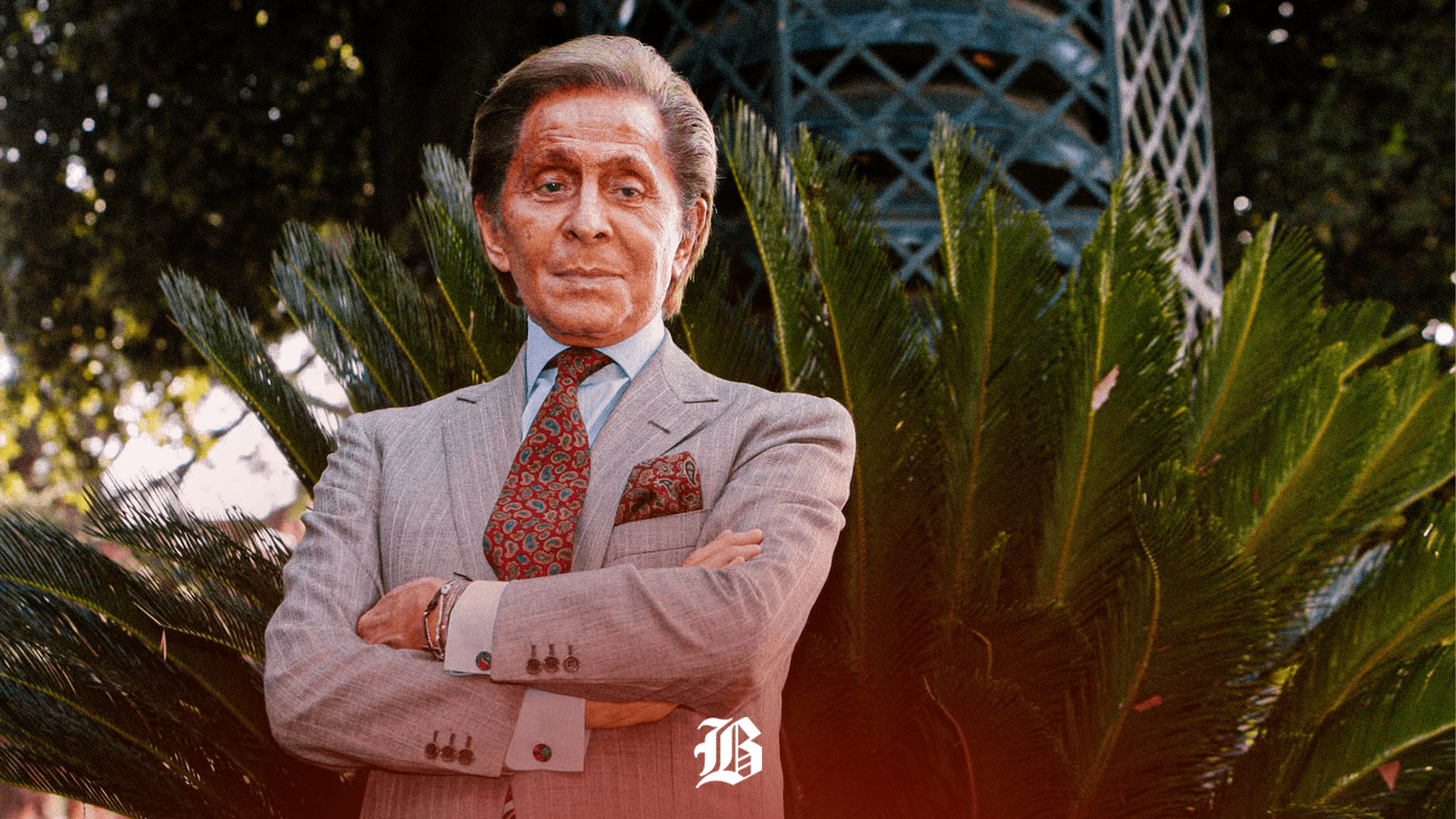
ROME — Valentino Garavani, the Italian couturier whose name became shorthand for red-carpet elegance and whose “Valentino red” helped define modern glamour, has died in Rome aged 93, his foundation announced. He died on January 19, 2026, prompting an outpouring of tributes across Europe as fashion figures marked the passing of one of the last great titans of couture’s golden era.
In Rome, the city that shaped his maison and held his loyalty even as he conquered Paris and New York, public farewell ceremonies were set for a two-day viewing at the Valentino Garavani and Giancarlo Giammetti Foundation’s venue near the Spanish Steps (Piazza Mignanelli), with funeral rites scheduled at the Basilica of Santa Maria degli Angeli e dei Martiri.
Born May 11, 1932, in Voghera, Lombardy, Valentino was drawn early to beauty as performance—films, opera, society portraits—and pursued fashion studies before refining his craft in Paris. There, he trained and worked in the orbit of established couture, absorbing the discipline of atelier technique that would later become his signature: impeccable cut, luxurious fabrication, and an almost architectural control of line.
He returned to Italy and began building what would become one of luxury’s most enduring houses: an atelier in Rome at the end of the 1950s and a formal launch of Valentino in 1960, quickly positioning his work as “Italian elegance” with international ambition.
Valentino’s decisive breakthrough came with his early 1960s presentations in Florence, then the heartbeat of Italian fashion. The shows established him not simply as a local talent, but as a designer able to compete with the authority of Paris while maintaining a distinctly Italian sensuality—romantic, polished, and never careless.
From that point, the client list became its own headline. First ladies, actresses, royalty, and society figures sought out the quiet confidence of his silhouettes—pieces designed to flatter without noise, and to photograph with certainty. The fashion world’s shorthand for his impact was simple: he dressed power with grace.
If a designer’s legacy can be traced through the women who trusted him, Valentino’s reads like a cultural timeline: Jacqueline Kennedy Onassis, Elizabeth Taylor, and other era-defining icons turned to him for looks that signaled status without strain. Kennedy’s relationship with Valentino—often cited as central to his American ascent—helped translate Roman couture into global desirability.
And then there was the color: “Valentino red.” Not merely a shade, it became branding before “branding” was the industry’s daily vocabulary—an instantly recognizable statement of drama that still felt classic, rooted in craftsmanship rather than trend.
Behind the romance of couture sat the reality of a global business. Valentino’s lifelong partner, Giancarlo Giammetti, was widely credited with building the house’s structure—strategy, expansion, and the steady scaffolding that allowed the designer’s creativity to remain uncompromised. Their partnership, personal and professional, became one of fashion’s most consequential alliances.
Over time, the brand expanded far beyond haute couture into ready-to-wear, accessories, and fragrances—extensions that transformed a designer’s name into a luxury ecosystem, while the core promise remained unchanged: refinement, romance, and precision.
Valentino retired from the runway spotlight in 2008, closing an era that had stretched across more than five decades of fashion’s most dramatic cultural shifts. Yet even in retirement, the influence stayed visible: in the way modern red-carpet dressing still privileges clean silhouettes; in the continued reverence for couture discipline; and in the industry’s enduring hunger for “timeless” amid trend cycles that now spin at digital speed.
In later years, Valentino and Giammetti deepened their philanthropic work through a foundation established in 2016, supporting initiatives tied to culture and human welfare—an extension of their long-held belief that beauty, properly stewarded, should give something back.
Valentino Garavani’s death lands not only as the loss of a designer, but as the closing of a chapter: the couture age in which elegance was engineered by hand, where restraint was the loudest flex, and where a single red dress could become an era’s signature.
In the end, his message to fashion was consistent and uncompromising: beauty is not a trend. It is a craft—and it deserves discipline.
Keep the conversation in one place—threads here stay linked to the story and in the forums.
Sign in to start a discussion
Start a conversation about this story and keep it linked here.
Other hot threads
E-sports and Gaming Community in Kenya
Active 9 months ago
The Role of Technology in Modern Agriculture (AgriTech)
Active 9 months ago
Popular Recreational Activities Across Counties
Active 9 months ago
Investing in Youth Sports Development Programs
Active 9 months ago