We're loading the full news article for you. This includes the article content, images, author information, and related articles.
**Twenty months after a torrent of water shattered their lives, survivors of the Mai Mahiu tragedy say they are living in a state of limbo, with promised government support yet to fully materialize.**
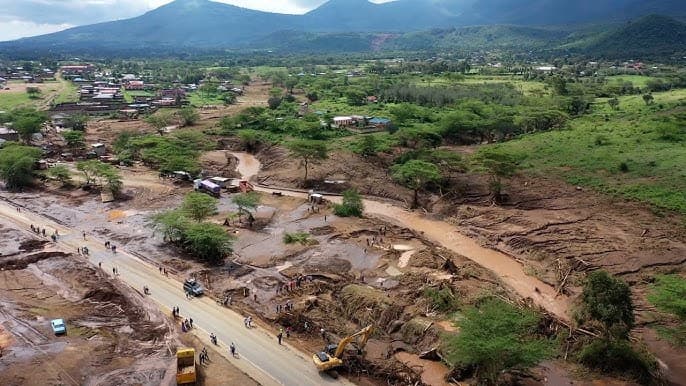
For the survivors of the Mai Mahiu flood tragedy, the passage of time has done little to heal their wounds or rebuild their lives. Twenty months after a blocked railway culvert unleashed a deadly torrent that claimed over 60 lives, a majority of the displaced families remain homeless, their hopes worn thin by what they describe as a series of broken promises.
The disaster, which struck in the dead of night on April 29, 2024, swept away homes, farms, and futures in the villages of Kamuchira, Jerusalem, and Ruiru. In the immediate aftermath, the highest levels of government pledged swift and comprehensive support. President William Ruto personally visited the devastated area and assured survivors they would be resettled.
The government announced a significant financial package to aid the victims. Deputy President Rigathi Gachagua confirmed the allocation of KES 300 million (approx. $2.33 million) for the construction of new homes for the 185 displaced families. A separate KES 250 million was set aside for the resettlement process itself. Yet, for many, these pledges remain just that. “The government forgot us after making many promises,” noted Bernard Kamau, a teacher who lost his two sons in the flood.
The primary obstacle to resettlement has been a stalemate over land prices. According to Deputy President Kithure Kindiki, the government’s KES 250 million budget for land acquisition proved insufficient, as landowners in the area demanded higher prices than the government was willing to pay. This has left scores of families struggling to pay rent for temporary housing, their lives suspended as they await a permanent solution.
The psychological and economic toll on the survivors is immense. Many, like Mary Muthoni, who lost eight family members, are grappling with deep trauma alongside financial ruin. The floods not only destroyed homes but also rendered farmland unusable, stripping away livelihoods. The once-fertile soil is now buried under rocks and silt, making a return to their old lives impossible for many.
While government assistance has faltered, some humanitarian aid has trickled in from organizations and well-wishers. The Kenya Red Cross was active in the initial search and rescue operations, and more recently, Rotary International and the Scann Foundation have constructed and handed over 18 new homes to some of the most affected families. However, this support, while vital, cannot meet the scale of the need.
Survivors have even petitioned Parliament to intervene and expedite the resettlement process, highlighting their worsening economic and mental health challenges. For many, the sound of rain now brings a fresh wave of trauma. The question of accountability also lingers, with some survivors questioning whether negligence on the part of Kenya Railways contributed to the disaster.
As another rainy season approaches, the families of Mai Mahiu are not just hoping for new houses; they are searching for a sense of security and a sign that their government has not forgotten them. Their plea is for the promises made in the glare of television cameras to be honoured in the quiet reality of their daily struggle.
Keep the conversation in one place—threads here stay linked to the story and in the forums.
Sign in to start a discussion
Start a conversation about this story and keep it linked here.
Other hot threads
E-sports and Gaming Community in Kenya
Active 9 months ago
The Role of Technology in Modern Agriculture (AgriTech)
Active 9 months ago
Popular Recreational Activities Across Counties
Active 9 months ago
Investing in Youth Sports Development Programs
Active 9 months ago
Key figures and persons of interest featured in this article