We're loading the full news article for you. This includes the article content, images, author information, and related articles.
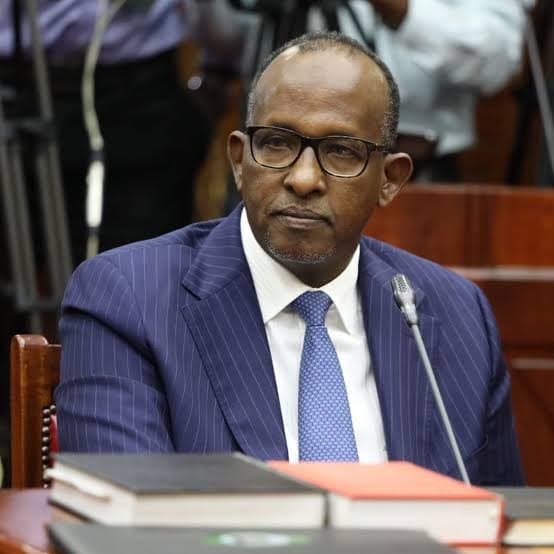
Duale has issued a sharp rebuttal to claims by Rigathi Gachagua that the Social Health Authority faces total collapse within the next six months.

The political divide between the national government and former Deputy President Rigathi Gachagua has escalated into a direct confrontation over the viability of the Social Health Authority (SHA), a central pillar of the administration's Universal Health Coverage agenda. Cabinet Secretary Aden Duale, in a sharp rebuttal to recent predictions, has openly challenged Gachagua to substantiate claims that the newly restructured healthcare funding system is destined to collapse within the next six months.
This ultimatum brings into sharp focus the precarious state of Kenya's healthcare financing sector, which has been undergoing a turbulent transition from the defunct National Hospital Insurance Fund (NHIF). For millions of Kenyans who depend on government-subsidized medical care, the public spat between these high-ranking figures is not merely a political distraction it represents the uncertainty surrounding the very mechanism that pays for their chemotherapy, maternity care, and emergency surgeries. With the SHA currently struggling to normalize operations, the stakes for the administration and the public could not be higher.
The controversy stems from allegations made by Gachagua, who has consistently cited internal intelligence to suggest that the Social Health Authority is built on a foundation of operational incompetence and impending fiscal failure. His assertion that the entity will be insolvent or paralyzed within six months strikes at the heart of the government's ambitious shift toward a digitized, contribution-based healthcare model. For a government that has staked its legacy on the success of the Bottom-Up Economic Transformation Agenda, the collapse of the SHA would be a catastrophic policy failure.
The transition to the SHA has been plagued by significant challenges since its inception, raising questions about whether the implementation roadmap was sufficiently rigorous. The system has faced numerous hurdles, including:
Economists and public health analysts tracking the transition point to the massive funding gap as a primary indicator of risk. While the government maintains that the new system is designed to broaden the pool of contributors and ensure sustainability, independent data suggests that the projected revenue targets are far from being met. Should the authority fail to meet its monthly payout obligations to hospitals, the ripple effect would be immediate: hospitals would likely stop accepting SHA cards, effectively leaving millions of low-income citizens without coverage.
The financial pressure is compounded by the sheer scale of the population that requires subsidized care. Approximately 15 million Kenyans fall into the category of indigent or vulnerable households, whose premiums must be fully covered by the exchequer. If the national treasury encounters cash flow constraints—a scenario that has become more frequent given the broader fiscal consolidation efforts—the funding for these premiums becomes the first target for budget cuts. This reality lends credibility to Gachagua's claims of potential collapse, even if the timing he proposes remains a matter of intense political debate.
In Nairobi, the sentiment on the ground is one of guarded anxiety. At a major referral hospital, the administrator, who requested anonymity to avoid government reprisal, described the situation as a daily balancing act. The facility is currently owed hundreds of millions of shillings in pending bills, which has forced them to reduce the intake of elective procedures to prioritize emergency cases. For a patient waiting for a critical surgery, the administrative war between Duale and Gachagua is irrelevant the only reality is the refusal of treatment.
Meanwhile, the government remains defiant. Cabinet Secretary Duale has emphasized that the transition challenges are typical of any major institutional reform and that the government is committed to refining the system rather than abandoning it. The challenge for the administration is not just to refute Gachagua's claims but to demonstrate through tangible performance that the SHA can handle the volume of care required by the population. As of March 2026, the rhetoric remains heated, but the metrics of success—stable claims processing, consistent provider payments, and seamless patient access—remain the only true test of the system's health.
The Kenyan experience with health financing reform is not unique. Globally, countries that have attempted to leapfrog from disjointed, contributory health insurance schemes to universal coverage models often encounter similar barriers. The experience in nations such as Thailand, which successfully rolled out its "30 Baht" scheme, underscores that success relies on aggressive state funding and a robust IT infrastructure—the very two areas where the SHA has faced the most criticism. As the timeline ticks toward the six-month mark cited by Gachagua, the government is under immense pressure to finalize its digital integration and clear the backlog of provider payments.
Whether the SHA thrives or falters, the ultimatum issued by Duale has shifted the burden of proof. By daring the former Deputy President to present his dossier, the government has essentially invited a high-stakes audit of its most vital public service. The coming months will likely see a flurry of technical interventions as the state attempts to stabilize the system, with the public watching closely to see if the authority is a blueprint for national progress or a cautionary tale of institutional overreach.
As the debate continues to intensify, one fact remains immutable: the stability of the nation's healthcare system is too vital to be left to the mercy of political maneuvering. If the SHA is indeed on the brink, the solution will not be found in arguments between political heavyweights, but in the transparent and efficient management of the funds and data that keep the nation alive.
Keep the conversation in one place—threads here stay linked to the story and in the forums.
Sign in to start a discussion
Start a conversation about this story and keep it linked here.
Other hot threads
E-sports and Gaming Community in Kenya
Active 10 months ago
The Role of Technology in Modern Agriculture (AgriTech)
Active 10 months ago
Popular Recreational Activities Across Counties
Active 10 months ago
Investing in Youth Sports Development Programs
Active 10 months ago
Key figures and persons of interest featured in this article