We're loading the full news article for you. This includes the article content, images, author information, and related articles.
William Kabogo attacks DP Gachagua’s leadership style, terming it "revenge politics" and arguing that the region’s interests are better served by sticking with President Ruto.
By Senior Political Affairs Correspondent
In a stark escalation of intraregional political tensions, ICT Cabinet Secretary William Kabogo has publicly rebuked former Deputy President Rigathi Gachagua, accusing him of engaging in what he terms “politics of revenge” that could undermine the unity and development gains of Kenya’s politically influential Mt. Kenya region. The interventions come as 2027 electoral positioning intensifies across the country.
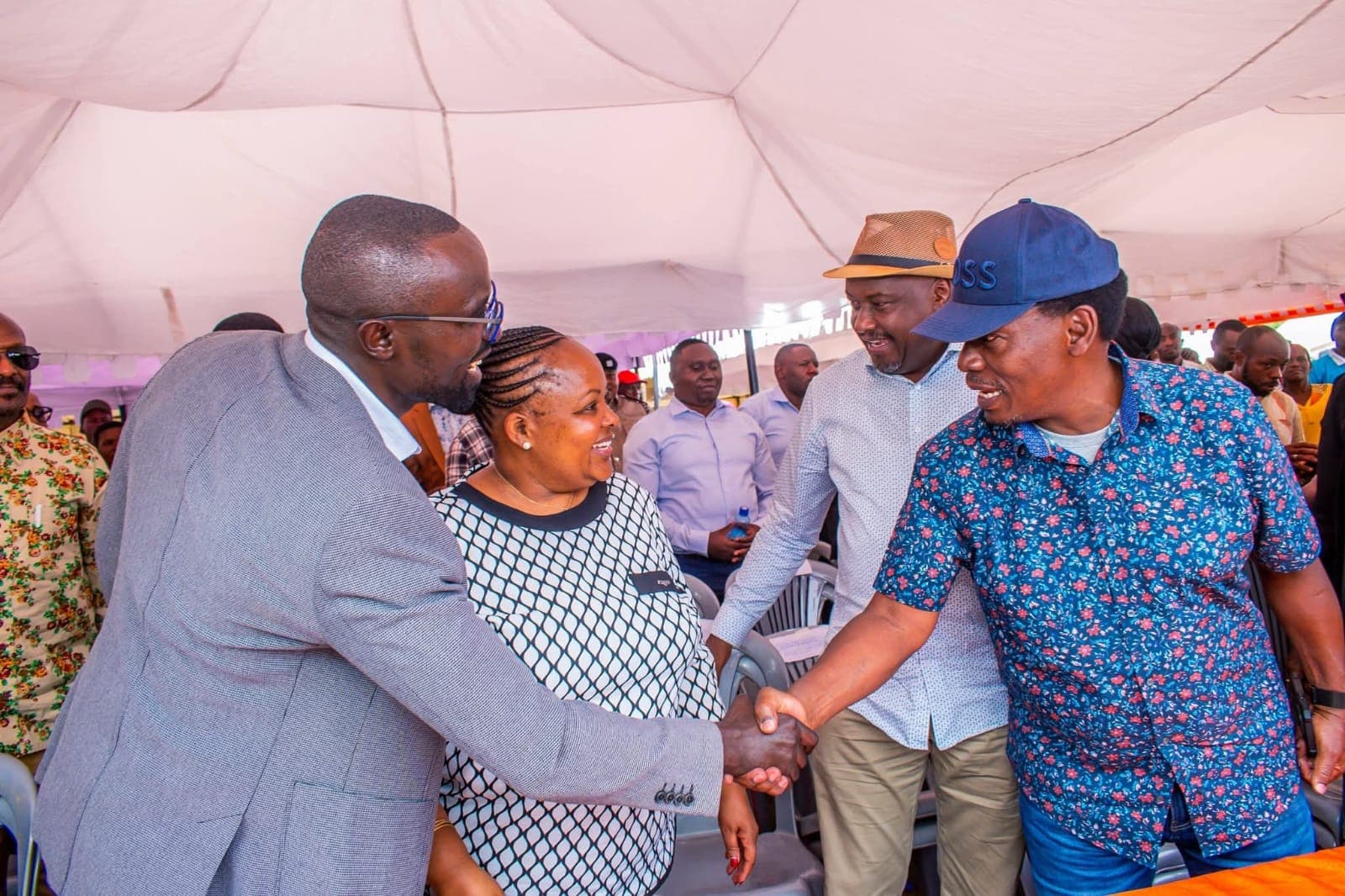
At a public engagement forum held on Saturday at Kianwe Primary School in Ndia, Kirinyaga West, Kabogo dismissed Gachagua’s narrative that Mt. Kenya is under siege politically and socially. He argued that recent commentary from the former deputy president risks alienating allies and weakening the region’s collective bargaining strength with the national government.
Kabogo specifically labelled Gachagua’s calls for President William Ruto to accept a “one-term presidency” as reckless and dangerous, asserting that such rhetoric fuels division rather than offering constructive leadership. Emphasising the region’s ongoing development trajectory under President Ruto, Kabogo stated that “Mt. Kenya is safer and better in the hands of President Ruto,” and criticised his rivals for lacking a substantive vision beyond confrontation.
Kabogo’s language — framing Gachagua’s campaign as vindictive — reflects deeper fault lines within the Kenya Kwanza coalition and the broader political landscape in Mt. Kenya. His description of Gachagua’s approach as driven by personal grievance rather than developmental priorities represents a strategic attempt to recast the narrative around leadership and governance in the region.
The ICT CS underscored ongoing infrastructure and social projects — from expressway expansions to affordable housing initiatives — as evidence of the government’s delivery on economic promises to local constituencies, suggesting that divisive rhetoric could jeopardise these gains.
While Kabogo’s remarks dominate the latest round of political exchanges, Gachagua has publicly rejected claims that his actions are rooted in revenge. In interviews preceding Kabogo’s comments, the former Deputy President characterised his stance as a fight for good governance, accountability and the political relevance of the Mt. Kenya electorate ahead of the 2027 general election cycle — framing his critique of the administration as principled rather than personal.
Observers note that Gachagua’s positioning taps into wider public debates about leadership style, economic performance and generational expectations, particularly among younger voters across central Kenya.
The Mt. Kenya region remains a critical electoral bloc in national contests, having delivered overwhelming support for President Ruto in the 2022 election — with nearly 77 % of valid votes in the region cast for him — underscoring its strategic weight in national politics.
Kabogo’s comments are likely aimed at consolidating pro-Ruto sentiment and pre-empting the emergence of rival leadership claims within the Kenya Kwanza fold. By portraying political dissent as counterproductive to regional interests, pro-government figures are signalling a broader strategy to maintain unity and influence.
Political analysts suggest that these exchanges are symptomatic of deeper power negotiations as Kenya’s political actors position themselves in the lead-up to the 2027 general elections, where alliances and regional loyalties will be intensely contested.
William Kabogo has sharply criticised Rigathi Gachagua, accusing him of “revenge politics” that could weaken Mt. Kenya’s cohesion and development prospects.
Kabogo defended President William Ruto’s leadership record and appealed for regional unity under the current administration.
Gachagua denies personal vendettas, framing his push as principled political engagement.
These developments reflect wider strategic realignments in a region that remains pivotal to national electoral outcomes.
Keep the conversation in one place—threads here stay linked to the story and in the forums.
Sign in to start a discussion
Start a conversation about this story and keep it linked here.
Other hot threads
E-sports and Gaming Community in Kenya
Active 9 months ago
The Role of Technology in Modern Agriculture (AgriTech)
Active 9 months ago
Popular Recreational Activities Across Counties
Active 9 months ago
Investing in Youth Sports Development Programs
Active 9 months ago
Key figures and persons of interest featured in this article