We're loading the full news article for you. This includes the article content, images, author information, and related articles.
A humpback whale has freed itself from a sandbank near the German coastal city of Lübeck, after a series of rescue attempts. Rescue teams now hope the whale will swim out of the shallow waters of Lübeck Bay and into the wider sea.
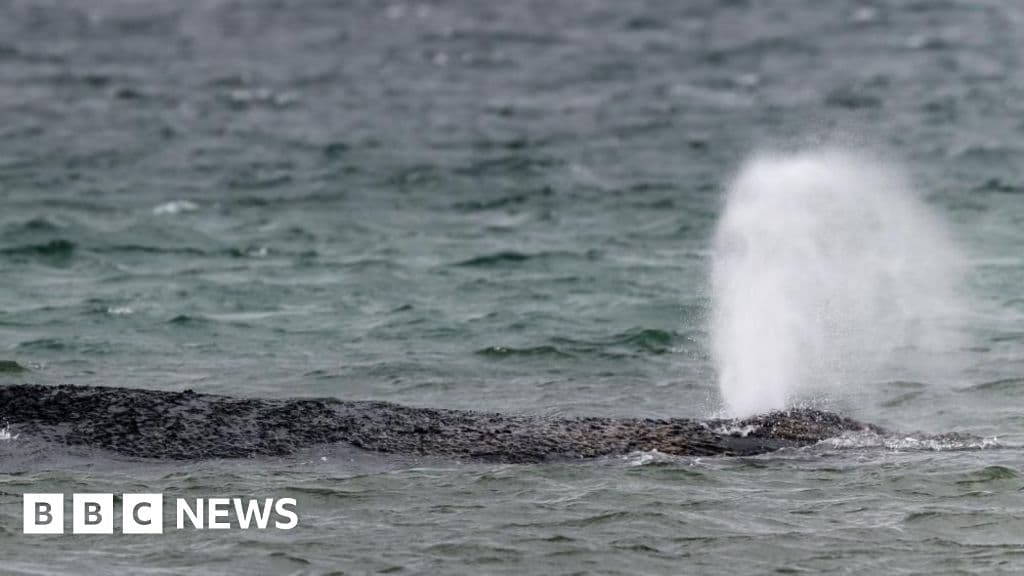
A massive humpback whale, once perilously pinned against the shifting sands of the German Baltic coast, has finally returned to deeper waters, marking the successful conclusion of a grueling, high-stakes international rescue operation. After being stranded near the resort town of Timmendorfer Strand since last Monday, the 12-meter (40-foot) cetacean broke free from the shallows of Lübeck Bay, a success confirmed by the Institute for Terrestrial and Aquatic Wildlife Research.
This operation was not merely a local environmental story it was a complex logistical challenge that tested the limits of human intervention in wildlife survival. For experts monitoring the event, the rescue underscores a growing global anxiety regarding the vulnerability of marine megafauna as navigation patterns shift, whether due to climate change, oceanic noise, or subtle alterations in migratory routes that are increasingly bringing these giants into dangerous, shallow coastal corridors.
The situation near Lübeck became critical by late Thursday. With the tide offering no reprieve and the whale physically exhausted from the shallow entrapment, officials were forced to abandon passive observation in favor of active engineering. Two massive mechanical diggers were deployed to dredge a channel, a desperate measure that required precision to avoid distressing the animal further.
Biologist Robert Marc Lehmann, who led the efforts to coax the mammal into the newly created passage, described the operation as a delicate balance between necessity and risk. Dredging near a stranded whale poses extreme dangers, including acoustic disruption and physical injury from machinery. The success of the operation relied heavily on the coordination of local authorities and the scientific rigor of the Institute for Terrestrial and Aquatic Wildlife Research, who managed the whale's health metrics throughout the ordeal.
Humpback whales, typically denizens of the open Atlantic and high-latitude feeding grounds, are rare visitors to the enclosed, brackish waters of the Baltic Sea. Their presence in this region is often indicative of navigation errors, frequently linked to juvenile whales that have strayed from their primary migration paths. Marine scientists argue that these incidents are not necessarily a sign of a shifting population, but rather a tragic consequence of individual animals becoming disoriented.
The Baltic, with its complex geography and shallow shelf, acts as a trap. Unlike the deep oceanic channels where humpbacks can echolocate effectively, the Baltic creates auditory interference and physical barriers. When an animal of such immense size—weighing several tonnes—enters these waters, the likelihood of stranding increases exponentially. Experts are currently analyzing whether oceanic anomalies or prey-chasing behaviors drove this specific animal so far off course, a question that remains at the center of ongoing research in German marine biology circles.
While the geography of the Baltic Sea differs vastly from the Indian Ocean, the humanitarian and ecological imperatives of whale rescue remain universal. For observers in Nairobi and coastal regions like Lamu or Watamu, the German operation offers a crucial lesson in institutional preparedness. When a marine mammal strands in Kenya, the response is often hampered by limited equipment and the logistical difficulty of reaching remote coastal stretches.
In Kenya, the Kenya Wildlife Service (KWS) and local community conservation groups often face similar scenarios, albeit with different species. The successful German effort highlights the importance of what officials call the "Rescue Readiness Protocol":
Kenyan marine researchers have long advocated for a similar level of dedicated, rapid-response infrastructure. As climate change continues to alter the distribution of marine life, the frequency of "wrong-turn" strandings in the Indian Ocean may rise, making the German case a blueprint for future policy.
As the humpback whale drifts further into the Baltic Sea, under the watchful gaze of monitoring vessels, the relief is palpable. Yet, the broader question of human responsibility remains. We have intervened to save one life, a noble and necessary act. However, the true challenge lies in understanding the environmental shifts that are driving these giants into our backyards. Conservation is no longer just about protecting the ocean it is about managing the increasingly fragile boundary between human activity and the wild, unpredictable movements of the natural world.
Whether this whale navigates successfully back to its ancestral grounds or requires further aid remains the urgent concern of the scientists currently trailing it. The event serves as a reminder that even in the modern, technologically advanced era, the survival of the world's largest mammals remains deeply entwined with the choices and actions of those who live along the shoreline.
Keep the conversation in one place—threads here stay linked to the story and in the forums.
Sign in to start a discussion
Start a conversation about this story and keep it linked here.
Other hot threads
E-sports and Gaming Community in Kenya
Active 10 months ago
The Role of Technology in Modern Agriculture (AgriTech)
Active 10 months ago
Popular Recreational Activities Across Counties
Active 10 months ago
Investing in Youth Sports Development Programs
Active 10 months ago



