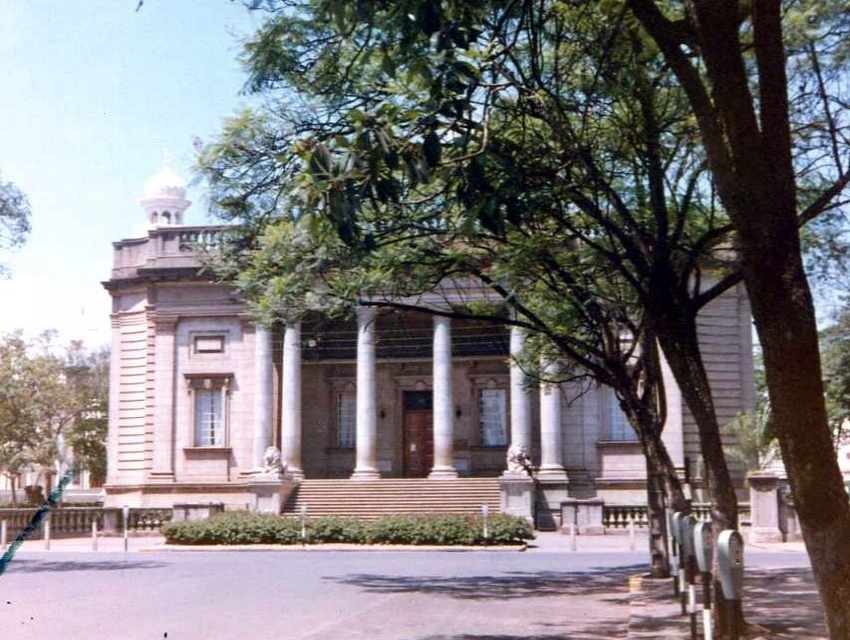
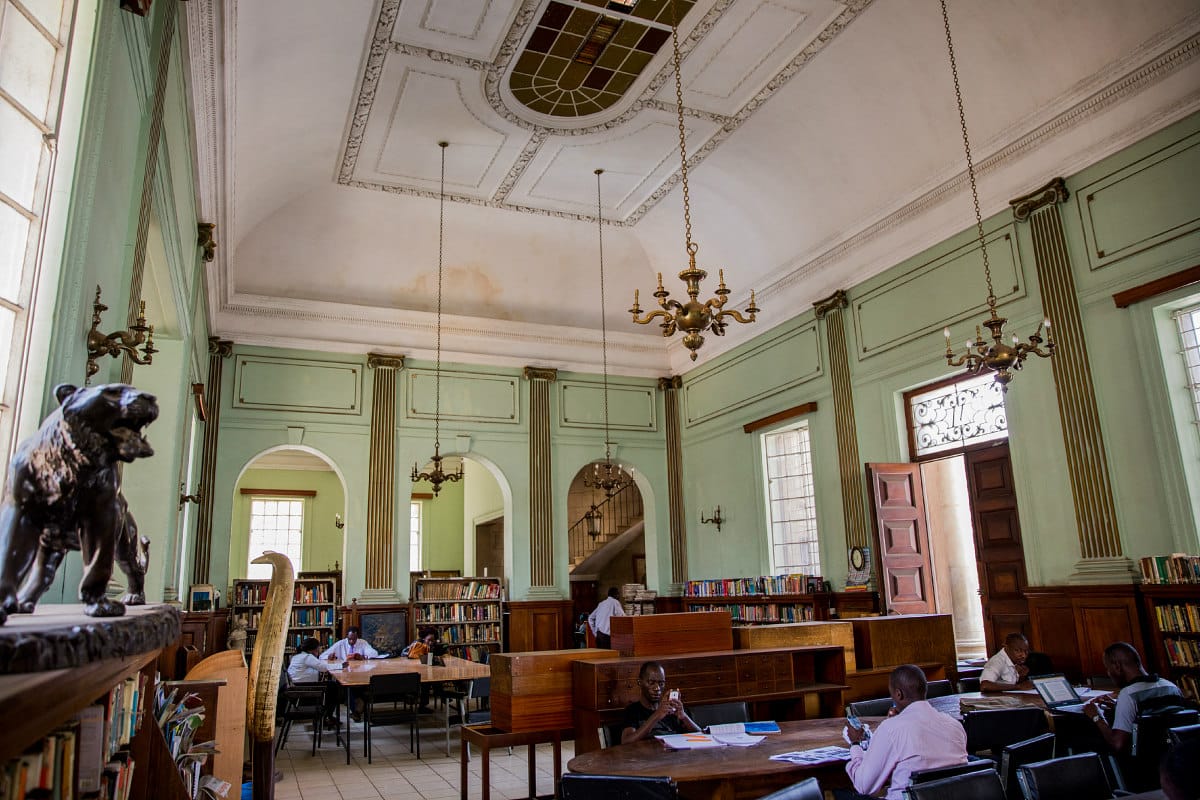
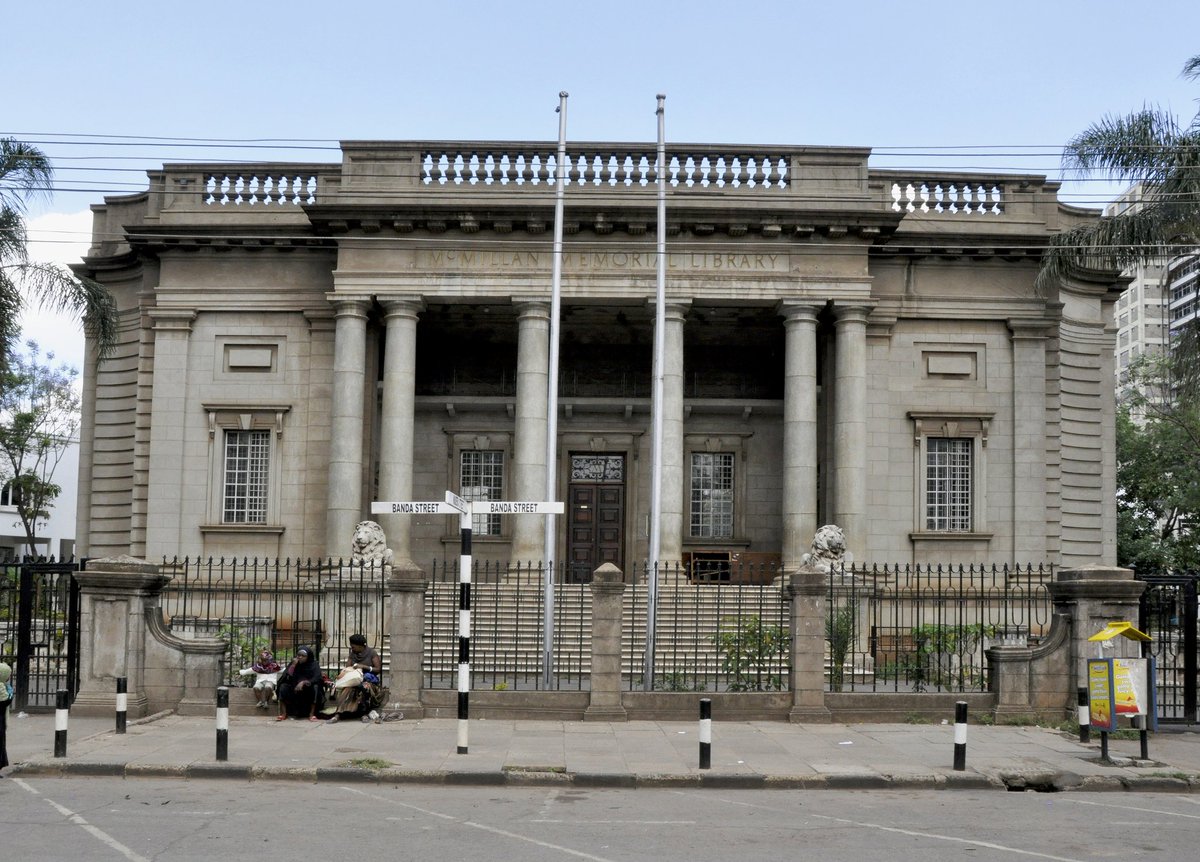
The McMillan Memorial Library stands as Nairobi’s oldest public library and one of the city’s most enduring cultural landmarks. Established in 1931 through a bequest from British settler Sir William Northrup McMillan, the library was intended as a center of learning and intellectual exchange. Located along Wabera Street in the heart of the city, it has witnessed Nairobi’s transformation from a colonial outpost into a modern African metropolis. Architecturally, the library is a striking example of neoclassical design, distinguished by its symmetrical façade, tall columns, and the iconic stone lions guarding its entrance. These lions have become symbolic of the institution itself, representing knowledge, vigilance, and legacy. The building’s design reflects early 20th-century European influences while remaining firmly embedded in Nairobi’s urban identity. Inside, the McMillan Memorial Library houses an extensive collection of rare books, manuscripts, newspapers, and archival materials, with particular strength in East African history and colonial-era records. Scholars, students, and researchers have long relied on its collections to study Kenya’s political, social, and cultural evolution. Despite its age, the library continues to serve as an important intellectual resource, especially for historical and academic research. Designated as a protected heritage site, the McMillan Memorial Library is more than just a repository of books—it is a quiet refuge amid the bustle of Nairobi’s central business district. Its calm reading rooms offer a rare sense of stillness in the city, making it a cherished space for reflection and study. As Nairobi continues to grow and modernize, the library remains a powerful reminder of the city’s layered past and enduring commitment to knowledge.
Trusted businesses serving Nairobi

