We're loading the complete profile of this person of interest including their biography, achievements, and contributions.

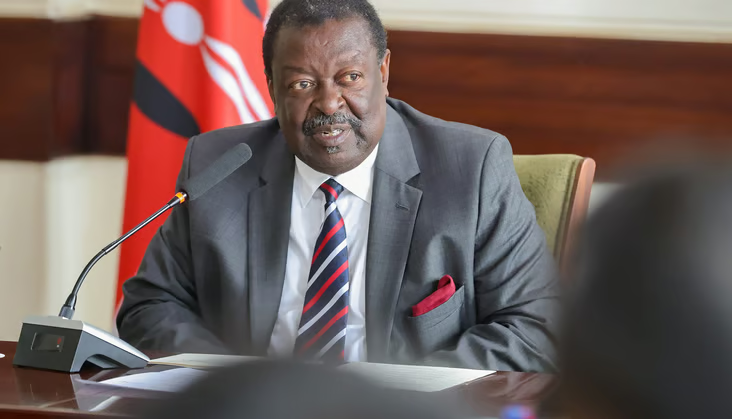
Prime Cabinet Secretary of Kenya (2022–present)
Born
1960(66 yrs)
Region
Vihiga
Constituency
Sabatia Constituency
Public Views
Experience
Documented career positions
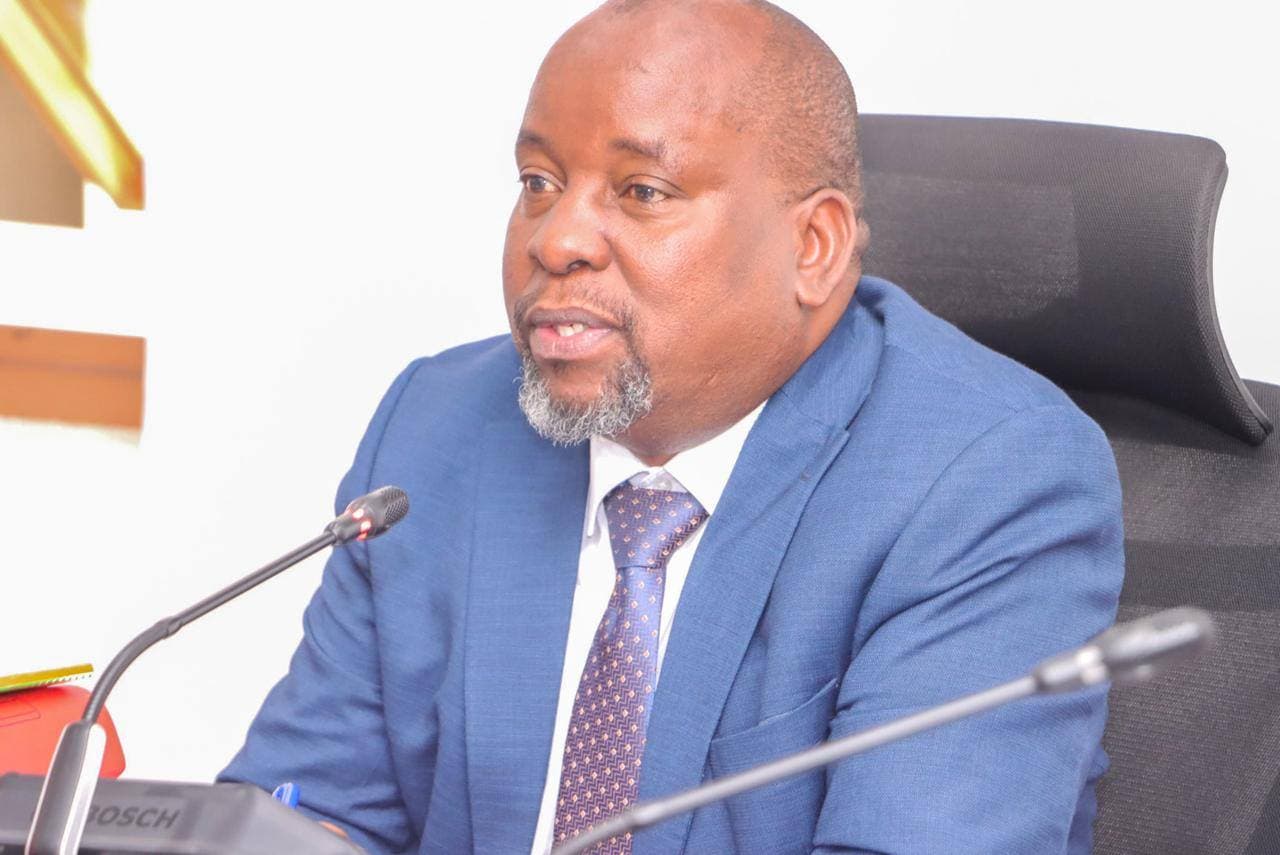
Wycliffe Musalia Mudavadi is a prominent Kenyan politician, economist, and statesman currently serving as the Prime Cabinet Secretary of Kenya. Born on September 21, 1960, in Sabatia, Vihiga County, he is a scion of a well-known political family, the son of the late Moses Mudamba Mudavadi, a powerful and influential minister under the administration of Kenya’s second president, Daniel arap Moi. Raised in a Quaker Christian family, Mudavadi has famously maintained his father’s tradition of not swearing oaths of office, citing his religious convictions. Mudavadi’s academic background includes early education at Nairobi Primary School, followed by secondary studies at Jamhuri High School and Nairobi School, where he completed his A-levels. He went on to attend the University of Nairobi, graduating with a Bachelor of Arts degree in Land Economics. During his schooling years, he was an active rugby player, representing his institutions and later the Mean Machine RFC. His entry into elective politics was triggered by the death of his father in 1989. Following the vacancy in the Sabatia Constituency, Mudavadi ran for the seat in a by-election and was elected unopposed, marking the beginning of a long and storied parliamentary and cabinet career. Throughout the 1990s and early 2000s, he served in various high-level ministerial dockets under President Moi, including Minister for Supplies and Marketing (1989–1993), Minister for Finance (1993–1997), and Minister for Agriculture (1997–1999). During his tenure as Finance Minister, he was noted for his work on economic liberalization efforts. In 2002, he was appointed the seventh Vice-President of Kenya, a position he held briefly toward the end of the Moi administration. Following the defeat of the ruling KANU party in the 2002 general election, Mudavadi’s political path evolved as he navigated Kenya’s changing landscape. He later aligned with the Orange Democratic Movement (ODM), becoming a key figure in the "Pentagon" team. Following the contested 2007 presidential election and the subsequent post-election crisis, he served as Deputy Prime Minister and Minister for Local Government in the Grand Coalition Government (2008–2013) formed by President Mwai Kibaki and Prime Minister Raila Odinga. In 2012, Mudavadi resigned from his government position to pursue his own presidential bid, eventually forming the United Democratic Forum (UDF) party. He unsuccessfully contested the presidency in 2013, finishing third. Seeking to consolidate his political base, he later founded the Amani National Congress (ANC) in 2015. He remained a significant opposition figure, participating in the National Super Alliance (NASA) in 2017. However, ahead of the 2022 general election, he shifted his political allegiance, becoming a founding partner of the Kenya Kwanza Alliance led by William Ruto. Following the alliance’s victory, President Ruto appointed Mudavadi as the first Prime Cabinet Secretary, a position tasked with coordinating and supervising national government functions. Mudavadi is married to Tessie Shangatti Mudavadi, and together they have three children: Moses, Michael, and Maryanne. Known for a calm, measured, and often understated political style, Mudavadi is widely regarded as a veteran of Kenyan power-brokering, having served in diverse capacities across multiple presidential administrations for over three decades.
AI-powered civic intelligence rating
Former Vice President of Kenya (2002)
Deputy Prime Minister (2008–2013)
Graduated from the University of Nairobi with a Bachelor of Arts (Land Economics) in 1984.
Goldenberg Scandal (1990s): While serving as Finance Minister under President Moi, Mudavadi was linked to the infamous Goldenberg scandal, a major financial fraud involving government compensation for fictitious gold exports. Though he denied wrongdoing and was not convicted, his name was often mentioned in discussions about high-level complicity.
2013 Presidential Nomination Dispute: In 2012, Mudavadi briefly joined Uhuru Kenyatta’s Jubilee coalition with a signed agreement that Uhuru would step down in his favor as the presidential candidate. Days later, Uhuru reversed the deal, calling it a “deal with the devil,” causing a fallout that cast Mudavadi as politically indecisive
Elected as the Member of Parliament for Sabatia Constituency in a 1989 by-election following the death of his father.
Appointed Minister for Supplies and Marketing in 1989, becoming the youngest serving minister in Kenyan history at that time.
Appointed Minister for Finance in 1993, where he was credited with initiating sweeping economic reforms, privatizing state enterprises, and curbing runaway inflation.
Appointed Minister for Agriculture, Livestock Development and Marketing in 1997, overseeing reforms in the tea, sugar, and coffee sectors.
Appointed Minister for Information, Transport and Communications in 1999, playing a key role in the liberalization of the communications sector.
Served as the 7th Vice President of Kenya in 2002.
Appointed Deputy Prime Minister and Minister for Local Government in 2008, where he played a central role in the National Accord and Reconciliation negotiations.
Formed the Amani National Congress (ANC) political party in 2015.
Appointed as the first Prime Cabinet Secretary of Kenya on October 27, 2022.
Awarded an honorary degree of Doctor of Humane Letters in Peace and Sustainable Development by Masinde Muliro University of Science and Technology in December 2022.
Assumed the additional portfolio of Cabinet Secretary for Foreign and Diaspora Affairs in October 2023.
Appointed as the Acting Cabinet Secretary for Interior and National Administration in October 2024.
Fallout with NASA (2017–2022): After the 2017 elections, Mudavadi’s ANC was part of the NASA coalition led by Raila Odinga. However, tensions grew when Raila took the “People’s President” oath without consulting NASA principals. Mudavadi’s perceived detachment from the protest actions led to accusations of betrayal and weak political resolve.
In the early 1990s, as Minister for Finance, Mudavadi faced accusations of culpability in the Goldenberg scandal, a major financial scam involving fraudulent export compensation claims. However, he was later cleared by the Bosire Commission of Inquiry, which concluded that he had acted as a whistleblower and attempted to block payments related to the scheme.
In 2010, while serving as Minister for Local Government, Mudavadi was investigated by the Kenya Anti-Corruption Commission regarding the City Council of Nairobi's procurement of cemetery land at an inflated price of KSh 283 million. He denied any personal involvement, and subsequent legal proceedings and witness testimonies indicated he did not financially benefit from the deal nor was he complicit in the procurement irregularities.
In 2025, Mudavadi faced significant public and media criticism regarding his handling of foreign affairs policy, specifically his defense of the deportation of Kenyan citizens from Tanzania, which critics labeled as a failure of diplomatic responsibility and a sign of poor foreign policy management.