We're loading the complete profile of this person of interest including their biography, achievements, and contributions.
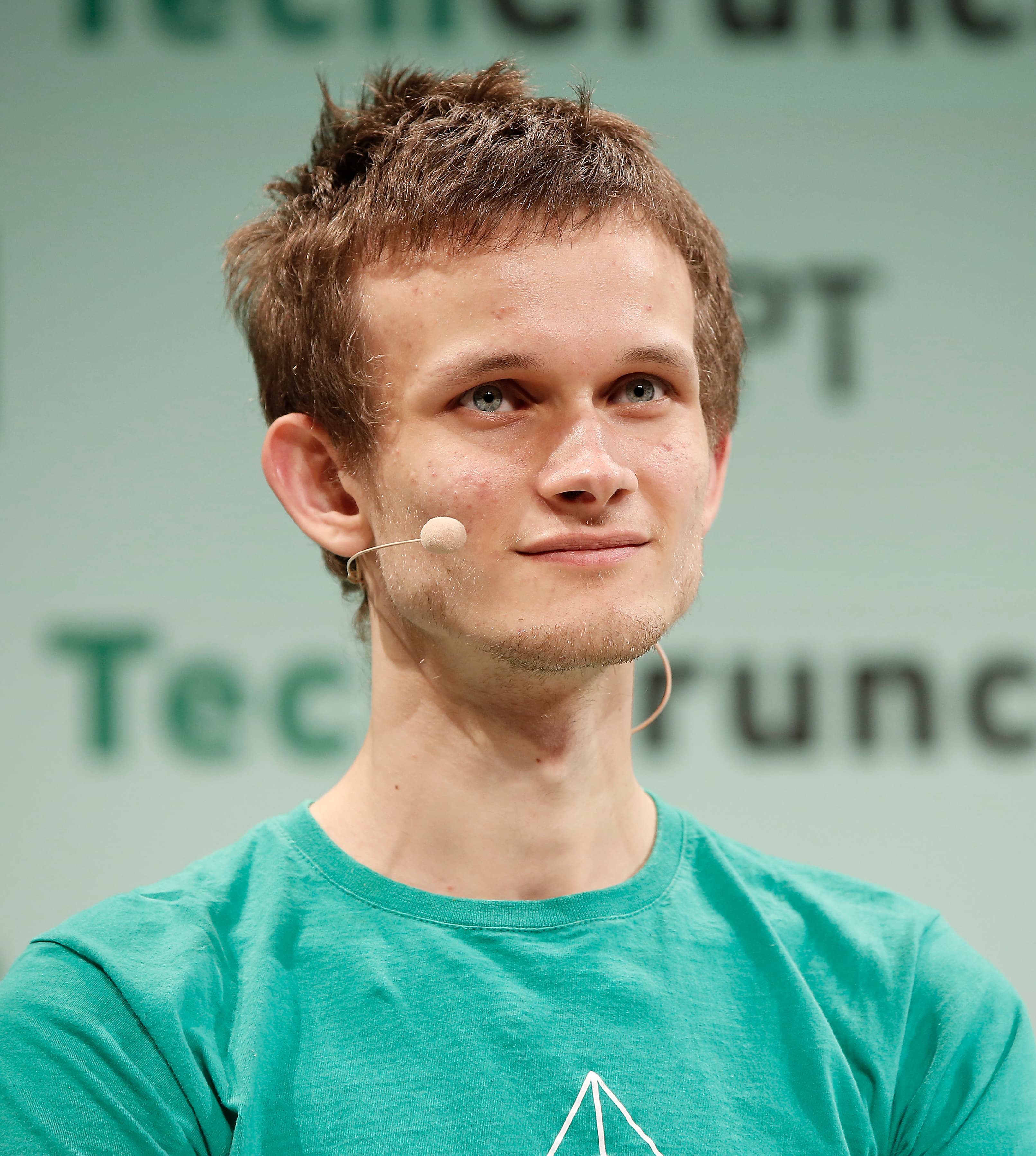
Co-Founder, Ethereum
Public Views
Experience
Documented career positions
Vitaly Dmitriyevich "Vitalik" Buterin (born January 31, 1994) is a Russian-Canadian computer programmer, writer, and primary co-founder of Ethereum, one of the world's most significant blockchain platforms. Recognized as a key figure in the cryptocurrency and decentralized technology sectors, Buterin has played a central role in evolving blockchain from a simple financial ledger into a programmable global infrastructure. Born in Kolomna, Russia, Buterin moved to Canada with his parents at the age of six. Showing early aptitude for mathematics, programming, and economics, he was placed in a program for gifted children during elementary school. He later attended The Abelard School, a private high school in Toronto, where he further cultivated his academic interests. After graduating high school, he enrolled at the University of Waterloo. During his tenure there, he worked as a research assistant for cryptographer Ian Goldberg, a key figure in the Tor Project. However, his academic trajectory shifted when, in 2014, he was awarded a $100,000 grant from the Thiel Fellowship—a program created by venture capitalist Peter Thiel to support young innovators—which led him to drop out of university to pursue blockchain development full-time. Buterin’s interest in cryptocurrency began in 2011 when he was introduced to Bitcoin by his father. Fascinated by the decentralized potential of the technology, he co-founded *Bitcoin Magazine* in 2011, serving as a writer and contributor to the nascent crypto-journalism space. Through this experience, he developed a deep understanding of blockchain limitations, specifically the inability of the Bitcoin network to facilitate complex, non-financial applications. In late 2013, Buterin published a white paper describing Ethereum, a blockchain platform featuring a built-in, Turing-complete programming language. His vision was to move beyond the limitations of Bitcoin, enabling developers to build decentralized applications (dApps) and smart contracts—self-executing agreements with terms written directly into code. Following the publication of the white paper, he gathered a team of co-founders, including Gavin Wood, Joseph Lubin, Anthony Di Iorio, Charles Hoskinson, and Mihai Alisie, to bring the project to life. The Ethereum network officially launched on July 30, 2015, with the "Frontier" release. Since the platform's inception, Buterin has remained a principal visionary for its development, guiding it through significant technical milestones, most notably "The Merge" in 2022, which transitioned Ethereum from a proof-of-work consensus mechanism to a more energy-efficient proof-of-stake model. Beyond his technical contributions, Buterin is widely recognized for his philanthropic efforts. He has made several high-profile donations using cryptocurrency, most notably a $1 billion donation in 2021 to India’s Crypto COVID-19 Relief Fund. His philanthropic portfolio focuses on areas such as pandemic research, longevity biotechnology, and the mitigation of existential risks associated with artificial intelligence. Through his writing and public speaking, Buterin continues to advocate for decentralized governance and the long-term, ethical development of internet infrastructure. In 2018, he received an honorary doctorate from the University of Basel in recognition of his contributions to the digital revolution.
AI-powered civic intelligence rating
Authored the original Ethereum whitepaper in 2013 fundamentally inventing the concept of programmable blockchains and smart contracts
Guided the historic highly complex Ethereum 'Merge' in 2022 transitioning the network to Proof-of-Stake and instantly reducing its global energy consumption by over 99 percent
Donated over 1 billion dollars in cryptocurrency (specifically Shiba Inu coin) to the India COVID-Crypto Relief Fund in 2021 executing one of the largest single philanthropic transfers in history
Frequently faces intense ideological pushback from 'Bitcoin Maximalists' who argue that Ethereum's frequent hard forks and transition to Proof-of-Stake prove the network is inherently centralized and controlled by a small oligarchy of developers
Criticized by early crypto adopters for failing to prevent the massive corporatization and regulatory capture of the Ethereum base layer by massive Wall Street financial institutions like BlackRock and Fidelity
In 2016, Buterin advocated for a hard fork of the Ethereum blockchain to recover funds stolen during 'The DAO' hack, a decision that caused a major community rift, violated the principle of blockchain immutability for some, and resulted in the split of the network into Ethereum and Ethereum Classic.
Awarded an honorary doctorate from the University of Basel for his monumental contributions to cryptography and economics
Co-founded Bitcoin Magazine in 2011, serving as one of its first writers and editors.
Won a bronze medal at the International Olympiad in Informatics in 2012.
Published the Ethereum whitepaper, titled 'A Next-Generation Smart Contract and Decentralized Application Platform,' in 2013.
Awarded the Thiel Fellowship in 2014, receiving a $100,000 grant to pursue full-time development of Ethereum.
Won the World Technology Award in the IT Software category in 2014.
Launched the Ethereum blockchain mainnet on July 30, 2015.
Listed on the Fortune 'The Ledger 40 Under 40' list in 2018.
Listed on the Forbes '30 Under 30' list in the Finance category in 2018.
Received an honorary doctorate from the Faculty of Business and Economics at the University of Basel on November 30, 2018.
Named one of the 100 most influential people in the world by Time magazine in 2021.
Donated over $1 billion in SHIBA tokens to India’s Crypto Covid Relief Fund in 2021.
Published the book 'Proof of Stake: The Making of Ethereum and the Philosophy of Blockchains' in 2022.
Buterin has been a vocal critic of self-proclaimed Bitcoin inventor Craig Wright, publicly labeling him a 'fraud' and 'scammer' on several occasions, including during a 2018 conference, which led to ongoing public disputes and threats of legal action from Wright.
Buterin has faced recurring criticism from community members and developers regarding his outsized influence over Ethereum's development roadmap and governance, with some, including prominent developers, arguing that the concentration of power within the Ethereum Foundation contradicts the network's decentralized principles.
In 2021, Buterin faced backlash from some members of the crypto community after donating approximately $1 billion worth of SHIB meme coins to the India COVID-Crypto Relief Fund, an action that triggered a significant sell-off and a sharp price decline in the token.