We're loading the complete profile of this person of interest including their biography, achievements, and contributions.
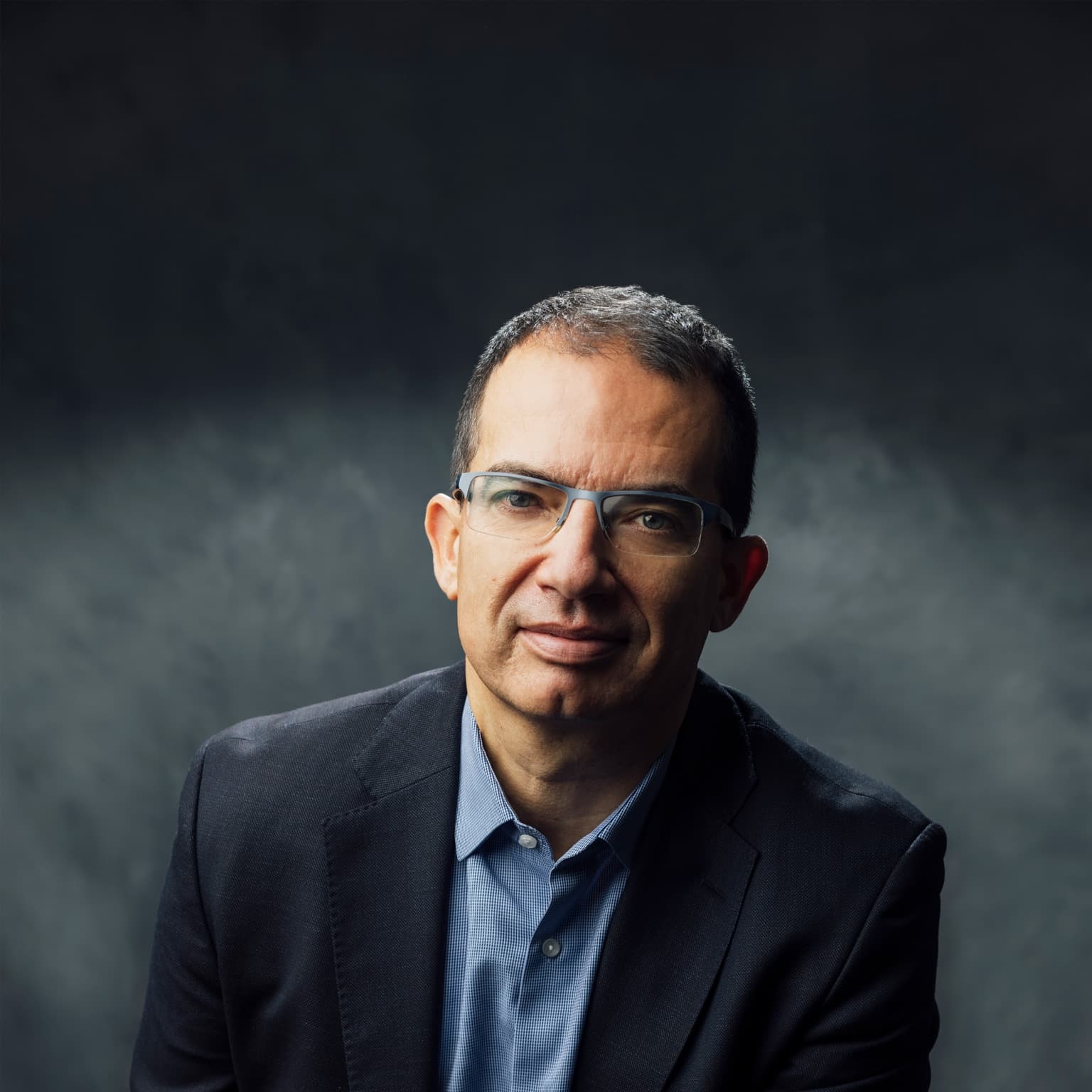
CEO, Moderna
Public Views
Experience
Documented career positions
Stéphane Bancel is a French business executive best known for his long-standing leadership as the chief executive officer of Moderna, the American biotechnology company that gained global prominence for its development of messenger RNA (mRNA) technology and the COVID-19 vaccine. Born on July 20, 1972, in Marseille, France, Bancel’s career has been characterized by a transition from traditional pharmaceutical manufacturing and diagnostics to the cutting edge of genomic medicine. Bancel’s academic background is rooted in engineering and business. He earned a Master of Engineering degree from CentraleSupélec (formerly École Centrale Paris) and a Master of Science in chemical engineering from the University of Minnesota. He later completed a Master of Business Administration (MBA) from Harvard Business School, providing him with a dual foundation in technical sciences and corporate strategy that would define his professional trajectory. His early career began in the late 1990s and early 2000s, where he gained significant experience in the global pharmaceutical industry. From 2000 to 2006, Bancel held several leadership positions at Eli Lilly and Company, including serving as the managing director for Belgium and as an executive director of global manufacturing strategy and supply chain. Prior to his tenure at Eli Lilly, he worked as the Asia-Pacific sales and marketing director for the French diagnostics company bioMérieux. He returned to bioMérieux in 2007 to serve as its chief executive officer, a role he held until 2011. During his time at bioMérieux, he was credited with improving the company's financial margins and global operations. In 2011, Bancel joined the board of directors of the nascent biotechnology company Moderna, which had been founded just a year prior. In October of that same year, he was appointed CEO of the company. Under his leadership, Moderna pivoted toward the ambitious goal of harnessing mRNA technology to create a new class of prophylactic and therapeutic medicines. Bancel steered the company through its formative years as a private venture, ultimately leading Moderna to a successful initial public offering (IPO) in December 2018, which was the largest in the history of the biotechnology industry at that time. The most defining period of Bancel’s career occurred in 2020, following the emergence of the SARS-CoV-2 virus. Under his direction, Moderna mobilized its mRNA platform to develop a vaccine candidate (mRNA-1273) in record time. The company received Emergency Use Authorization from the U.S. Food and Drug Administration in December 2020, followed by full FDA approval for the vaccine—marketed as Spikevax—in January 2022. This achievement solidified Bancel’s reputation as a key figure in global public health responses to the pandemic. Beyond his role at Moderna, Bancel has been a special partner at Flagship Pioneering, the venture capital firm that incubated Moderna, since 2013. He has also served on the boards of several other organizations, including Indigo Agriculture and Qiagen. His professional contributions have earned him various recognitions, including his nomination as a Chevalier of the Legion d'honneur in France in 2022 and his election to the U.S. National Academy of Engineering in 2024. Bancel resides in the Boston area with his wife and two children.
Scaled Moderna from an early-stage, unproven biotech startup into a global pharmaceutical titan, validating mRNA technology as a fundamental new pillar of human medicine
Led the development of Spikevax, effectively co-saving the global economy alongside Pfizer during the COVID-19 pandemic and generating tens of billions in rapid revenue
Routinely targeted by the US Congress (particularly Senator Bernie Sanders) regarding Moderna's decision to quadruple the commercial price of its COVID-19 vaccine to $130 per dose following the end of government purchasing contracts, despite receiving massive taxpayer funding (Operation Warp Speed) for its initial development
Engaged in massive, highly complex patent infringement lawsuits against Pfizer and BioNTech, arguing they illegally copied Moderna's foundational mRNA technology to build their rival vaccine
His notoriously intense, hyper-demanding management style reportedly led to massive executive turnover at Moderna in the years prior to the pandemic, earning the company a reputation as a brutal place to work
Pioneered highly complex partnerships with Merck to utilize mRNA to train the immune system to recognize and attack specific, personalized cancer mutations (neoantigens)
Awarded the Legion of Honour by the French government
Earned a Master of Engineering from École Centrale Paris in 1995
Earned a Master of Science in chemical engineering from the University of Minnesota in 1995
Graduated with a Master of Business Administration from Harvard Business School in 2000
Served in various roles at Eli Lilly and Company, including Managing Director for Belgium and Executive Director of global manufacturing strategy, from 2000 to 2006
Appointed Chief Executive Officer of the French diagnostics company bioMérieux in 2007, serving until 2011
Joined the board of directors of Moderna in March 2011
Appointed Chief Executive Officer of Moderna in October 2011
Joined Flagship Pioneering as a partner in 2013
Named Ernst & Young New England Entrepreneur of the Year in 2017
Led Moderna through its initial public offering in December 2018
Oversaw the development and emergency use authorization of the Moderna COVID-19 vaccine in 2020
Received the 2021 Pontifical Hero Award for Inspiration for leadership during the pandemic
Named a 2021 Uber ELITE Winner by PM360 for leadership in healthcare and life sciences
Named a Chevalier (Knight) of the Légion d'Honneur by the French government in 2022
Received the Bower Award for Business Leadership from The Franklin Institute in 2022
Elected to the U.S. National Academy of Engineering in 2024
In July 2020, Stéphane Bancel and other Moderna executives faced public scrutiny and allegations of potential insider trading after modifying pre-planned stock-trading programs shortly after announcing positive COVID-19 vaccine trial results. While the trades were executed under Rule 10b5-1 plans and no charges of insider trading were filed, the timing of the modifications raised questions about executive conduct during the pandemic.
In March 2023, Bancel testified before the U.S. Senate Committee on Health, Education, Labor and Pensions, where he faced intense criticism from lawmakers, including Senator Bernie Sanders, for Moderna's decision to quadruple the price of its COVID-19 vaccine to approximately $130 per dose. Critics labeled the move 'corporate greed,' arguing that it disregarded the billions of dollars in federal funding and taxpayer support the company received to develop the vaccine.
In 2021, Bancel and Moderna faced mounting public criticism and pressure from global health advocates and officials over the distribution of COVID-19 vaccines to lower-income countries. Critics accused the company of prioritizing profits and wealthier nations over equitable global access, a charge Bancel publicly disputed by asserting the company was fulfilling its contractual commitments.
In February 2022, Bancel faced a viral misinformation campaign on social media that falsely alleged he had abruptly dumped $400 million in company stock and deleted his Twitter account to hide negative information. Fact-checking organizations clarified that the stock sales were part of a long-standing, pre-planned liquidation strategy and not an abrupt or irregular dump.