We're loading the complete profile of this person of interest including their biography, achievements, and contributions.
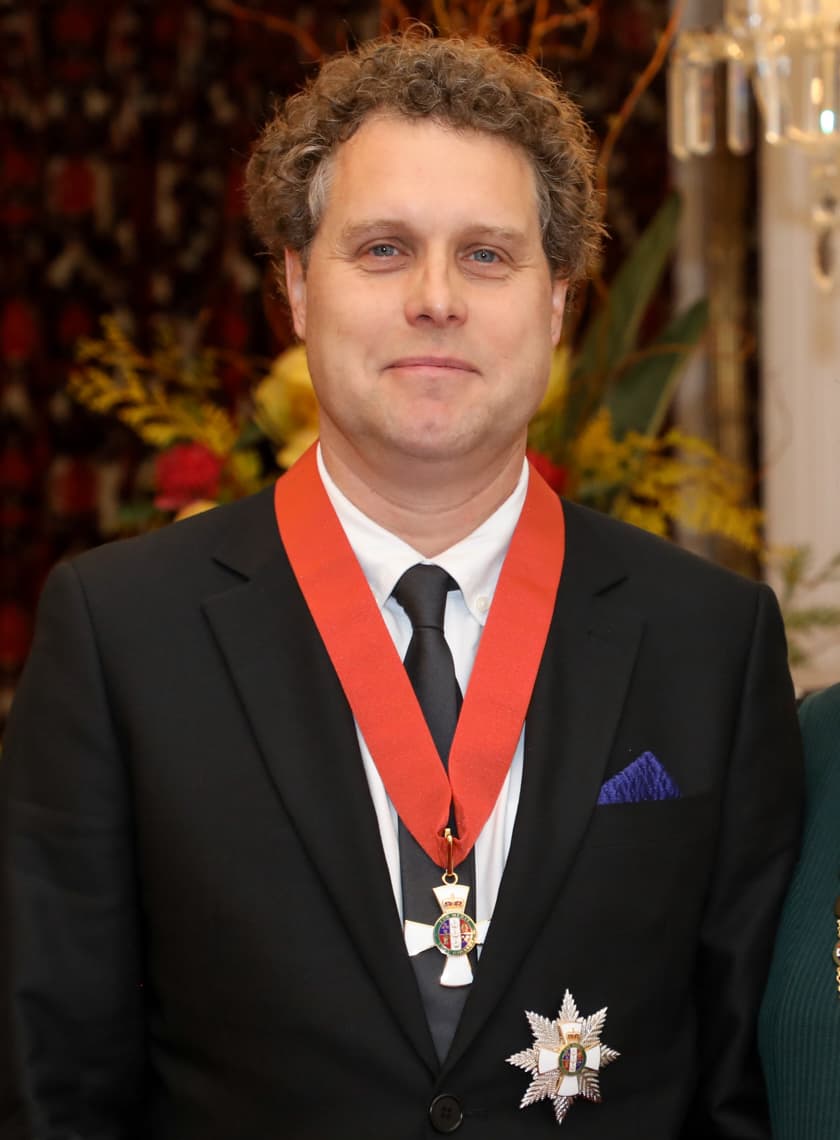
Founder & CEO, Rocket Lab
Public Views
Experience
Documented career positions
Sir Peter Joseph Beck (born circa 1977) is a prominent New Zealand aerospace engineer and entrepreneur, best known as the founder, president, and chief executive officer of the aerospace company Rocket Lab. Born and raised in Invercargill, New Zealand, Beck developed an early and intense fascination with mechanics and rocketry. The son of a museum and art gallery director and gemologist, Russell Beck, and a teacher, Peter grew up in an environment that encouraged hands-on engineering. As a teenager, he famously disassembled his family’s Mini, rebuilding it with a custom turbocharger, and spent his formative years in a workshop building water rockets and various experimental devices. Eschewing a traditional university education, Beck chose to pursue a practical path, beginning a tool-and-die maker apprenticeship at the appliance manufacturer Fisher & Paykel in 1995. Beck’s early professional career was defined by his work in precision engineering and high-performance materials. Following his time at Fisher & Paykel, where he refined his skills in production machinery and product design, he worked as a project engineer on a yacht in New Plymouth. Between 2001 and 2006, he worked at Industrial Research Limited, a New Zealand government research institute. During this period, he focused on advanced composite structures, superconductors, and wind turbine technology, all while continuing his private, self-taught research into rocket propulsion systems. His dedication to rocketry led him to travel to the United States to meet with fellow enthusiasts, a journey that proved pivotal in formulating his vision for a commercial space company. In June 2006, Beck founded Rocket Lab in New Zealand, driven by the goal of democratizing access to space through affordable, frequent launch services. The company achieved a major milestone in November 2009 with the launch of the Ātea-1 sounding rocket, which marked the first time a private company in the Southern Hemisphere successfully reached space. Following this achievement, the company’s trajectory accelerated. In 2013, Rocket Lab transitioned its registration to the United States, establishing its headquarters in Huntington Beach, California, while maintaining significant research and development operations in New Zealand. Under Beck's leadership, the company developed the Electron launch vehicle—a rocket noted for its use of 3D-printed engines and carbon-composite structures. The development of this vehicle, and the establishment of the private Launch Complex 1 in Mahia, New Zealand, required complex international negotiations and new legislative frameworks, reflecting Beck’s skill in navigating both technical and regulatory landscapes. Since the successful introduction of the Electron rocket, Rocket Lab has grown into a global leader in the small satellite launch market, expanding its services to include satellite manufacturing, spacecraft components, and on-orbit management. In 2021, the company went public on the Nasdaq Stock Market through a merger with a special-purpose acquisition company, a move that solidified its financial standing in the competitive private space sector. Beck, who serves as the company’s CEO, President, and Chairman, has maintained a hands-on approach to engineering, consistently pushing for innovations such as reusable rocket technology. Beck has received numerous honors for his contributions to the aerospace industry and business. In 2024, he was appointed a Knight Companion of the New Zealand Order of Merit for his services to the aerospace industry, business, and education. His other recognitions include the Pickering Medal from the Royal Society Te Apārangi, the Gold and Meritorious Medals from the Royal Aeronautical Society, and the New Zealander of the Year Award in the Innovator of the Year category. He is also an adjunct professor of aerospace engineering at the University of Auckland. Married to Kerryn Morris, with whom he has two children, Beck continues to be a central figure in the modern space economy, frequently cited for his role in transforming New Zealand into a recognized player in global spaceflight.
Founded Rocket Lab and successfully developed the Electron rocket, achieving the second-highest launch cadence of any US company behind SpaceX
Successfully launched the 'Neutron' rocket program, breaking into the highly lucrative medium-lift and national security launch markets
Pioneered the use of 3D printing and carbon-composite materials in orbital rocket manufacturing, drastically reducing production times and costs
Faced localized pushback in New Zealand regarding Rocket Lab's increasing reliance on highly classified US military and intelligence contracts, which critics argue violates New Zealand's traditionally pacifist and non-nuclear geopolitical stance
Endured significant financial and operational strain during the early development of the Neutron rocket, drawing skepticism from Wall Street regarding his ability to compete directly against the massive economies of scale possessed by SpaceX
In March 2025, a class action lawsuit was filed against Rocket Lab and CEO Peter Beck, alleging that they made materially false and misleading statements regarding the development timeline of the company's Neutron rocket. The lawsuit was defeated in November 2025 when a U.S. District Court judge dismissed the complaint.
Secured over $500 million in contracts from the Space Development Agency (SDA) to build advanced missile tracking satellites
Began his career in 1993 as an apprentice precision engineer at Fisher & Paykel.
Joined a government research institute in 2003, focusing on advanced composite structures and materials.
Founded Rocket Lab in 2006 to provide launch services for small satellites.
Led the successful launch of the Ātea-1 rocket in 2009, making Rocket Lab the first private company in the Southern Hemisphere to reach space.
Awarded the Cooper Medal by the Royal Society Te Apārangi in 2014 for the best published account of research in physics and engineering.
Named Innovator of the Year at the 2015 New Zealander of the Year Awards.
Recognized as the EY Entrepreneur of the Year in New Zealand in 2016.
Led the first successful orbital launch of the Electron rocket in 2017.
Received a Sir Peter Blake Leadership Award in 2018.
Appointed as an Adjunct Professor of Aerospace Engineering at the University of Auckland in 2019.
Awarded the Pickering Medal by the Royal Society Te Apārangi in 2020 for innovative work in design and development.
Oversaw Rocket Lab's entry into the public market via a merger with a Special Purpose Acquisition Company (SPAC) on the Nasdaq in 2021.
Appointed a Knight Companion of the New Zealand Order of Merit in the 2024 King's Birthday Honours for services to the aerospace industry, business, and education.
Recognized as a billionaire by Forbes in 2024 for his contributions to the aerospace industry.
Since 2024–2025, Peter Beck and Rocket Lab have faced public protests and criticism from various advocacy groups, such as the Palestine Solidarity Network Aotearoa (PSNA), regarding the company's contracts with U.S. defense and intelligence agencies. Critics allege that the company's technology has been used in military operations and have unsuccessfully called for legal action against the company's leadership.