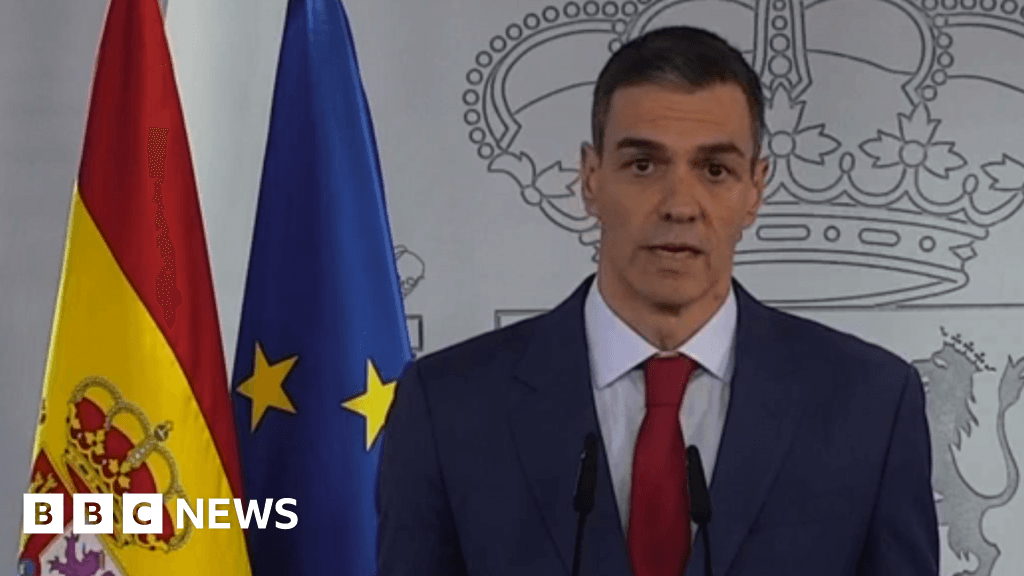
We're loading the complete profile of this person of interest including their biography, achievements, and contributions.
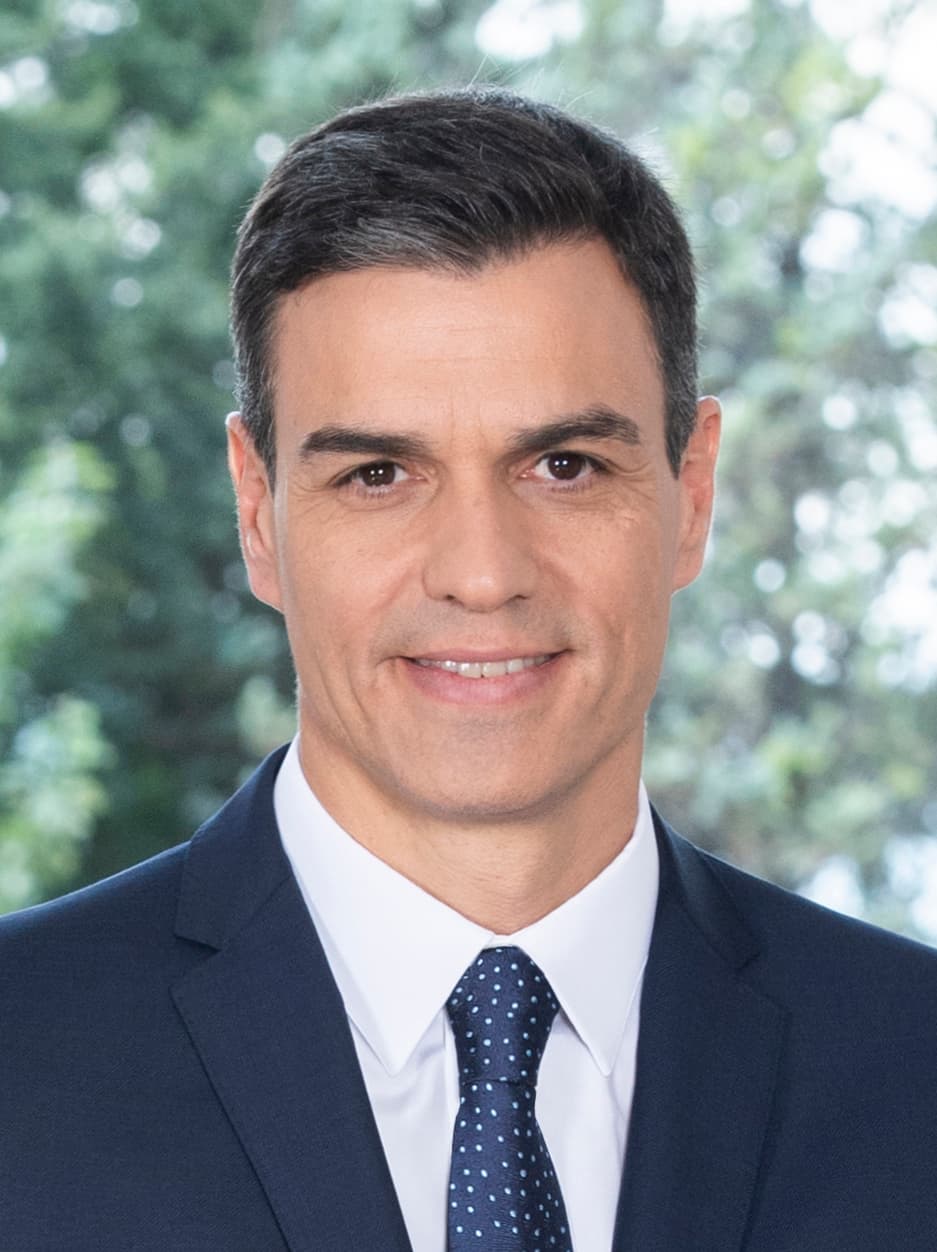
Prime Minister of Spain
Public Views
Experience
Documented career positions
Pedro Sánchez Pérez-Castejón is a Spanish economist and politician who has served as the Prime Minister of Spain since June 2018. A central figure in modern Spanish politics, Sánchez has led the Spanish Socialist Workers' Party (PSOE) as Secretary-General during two distinct periods, first from 2014 to 2016 and again since 2017. His premiership has been characterized by his ability to maintain stability through complex parliamentary arithmetic, most notably by forming the first coalition government in Spain since the restoration of democracy. Born on February 29, 1972, in Madrid, Sánchez grew up in a middle-class family in the Tetuán district. His father, Pedro Sánchez Fernández, was a public administrator and businessman, while his mother, Magdalena Pérez-Castejón, worked in the social security system before qualifying as a lawyer. As a youth, Sánchez attended the Instituto Ramiro de Maeztu and was an active basketball player, eventually playing in the youth system for the well-known club CB Estudiantes. He pursued higher education in economics, earning a licentiate degree from the Real Colegio Universitario María Cristina in 1995. He later obtained a degree in Politics and Economics from the Université libre de Bruxelles in 1998, a business leadership qualification from IESE Business School, and a doctorate in Economics from the Universidad Camilo José Cela, where he subsequently served as a lecturer. Sánchez joined the PSOE in 1993. His early professional career included work as an economic consultant and as an assistant in the European Parliament. He entered public office in 2004, serving as a city councillor in Madrid, a position he held until 2009. That year, he was elected to the Congress of Deputies, the lower house of the Spanish Parliament. Although he lost his seat following the 2011 general election, he returned to the chamber in 2013 to fill a vacancy. In 2014, following the resignation of Alfredo Pérez Rubalcaba, Sánchez launched a leadership bid and was elected Secretary-General of the PSOE. His initial tenure was marked by electoral difficulties in 2015 and 2016 and internal party strife, which culminated in his resignation in October 2016. However, he staged a political comeback in 2017, winning a primary election to regain the party leadership. In June 2018, Sánchez achieved a historic political milestone by leading a successful motion of no confidence against Prime Minister Mariano Rajoy, following a major corruption scandal involving the People's Party. Appointed Prime Minister by King Felipe VI, Sánchez initially led a minority government. Following subsequent general elections in 2019, he negotiated a coalition agreement with the left-wing party Unidas Podemos, forming the first coalition government of the democratic era. His tenure has faced significant domestic and international challenges, including the management of the COVID-19 pandemic, economic reform efforts, and long-standing political tensions regarding the independence movement in Catalonia. Following the general election in 2023, where his party secured the second-most seats, Sánchez demonstrated his tactical political acumen by negotiating the support of several regionalist and nationalist parties to form a third consecutive government, officially taking office for this term in November 2023. Beyond his national role, he has maintained an active presence in international affairs, including serving as President of the Socialist International since 2022. Sánchez is married to Begoña Gómez, with whom he has two daughters. He is known for his fluency in English and French, as well as his background as a former competitive athlete, which he has occasionally emphasized in his public persona. Throughout his career, political analysts have frequently noted his resilience, often referring to his ability to recover from political setbacks as a defining trait of his leadership style.
Prime Minister of Spain (2018–Present), successfully surviving multiple votes of no confidence and highly fractured, chaotic general elections
Led Spain to have one of the fastest-growing economies and lowest inflation rates in the Eurozone during the post-pandemic recovery
Spearheaded the historic, coordinated European diplomatic effort to formally recognize the State of Palestine in 2024 alongside Ireland and Norway
His 2023 political survival depended on granting a highly unconstitutional amnesty to Catalan separatist leaders (like Carles Puigdemont) who orchestrated the illegal 2017 independence referendum, sparking massive, violent protests in Madrid and outraging the Spanish judiciary
Threatened to resign the premiership entirely in early 2024 in a bizarre, 5-day public hiatus after a right-wing organization filed a corruption lawsuit against his wife (Begoña Gómez), a move critics called pure political theater and emotional manipulation
Engaged in a vicious diplomatic war with Israel, resulting in Tel Aviv withdrawing its ambassador from Madrid after Sánchez accused Israel of violating international humanitarian law in Gaza
News articles featuring Pedro Sánchez
President of the Socialist International
Joined the Spanish Socialist Workers' Party (PSOE) in 1993.
Graduated with a degree in Economic Science and Business Studies from María Cristina Royal University College in 1995.
Completed a Master's degree in Political Economy from the Université libre de Bruxelles in 1998.
Earned a Diploma in Advanced European Economic and Monetary Integration Studies from the Instituto Ortega y Gasset in 2002.
Elected as a city councillor in Madrid in 2004.
Began serving as a lecturer in economics at Camilo José Cela University in 2008.
Elected to the Congress of Deputies in 2009.
Received a Doctorate in Economics from Camilo José Cela University in 2012.
Elected Secretary-General of the PSOE in 2014, serving as Leader of the Opposition.
Re-elected as Secretary-General of the PSOE in 2017 following a leadership primary.
Became Prime Minister of Spain in 2018 after winning the first successful motion of no confidence in Spanish democratic history.
Formed the first national coalition government in Spain since the return to democracy following the November 2019 general election.
Elected President of the Socialist International in November 2022.
Re-elected Prime Minister of Spain for a third term in November 2023.
Received the Global Goalkeeper Award from the Bill & Melinda Gates Foundation in 2025 for his commitment to the UN Sustainable Development Goals and global health initiatives.
In 2024, a Spanish judge opened a preliminary investigation into Prime Minister Sánchez's wife, Begoña Gómez, regarding allegations of influence peddling and business corruption; Sánchez has consistently denied these claims, characterizing the judicial process as a politically motivated smear campaign orchestrated by opposition parties.
Throughout 2023 and 2024, Sánchez faced intense public and political criticism regarding his government's Amnesty Law for Catalan separatists involved in the 2017 independence referendum, with critics and parts of the judiciary arguing the legislation undermined the separation of powers and legal equality.
In February 2024, the 'Koldo case' emerged, involving an investigation into alleged bribery and corruption in the procurement of medical masks during the COVID-19 pandemic; the scandal implicated a former adviser to the then-Transport Minister, leading to opposition accusations of systemic corruption within the Socialist Party (PSOE) government.
In 2022, Sánchez faced significant backlash from political allies and the opposition for unilaterally changing Spain's long-standing diplomatic position on the Western Sahara, pivoting to support Morocco's autonomy plan without seeking prior consensus in parliament.
Between 2022 and 2023, the government's 'Ley del solo sí es sí' (Only Yes is Yes law) faced severe criticism after legal loopholes led to the unintended reduction of sentences and early release for hundreds of convicted sex offenders, forcing the government to reform the law in 2023.