We're loading the complete profile of this person of interest including their biography, achievements, and contributions.
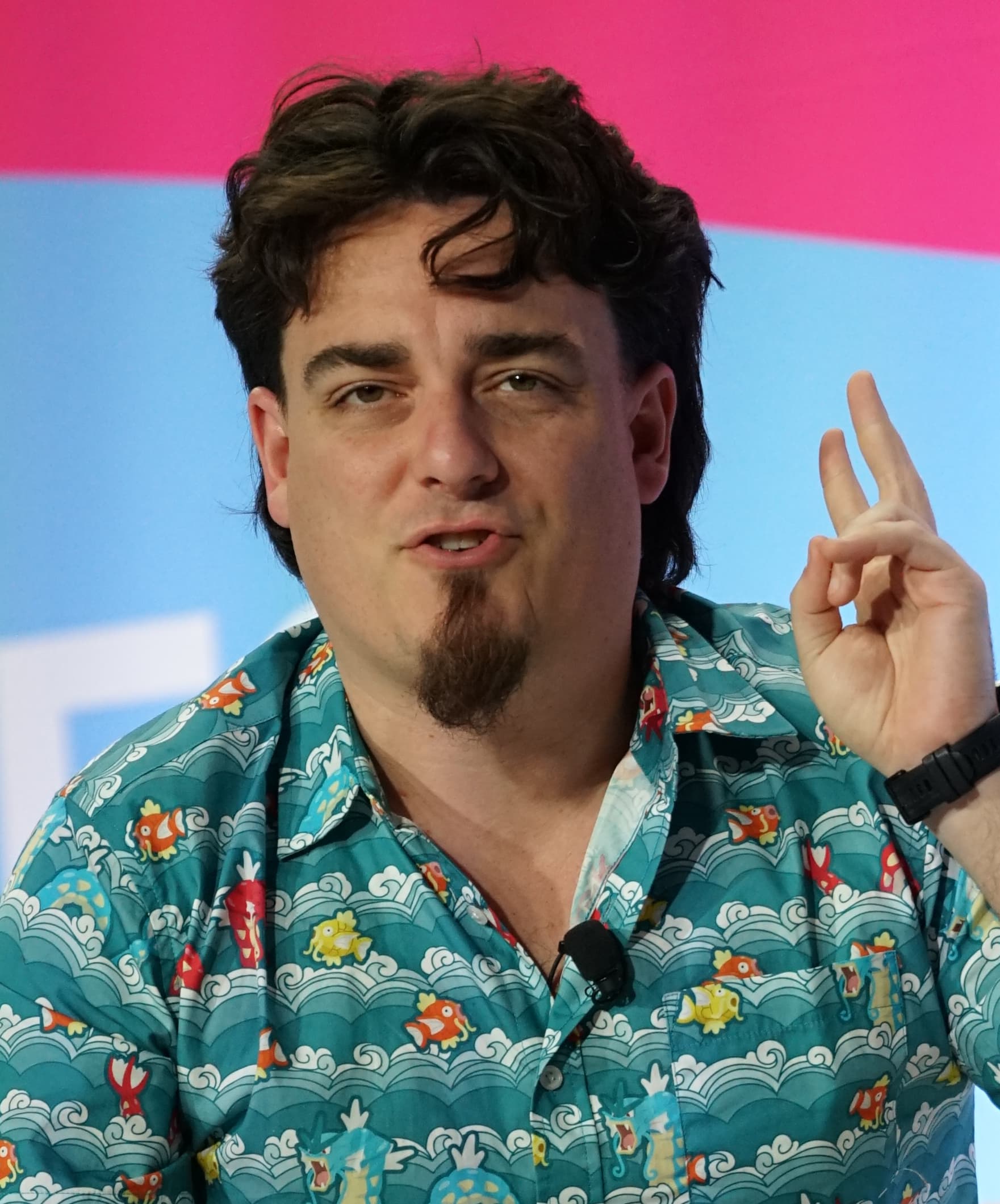
Founder, Anduril Industries
Public Views
Experience
Documented career positions
Palmer Luckey is an American entrepreneur and engineer who has made a significant impact on two distinct technological sectors: consumer virtual reality and defense technology. Born on September 19, 1992, in Long Beach, California, Luckey developed a fascination with electronics and engineering at an early age. His upbringing was unconventional; he was homeschooled by his mother and spent much of his adolescence tinkering with complex hardware in his family’s garage. This environment fostered a hands-on approach to problem-solving, during which he engaged in diverse projects ranging from repairing old gaming consoles to building custom PC rigs and experimenting with high-power lasers. To fund his hobbies, Luckey held various part-time positions, including working as a groundskeeper, a youth sailing coach, and a technician repairing damaged iPhones. Luckey’s path toward professional engineering began with his studies at Golden West College and Long Beach City College at the age of 14, followed by coursework at California State University, Long Beach, where he majored in journalism. During this period, he also worked as a part-time engineer at the University of Southern California’s Institute for Creative Technologies within the Mixed Reality Lab. It was during these years that he began focusing on virtual reality. Frustrated by the high cost and poor performance of existing head-mounted displays, he began building his own prototypes. Over several years, he designed dozens of iterations of virtual reality headsets in his garage. His work gained attention within enthusiast communities, and he eventually shared his 6th-generation prototype, which he branded the "Oculus Rift," on online forums. In 2012, Luckey founded Oculus VR to bring his creation to a wider audience. He launched a Kickstarter campaign that far exceeded its financial goals, raising over $2.4 million, which propelled the Oculus Rift into the public eye and is widely credited with reviving the virtual reality industry. His work attracted significant attention, and in 2014, Facebook (now Meta Platforms) acquired Oculus VR in a deal valued at approximately $2 billion. Luckey joined Facebook as part of the acquisition, continuing his work on the development of the Rift and the broader VR ecosystem. In 2016, Luckey became the subject of intense media scrutiny following reports that he had made financial contributions to Nimble America, a pro-Donald Trump political organization. This revelation sparked controversy among developers and the public, leading to criticism and calls for his resignation. Luckey’s tenure at Facebook ended in 2017. While the company stated his departure was not due to his political views, the events surrounding his exit drew widespread attention to the intersection of Silicon Valley corporate culture and political expression. Following his departure from Facebook, Luckey transitioned into the defense sector, co-founding Anduril Industries in 2017 alongside Trae Stephens, Matt Grimm, Brian Schimpf, and Joseph Chen. With Anduril, Luckey sought to apply the iterative development methodologies of consumer technology startups to the defense industry. The company focuses on the development of autonomous systems, including surveillance towers, unmanned aerial vehicles, and AI-powered command-and-control software. Anduril has since secured numerous contracts with the U.S. Department of Defense and other government agencies, positioning itself as a major disruptor in the defense technology landscape. Luckey’s political and ideological views have remained a notable aspect of his public profile. He has been a vocal supporter of the Republican Party and has described himself as a "radical Zionist." His personal life includes his marriage to Nicole Edelmann, a cosplayer and gamer. Over the years, Luckey has continued to be a polarizing yet influential figure, recognized for his technical innovation and his outspoken entry into highly sensitive and complex fields, such as military autonomy and defense manufacturing. His career trajectory remains one of the most unique in modern technology, marked by the rapid rise of consumer VR and his subsequent shift toward high-stakes national security infrastructure.
Founded Anduril Industries, achieving a valuation of over $14 billion by 2025 and successfully winning massive, non-traditional procurement contracts from the Pentagon
Designed the Oculus Rift VR headset at age 19, kickstarting the modern virtual reality industry and selling the company to Meta (Facebook) for $2 billion in 2014
Developed the 'Lattice' AI operating system, which integrates various sensors and autonomous vehicles to create real-time, automated battlefield awareness for the U.S. and allied militaries
Infamously fired by Facebook in 2017 amidst massive internal and external backlash after it was revealed he had secretly donated to a pro-Trump 'shitposting' organization (Nimble America) during the 2016 election
Fiercely criticized by tech industry purists and anti-war activists for unabashedly building autonomous weapons systems and border surveillance towers, breaking the previous Silicon Valley taboo against defense work
Frequently engages in bitter, highly public social media feuds with executives of legacy defense contractors, accusing them of price-gouging the American taxpayer and lacking genuine technological innovation
A central figure in bridging the massive cultural and technological divide between Silicon Valley engineering and the Department of Defense
Founded the online community ModRetro in 2009, which focused on the modification and 'portabilization' of vintage electronics.
Developed a series of early virtual reality headset prototypes, including the PR1, beginning in 2009.
Founded Oculus VR in 2012 to commercialize virtual reality technology.
Launched a successful Kickstarter campaign for the Oculus Rift in 2012, which raised $2.4 million and helped revive the virtual reality industry.
Sold Oculus VR to Facebook (now Meta) for approximately $2 billion in 2014.
Ranked number 22 on the Forbes 2016 list of 'America's Richest Entrepreneurs Under 40'.
Founded the defense technology company Anduril Industries in 2017 to develop autonomous systems and advanced defense hardware.
Received the inaugural President's Award for Excellence in Freedom from Pepperdine University in 2024 for contributions to national security and innovation.
Secured the contract for the U.S. Army's Integrated Visual Augmentation System (IVAS) program with Anduril Industries in 2025.
In 2016, it was revealed that Luckey had donated $10,000 to 'Nimble America,' a pro-Donald Trump organization known for running anti-Hillary Clinton billboards. The controversy and resulting public backlash contributed to his departure from Facebook, which had acquired his company, Oculus VR, in 2014.
From 2014 to 2017, Luckey and his company, Oculus, were involved in a high-profile intellectual property lawsuit filed by ZeniMax Media. In 2017, a jury awarded ZeniMax $500 million, finding Luckey and other executives liable for violating non-disclosure agreements, copyright infringement, and false designation, though the jury found that Oculus did not misappropriate trade secrets; the legal battle ended in a confidential settlement in 2018.
Since founding the defense technology company Anduril Industries in 2017, Luckey has faced criticism from human rights groups and activists regarding the ethical implications of the company's autonomous surveillance and AI-driven military technology. Critics have raised concerns specifically about the company's contracts to build 'virtual walls' along the U.S.-Mexico border and his public advocacy for the use of autonomous weapons in warfare.