We're loading the complete profile of this person of interest including their biography, achievements, and contributions.
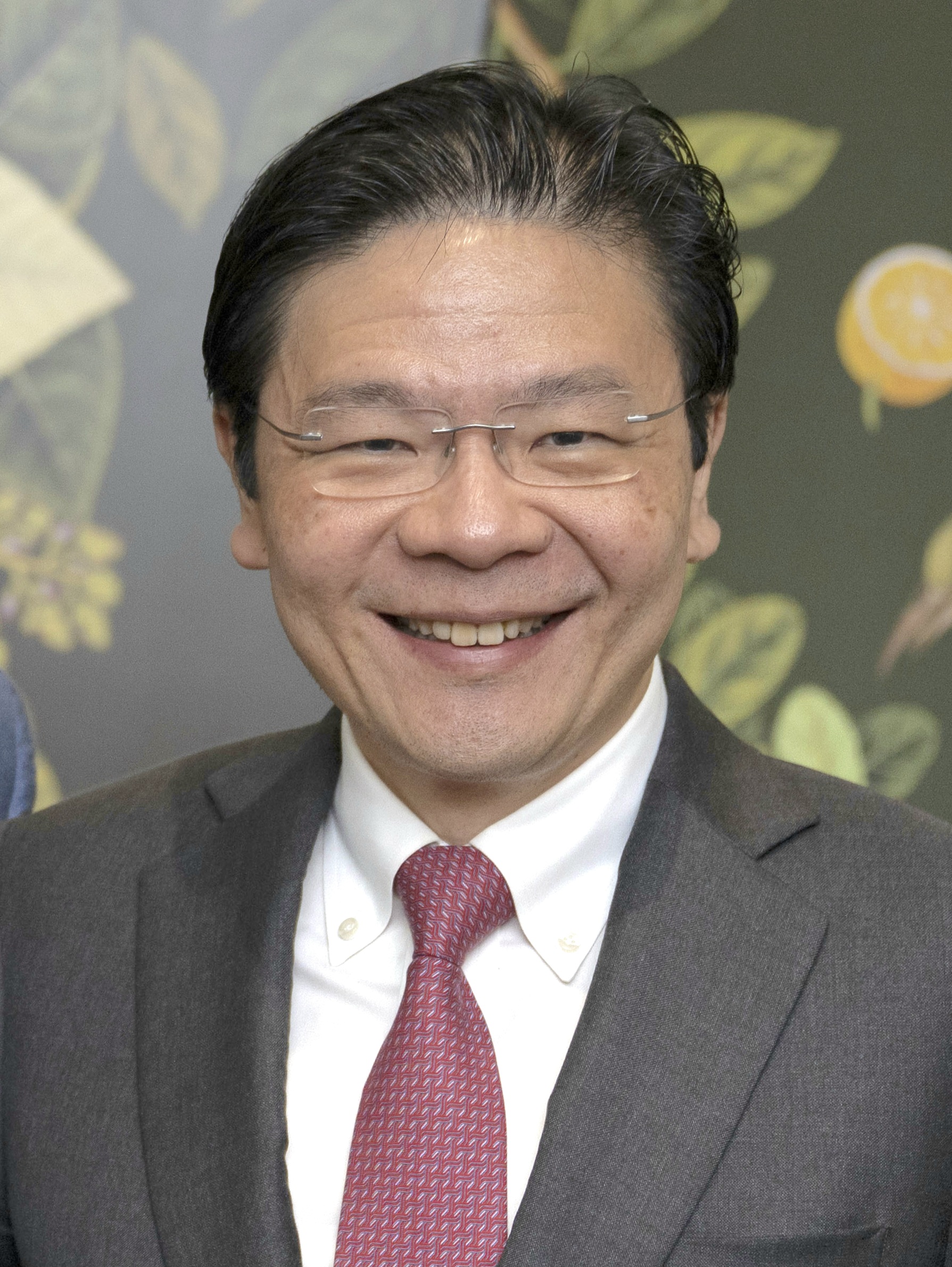
Prime Minister of Singapore
Public Views
Experience
Documented career positions
Lawrence Wong Shyun Tsai (born 18 December 1972) is a Singaporean politician and economist who has served as the fourth Prime Minister of Singapore since 15 May 2024. A member of the People's Action Party (PAP), he is the first Prime Minister of Singapore born after the nation's independence in 1965. In addition to his role as head of government, he serves as the Minister for Finance and holds the position of Secretary-General of the People's Action Party. Wong was born in the eastern part of Singapore to a Hainanese family. His father, who had moved to Singapore from Malaysia, worked as a sales executive, and his mother was a primary school teacher. He grew up in a public Housing and Development Board (HDB) flat in Marine Parade. Wong attended Haig Boys' Primary School (now Tanjong Katong Primary School), Tanjong Katong Technical School, and Victoria Junior College. He pursued higher education in the United States on a Public Service Commission scholarship, earning a Bachelor of Science in economics from the University of Wisconsin–Madison in 1994 and a Master of Arts in applied economics from the University of Michigan in 1995. In 2004, he completed a Master in Public Administration at the Harvard Kennedy School. Wong began his professional career in the civil service in 1997, working as an economist at the Ministry of Trade and Industry. His early assignments included analyzing the regional economic effects of the 1997 Asian financial crisis. He subsequently held positions at the Ministry of Finance and the Ministry of Health, where he served as the Director of Healthcare Finance. From May 2005 to August 2008, he served as the Principal Private Secretary to Prime Minister Lee Hsien Loong. Following this, he joined the Energy Market Authority, serving as its deputy chief executive and later as its chief executive officer from 2009 until 2011. Wong entered politics in the 2011 general election, winning a seat as a member of the PAP team for the West Coast Group Representation Constituency (GRC). In 2015, he shifted to the newly formed Marsiling–Yew Tee GRC, where he has remained a representative. Throughout his ministerial career, he held various portfolios, including Minister for Culture, Community and Youth; Minister for National Development; and Minister for Education. In 2021, he was appointed Minister for Finance. A pivotal juncture in Wong's career occurred during the COVID-19 pandemic, when he was appointed as a co-chair of the government’s multi-ministry task force in January 2020. His leadership in navigating the nation's pandemic response significantly raised his public profile and demonstrated his administrative capability during a national crisis. In April 2022, he was formally chosen as the leader of the PAP's "fourth-generation" (4G) team, positioning him as the designated successor to Lee Hsien Loong. He was appointed Deputy Prime Minister in June 2022. On 15 May 2024, Wong was sworn in as the fourth Prime Minister of Singapore, succeeding Lee Hsien Loong. He led the PAP to victory in the 2025 general election and was elected Secretary-General of the party on 4 December 2024. Regarding his personal life, Wong is a Methodist and has been married twice. His first marriage ended in divorce, and he is currently married to Loo Tze Lui, a former banker. He has no children. Outside of his professional duties, Wong is known for his interest in music, particularly as an avid guitar player, a hobby he has occasionally shared on social media.
AI-powered civic intelligence rating
Sworn in as the 4th Prime Minister of Singapore in 2024, successfully managing the highly scrutinized transition from the Lee political dynasty to the 4G leadership
Served as the co-chair of the Multi-Ministry Taskforce on COVID-19, universally praised for his calm, data-driven management that kept Singapore's mortality rate among the lowest in the world
Inherited a rare string of political scandals within the historically pristine PAP in 2023/2024 (including a high-profile corruption probe into the Transport Minister and an extramarital affair involving the Speaker of Parliament), requiring him to aggressively rebuild public trust in the party's moral authority
Criticized by the nascent political opposition for continuing the PAP's strict, highly controlled approach to domestic media and public assembly (specifically utilizing POFMA 'fake news' laws to stifle dissent)
Faces immense generational pressure regarding the skyrocketing cost of public housing (HDB flats) and the fierce, highly stressful nature of the Singaporean educational system
Architect of massive, highly targeted fiscal stimulus packages that saved the Singaporean aviation and tourism sectors from total collapse during the pandemic
Currently serves as the Minister for Finance, maintaining Singapore's status as a premier, hyper-stable global financial hub
Graduated with a Bachelor of Science in Economics from the University of Wisconsin–Madison in 1994.
Obtained a Master of Arts in applied economics from the University of Michigan in 1995.
Began public service career as an economist at the Ministry of Trade and Industry in 1997.
Completed a Master in Public Administration at Harvard University in 2004.
Served as Director of Healthcare Finance at the Ministry of Health from 2004 to 2005, where he implemented reforms to MediShield.
Served as Principal Private Secretary to Prime Minister Lee Hsien Loong from 2005 to 2008.
Appointed Chief Executive of the Energy Market Authority in 2009, serving until 2011.
Elected as a Member of Parliament for West Coast GRC in 2011.
Appointed Minister of State for Defence and Minister of State for Education in 2011.
Appointed Acting Minister for Culture, Community and Youth in 2012, later becoming full Minister in 2014.
Led the successful bid for the Singapore Botanic Gardens to be recognised as Singapore's first UNESCO World Heritage Site in 2015.
Elected as a Member of Parliament for the Marsiling–Yew Tee GRC in 2015.
Appointed Minister for National Development in 2015, serving until 2020.
Appointed Second Minister for Finance in 2016.
Appointed Minister for Education in 2020.
Elected to the People's Action Party's Central Executive Committee in 2020.
Co-chaired the Multi-Ministry Taskforce overseeing Singapore's response to the COVID-19 pandemic starting in 2020.
Appointed Minister for Finance in 2021.
Appointed Deputy Chairman of the Monetary Authority of Singapore in 2021.
Selected as the leader of the People's Action Party's fourth-generation (4G) team in 2022.
Appointed Deputy Secretary-General of the People's Action Party in 2022.
Conferred the National Trades Union Congress (NTUC) Medal of Honour in 2023 for his contributions to the labour movement.
Appointed Deputy Chairman of the GIC Board of Directors in 2023.
Sworn in as the 4th Prime Minister of Singapore on 15 May 2024.
Elected Secretary-General of the People's Action Party in December 2024.
Led the People's Action Party to victory in the 2025 general election.
In July 2020, during the COVID-19 pandemic, Lawrence Wong, as co-chair of the Multi-Ministry Taskforce, faced public criticism and allegations from the Singapore Democratic Party (SDP) regarding the task force's handling of medical advice and foreign worker testing. Wong refuted these claims as 'baseless and false,' maintaining that the task force consistently operated on expert scientific guidance.
In July 2023, while serving as Deputy Prime Minister, Wong publicly addressed a series of political scandals involving members of the People's Action Party, including a corruption investigation and extra-marital affairs. He acknowledged these events as a 'setback' for the ruling party and emphasized the necessity of restoring public trust through accountability.
In April 2025, Wong faced criticism from some segments of the Malaysian public following his remarks on the use of the term 'pendatang' (foreigner/immigrant) in the context of Singapore-Malaysia historical relations. The comments were interpreted by some as minimizing the current inter-communal tensions in Malaysia, leading to public debate.
In late 2025, Wong faced an online backlash from Chinese social media users following his remarks about regional stability and Japan's security role in Asia. The controversy was amplified by nationalist content creators who interpreted his observations on Japan as a sign of Singapore's diplomatic alignment against China.
In early 2026, Wong became the primary target of a coordinated, AI-driven disinformation campaign on YouTube, which utilized deepfake technology and fabricated narratives to suggest his leadership was under threat and that he had been removed from power. The government identified these as efforts to manipulate public opinion and create domestic uncertainty.