We're loading the complete profile of this person of interest including their biography, achievements, and contributions.
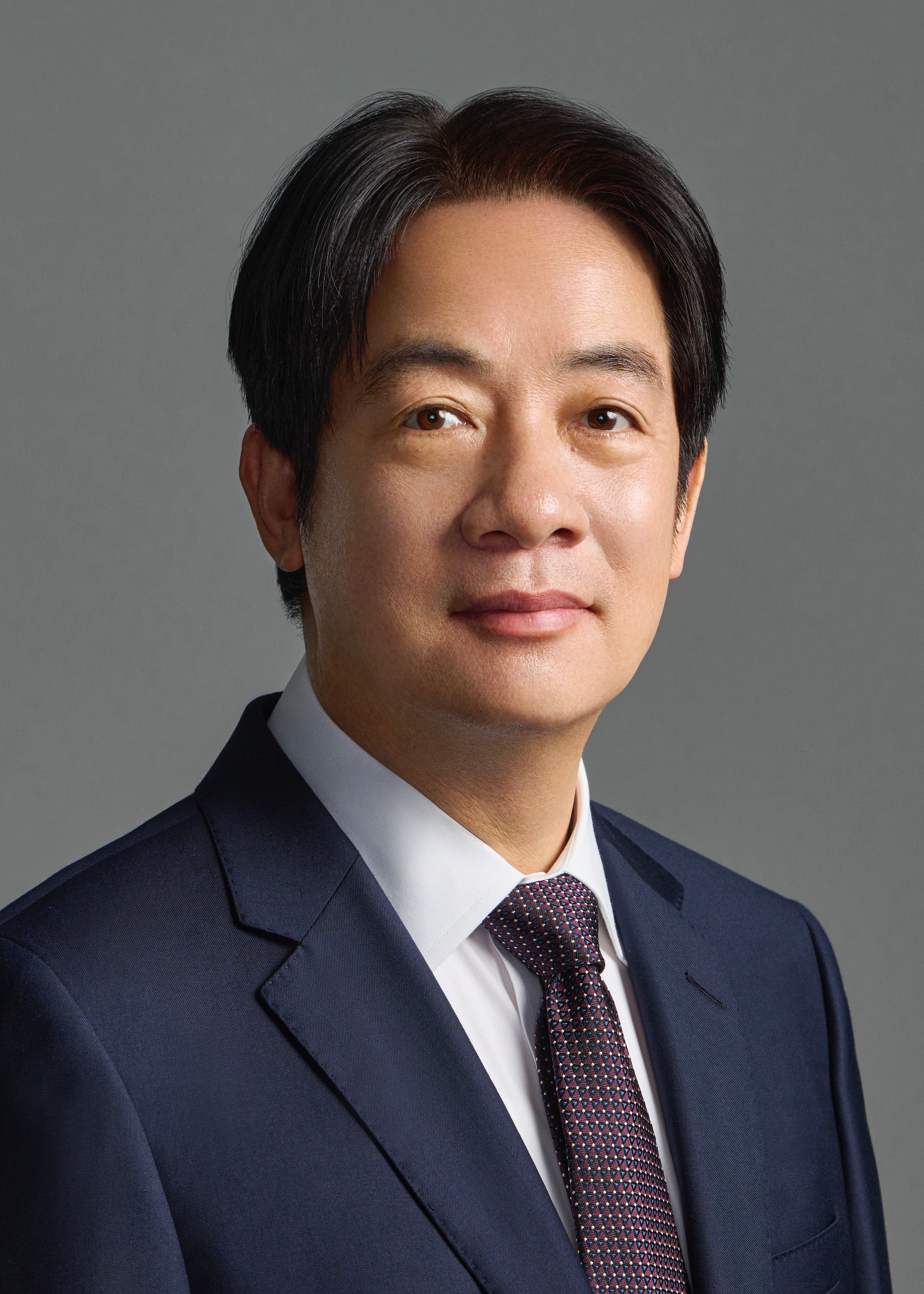
President of the Republic of China (Taiwan)
Public Views
Experience
Documented career positions
Lai Ching-te, also known by his English name William Lai, is a Taiwanese physician and politician currently serving as the eighth president of the Republic of China (Taiwan). A prominent member of the Democratic Progressive Party (DPP), he has played a central role in Taiwanese governance for over two decades, transitioning from a career in medicine to the highest executive office in the nation. Born on October 6, 1959, in Wanli, a coastal village in what was then Taipei County (now New Taipei City), Lai was the youngest of six children in a working-class family. His father, a coal miner, died in a mining accident when Lai was just two years old. His mother raised him and his siblings alone in modest circumstances, an upbringing that Lai has frequently cited as the source of his personal resilience and determination. Lai’s educational path was driven by an interest in science and public service. He earned a Bachelor of Science in Physical Medicine and Rehabilitation from National Taiwan University and later completed the Post-Bachelor Program in Medical Science at National Cheng Kung University. He practiced as a chief physician specializing in nephrology at National Cheng Kung University Hospital and Sin-lau Hospital. During his medical career, he also pursued further studies in the United States, earning a Master of Public Health from Harvard University in 2003. Lai’s transition into politics was precipitated by the 1996 Taiwan Strait Crisis. Motivated by a desire to protect Taiwan’s burgeoning democracy, he stepped away from medicine to run for the National Assembly, where he advocated for constitutional reforms, including the freezing of the Taiwan Provincial Government. In 1998, he was elected to the Legislative Yuan, representing Tainan City. During his 11-year tenure in the legislature (1999–2010), he earned a reputation for diligence, frequently being named one of the "best legislators" by local civil society organizations. In 2010, Lai was elected the first mayor of the newly consolidated Tainan special municipality, serving in that role until 2017. His administration was noted for its focus on integrity and public service. In 2017, he was appointed Premier of the Republic of China by President Tsai Ing-wen, a position he held until 2019. Following his service as premier, Lai was selected as Tsai’s running mate for the 2020 presidential election. The pair won, and Lai served as Vice President from 2020 to 2024. In 2023, Lai assumed the chairmanship of the DPP and secured the party's nomination for the 2024 presidential election. He won the election on January 13, 2024, with approximately 40% of the vote in a three-way race, marking a historic third consecutive presidential term for the DPP. He was inaugurated as president on May 20, 2024. As president, Lai has emphasized a platform of continuity, aiming to strengthen Taiwan’s democratic resilience, enhance its international alliances, and maintain peace across the Taiwan Strait through a policy of pragmatic engagement and defense readiness. Lai is married to Wu Mei-ju, with whom he has two sons. Throughout his career, he has been recognized for his disciplined approach to governance and his ability to navigate complex domestic and geopolitical challenges, positioning himself as a steadfast defender of Taiwan's democratic identity on the global stage.
Elected President of Taiwan in 2024, successfully navigating intense Chinese disinformation campaigns and military intimidation to secure the victory
Spearheaded the dramatic increase in Taiwan's defense budget and the procurement of advanced asymmetric weaponry from the United States
Served as Vice President (2020–2024) and Premier of the Republic of China (2017–2019), overseeing massive expansions in the Taiwanese semiconductor industry
Universally despised by the Chinese Communist Party (CCP), which frequently subjects his administration to crippling cyberattacks and trade embargoes on Taiwanese agricultural exports
Faces an incredibly hostile, opposition-controlled legislative yuan (KMT and TPP), leading to massive, physical brawls on the parliamentary floor in 2024 and 2025 over government oversight bills
His historical background as a vocal advocate for absolute 'Taiwanese Independence' occasionally causes friction with the United States, which strictly adheres to a policy of 'Strategic Ambiguity'
News articles featuring Lai Ching-te
Former Mayor of Tainan, renowned for his highly effective, technocratic urban governance
Graduated from National Taiwan University with a Bachelor of Science degree in physical medicine and rehabilitation in 1983.
Completed the post-bachelor program in medical science at National Cheng Kung University in 1986.
Served as a chief physician in nephrology at National Cheng Kung University Hospital and Sin-lau Hospital from 1989 to 1994.
Elected as a representative to the National Assembly in 1996, becoming the leading vote-getter in Tainan.
Elected to the Legislative Yuan in 1998, serving four consecutive terms until 2010.
Earned a Master of Public Health degree from Harvard University in 2003.
Participated in the U.S. Department of State's International Visitor Leadership Program in 2004.
Elected as the first mayor of the newly merged Tainan Special Municipality in 2010.
Re-elected as Mayor of Tainan in 2014 with 72.9% of the vote, the highest percentage for any city or county head since 1987.
Appointed as the 26th Premier of the Republic of China in 2017, serving until 2019.
Elected as Vice President of the Republic of China in 2020.
Elected as Chairman of the Democratic Progressive Party in 2023.
Elected as the President of the Republic of China in 2024, marking the first time a party secured three consecutive presidential terms since direct elections began in 1996.
Awarded the Order of Dr. Sun Yat-sen with Grand Cordon in May 2024 for his contributions to the nation.
Presented the 2024 Asia Democracy and Human Rights Award in December 2024 to recognize international efforts in human rights advocacy.
In 2015, while serving as Mayor of Tainan, Lai boycotted city council meetings for over 200 days to protest vote-buying allegations against the then-Speaker of the Tainan City Council, Li Chuan-chiao. This action led the Control Yuan to impeach him for 'gross negligence' and a dereliction of duty, though he remained in office.
In 2019, Lai launched a primary challenge against incumbent President Tsai Ing-wen for the Democratic Progressive Party (DPP) presidential nomination. The move was highly controversial as it was the first significant primary challenge against a sitting DPP president, leading to internal party friction before he eventually accepted the vice-presidential nomination on Tsai's ticket.
During the 2024 presidential campaign in late 2023, Lai faced allegations that his childhood family home in Wanli, New Taipei City, was an illegal structure. He argued it was a legal miner's residence that had been renovated, eventually pledging to convert the property into a mining history museum to resolve the public dispute.
Lai has frequently faced criticism and diplomatic tension, particularly from Beijing and opposition parties in Taiwan, for his 2017 self-description as a 'pragmatic worker for Taiwan independence.' Critics argue this stance creates unnecessary instability and increases the risk of conflict, while Lai has maintained that Taiwan is already a sovereign, independent state as the Republic of China, requiring no further declaration of independence.