We're loading the complete profile of this person of interest including their biography, achievements, and contributions.
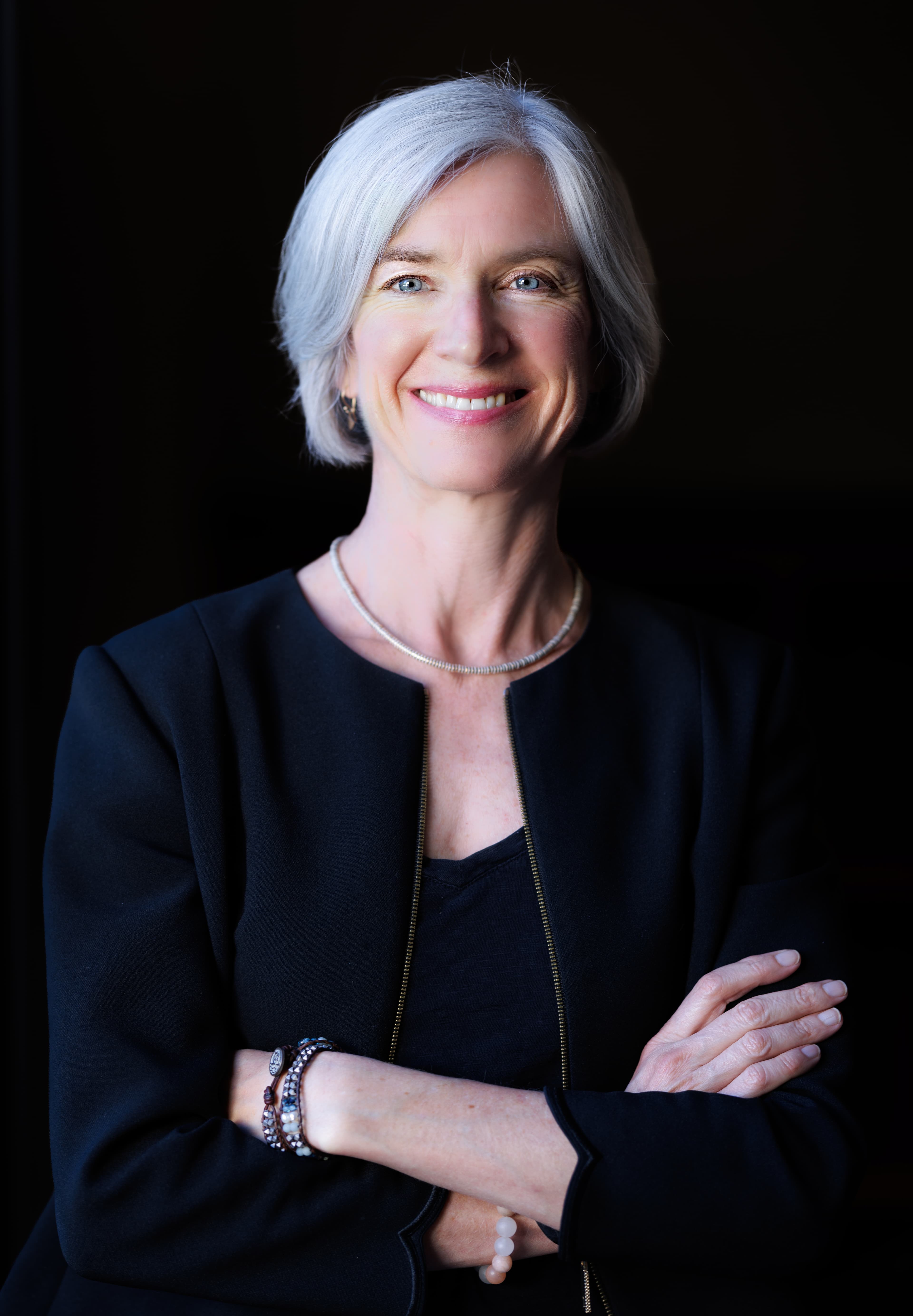
Biochemist & Nobel Laureate (CRISPR)
Public Views
Experience
Documented career positions
Jennifer A. Doudna is a distinguished American biochemist and a seminal figure in modern genetics, renowned for her pioneering work in the development of CRISPR-Cas9 genome-editing technology. Born on February 19, 1964, in Washington, D.C., and raised primarily in Hilo, Hawaii, Doudna developed an early interest in science, influenced by her father’s academic background in literature and her mother’s work in history, alongside her own childhood fascination with the lush, diverse ecosystem of Hawaii. She pursued her undergraduate studies at Pomona College, where she earned a Bachelor of Arts in chemistry in 1985. She continued her academic journey at Harvard Medical School, completing her Ph.D. in biological chemistry and molecular pharmacology in 1989 under the mentorship of Jack Szostak. Following her doctoral studies, she conducted postdoctoral research at the University of Colorado Boulder under Thomas Cech, where she focused on the structure and function of RNA enzymes. Doudna’s academic career is marked by significant contributions to structural biology, particularly concerning RNA molecules. Before her breakthrough with CRISPR, she held faculty positions at Yale University and subsequently joined the University of California, Berkeley, in 2002. It was at UC Berkeley that her laboratory delved into the molecular mechanisms of RNA interference and eventually the bacterial immune system known as CRISPR-Cas9. In 2012, Doudna, in collaboration with French microbiologist Emmanuelle Charpentier, published a landmark study in the journal Science. This research demonstrated that the CRISPR-Cas9 system, originally a bacterial defense mechanism against viruses, could be repurposed into a programmable tool for precise genome editing in any organism. This discovery revolutionized the field of biotechnology, providing scientists with an efficient, affordable, and versatile method to alter DNA sequences, thereby opening new frontiers in medicine, agriculture, and basic biological research. The global impact of Doudna’s work has been recognized with numerous prestigious honors. In 2020, Doudna and Charpentier were awarded the Nobel Prize in Chemistry for their development of the CRISPR-Cas9 method, becoming the first two women to share the prize in chemistry. Beyond the Nobel, Doudna is a recipient of the Breakthrough Prize in Life Sciences, the Gruber Prize in Genetics, and the Japan Prize, among others. She is an elected member of the National Academy of Sciences and the American Academy of Arts and Sciences. Throughout her career, Doudna has been a vocal advocate for the responsible use of gene-editing technologies. She has frequently called for rigorous ethical oversight and public dialogue regarding the potential applications of CRISPR, particularly in human germline editing. As the Li Ka Shing Chancellor’s Chair and a professor in the Departments of Chemistry and of Molecular and Cell Biology at UC Berkeley, she continues to lead research into the future of genomics. She also serves as the president and chair of the Innovative Genomics Institute, a collaborative research organization she founded to translate academic discoveries into real-world applications. Personally, Doudna is married to fellow researcher Jamie Cate, and they have one son. Her work remains a cornerstone of 21st-century science, fundamentally altering the trajectory of medical research and the ethics of genetic modification.
AI-powered civic intelligence rating
Awarded the 2020 Nobel Prize in Chemistry for co-inventing CRISPR-Cas9, the revolutionary genetic scissors that allow scientists to edit DNA with unprecedented precision
Founder of the Innovative Genomics Institute (IGI), dedicated to utilizing gene editing to solve major global problems in human health, agriculture, and climate change
Engaged in a massive, bitter, and decade-long patent dispute regarding the fundamental intellectual property rights to CRISPR technology against the Broad Institute (Feng Zhang and George Church), a legal war involving billions of dollars in potential licensing fees
Frequently forced to publicly confront and condemn rogue scientists (such as He Jiankui in 2018) who cross the ultimate ethical red line by utilizing CRISPR to edit human embryos, demanding strict global moratoriums on germline editing
Starting in 2012, Doudna was the central figure in a high-profile and long-running patent interference dispute between the University of California (her institution) and the Broad Institute of MIT and Harvard regarding the foundational intellectual property rights for CRISPR-Cas9 gene-editing technology. The dispute involved multiple rounds of litigation before the U.S. Patent and Trademark Office and federal courts, with various rulings favoring the Broad Institute's claims over those of Doudna and her collaborators, leading to years of legal conflict and intense academic debate over the invention's true origin and commercial rights.
Co-founded multiple massive biotechnology companies, including Caribou Biosciences, Intellia Therapeutics, and Mammoth Biosciences
Authored the highly acclaimed book 'A Crack in Creation: Gene Editing and the Unthinkable Power to Control Evolution'
Earned a Bachelor of Arts in chemistry from Pomona College in 1985.
Received a Ph.D. in biological chemistry and molecular pharmacology from Harvard Medical School in 1989.
Appointed to the faculty of Yale University in 1994.
Became an investigator with the Howard Hughes Medical Institute in 1997.
Received the Alan T. Waterman Award from the National Science Foundation in 2000.
Joined the faculty of the University of California, Berkeley, in 2002.
Elected to the National Academy of Sciences in 2002.
Elected to the American Academy of Arts and Sciences in 2003.
Elected to the National Academy of Medicine in 2010.
Co-founded the biotechnology company Caribou Biosciences in 2011.
Published the seminal research on CRISPR-Cas9 genome editing with Emmanuelle Charpentier in 2012.
Co-founded Editas Medicine in 2013.
Elected to the National Academy of Inventors in 2014.
Founded the Innovative Genomics Institute in 2014.
Awarded the Breakthrough Prize in Life Sciences in 2015.
Named one of the Time 100 most influential people in 2015.
Elected as a fellow of the American Academy of Microbiology in 2015.
Received the Tang Prize in Biopharmaceutical Science in 2016.
Received the Canada Gairdner International Award in 2016.
Awarded the Heineken Prize for Biochemistry and Biophysics in 2016.
Elected a Foreign Member of the Royal Society in 2016.
Awarded the Japan Prize in 2017.
Received the Albany Medical Center Prize in 2017.
Awarded the Golden Plate Award of the American Academy of Achievement in 2017.
Awarded the Kavli Prize in Nanoscience in 2018.
Received the NAS Award in Chemical Sciences in 2018.
Received the Pearl Meister Greengard Prize from the Rockefeller University in 2018.
Awarded a Medal of Honor from the American Cancer Society in 2018.
Received the Harvey Prize from the Technion in 2019.
Awarded the LUI Che Woo Prize in 2019.
Received the Wolf Prize in Medicine in 2020.
Awarded the Nobel Prize in Chemistry with Emmanuelle Charpentier in 2020.
Received a Guggenheim Fellowship in 2020.
Received the Award for Excellence in Molecular Diagnostics from the Association for Molecular Pathology in 2021.
Inducted into the National Inventors Hall of Fame in 2023.
Awarded the National Medal of Technology and Innovation in 2025.
Named the recipient of the American Chemical Society's Priestley Medal in 2026.
Elected as a member of the National Academy of Engineering in 2026.