We're loading the complete profile of this person of interest including their biography, achievements, and contributions.
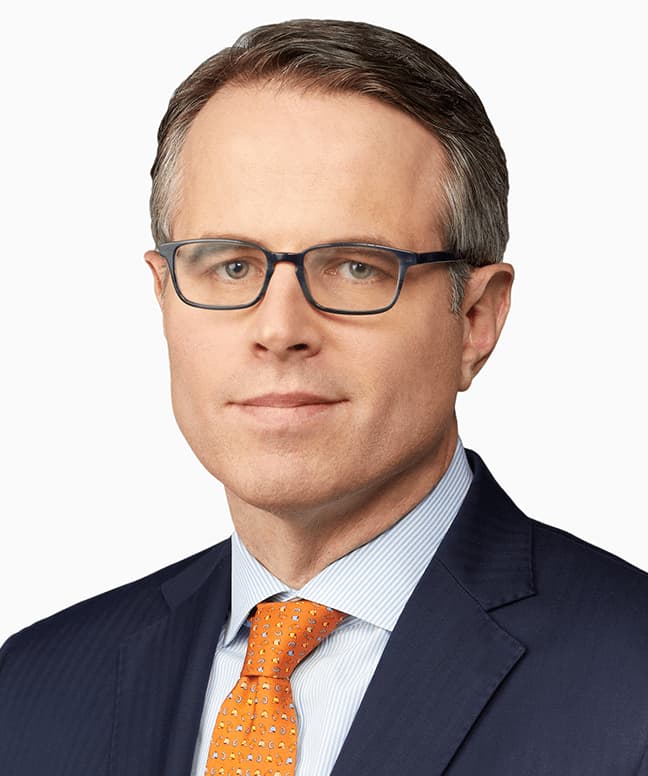
President & CEO, RTX Corporation
Public Views
Experience
Documented career positions
Christopher T. Calio is an American business executive currently serving as the chairman, president, and chief executive officer (CEO) of RTX Corporation, a global aerospace and defense conglomerate headquartered in Arlington, Virginia. Since his appointment to lead the organization, Calio has been responsible for overseeing its three primary business units—Collins Aerospace, Pratt & Whitney, and Raytheon—and guiding the company's strategic initiatives in advanced aviation, integrated defense systems, and next-generation aerospace technology. Born and raised in South Windsor, Connecticut, Calio attended South Windsor High School, from which he graduated in 1992. He pursued his higher education in the state, earning a bachelor’s degree in political science from Trinity College. Subsequently, he completed both a Juris Doctor (JD) and a Master of Business Administration (MBA) from the University of Connecticut, providing him with a foundation in both legal and business strategy. Calio began his professional career with United Technologies Corporation (UTC) in 2005, initially joining the firm as an assistant counsel. Over the next two decades, he ascended through various leadership roles of increasing responsibility. His tenure at UTC included serving as chief of staff for the company’s chairman and CEO, a role that positioned him closely with the organization’s executive leadership during critical periods of corporate transformation. His operational background was further solidified during his time with Pratt & Whitney, where he led the Commercial Engines legal department during the development and launch of the Airbus A320neo program. He was also instrumental in the acquisition of Rolls-Royce's stake in the International Aero Engines collaboration. Prior to the merger that formed Raytheon Technologies (later rebranded as RTX), Calio served as vice president and general counsel for UTC Aerospace Systems, now known as Collins Aerospace. In January 2020, he was appointed president of Pratt & Whitney, where he oversaw the design, manufacture, and servicing of aircraft engines and auxiliary power units, managing a workforce of over 36,000 employees. Following the formation of RTX, Calio served as the company's president and chief operating officer (COO). In this capacity, he managed a significant organizational realignment, streamlining RTX from four business segments into its current three-pillar structure. His performance in this role led to his selection as the successor to longtime CEO Gregory J. Hayes. Calio assumed the role of president and CEO on May 2, 2024. In April 2025, he was elected to the additional position of chairman of the board of directors. Under his leadership, RTX has continued to focus on operational excellence, technological innovation, and fulfilling a substantial backlog of defense and commercial contracts. Calio is recognized for his pragmatic approach to industrial management and his deep familiarity with the company’s internal operations, having spent nearly his entire professional career within the organization and its predecessors. Outside of his professional responsibilities, Calio is married to his wife, Caroline, and the couple has two sons. He maintains a relatively low public profile, focusing his efforts on industry leadership and the execution of RTX’s long-term growth strategy.
AI-powered civic intelligence rating
Promoted to CEO of RTX Corporation in 2024 commanding a massive defense and commercial aviation conglomerate with over 185000 employees globally
Successfully navigated Pratt & Whitney through a multi-billion dollar crisis regarding contaminated powdered metal in geared turbofan (GTF) engines executing a massive highly complex global recall and inspection program
Inherited intense fierce scrutiny from commercial airlines (like JetBlue and Spirit) who suffered massive financial losses due to the Pratt & Whitney engine groundings forcing RTX to pay out billions in compensation
Faces ongoing rigorous investigations from the US Department of Justice and the SEC regarding legacy bribery and export control violations related to Raytheon's historical sales in the Middle East resulting in massive corporate fines
In 2024, as CEO of RTX Corporation, Calio managed the resolution of a $950 million settlement with the U.S. government to resolve allegations of bribery, fraud, and overcharging for defense contracts. While he maintained that the misconduct largely stemmed from 'legacy' issues predating the merger that formed the current company, the scandal significantly impacted the corporation's reputation and financial results during his tenure.
Oversaw the intense rapid expansion of Raytheon's missile production facilities to meet unprecedented global demand for Patriot GEM-T interceptors and NASAMS air defense systems
Earned a bachelor's degree in political science from Trinity College.
Earned both a Juris Doctor and an MBA from the University of Connecticut.
Joined United Technologies Corporation (UTC) as an assistant counsel in 2005.
Appointed President of Pratt & Whitney's Commercial Engines business in January 2017.
Promoted to President of Pratt & Whitney, effective January 1, 2020.
Appointed Chief Operating Officer of Raytheon Technologies (now RTX) in March 2022.
Oversaw the corporate realignment of RTX from four business segments to three (Collins Aerospace, Pratt & Whitney, and Raytheon) in 2023.
Elected to the RTX Board of Directors in December 2023.
Appointed President and Chief Executive Officer of RTX Corporation, effective May 2, 2024.
Appointed Chairman of the Board of RTX in April 2025.
In 2023, amidst a class-action lawsuit regarding quality control failures in Pratt & Whitney's GTF engines, court documents alleged that Calio, in his previous role as President of Pratt & Whitney, was responsible for cost-cutting policies that prioritized supplier savings over quality. These allegations were part of broader investor criticism concerning whether his management background, which is primarily in law and business rather than engineering, equipped him to handle the company's complex technical and manufacturing challenges.