We're loading the complete profile of this person of interest including their biography, achievements, and contributions.
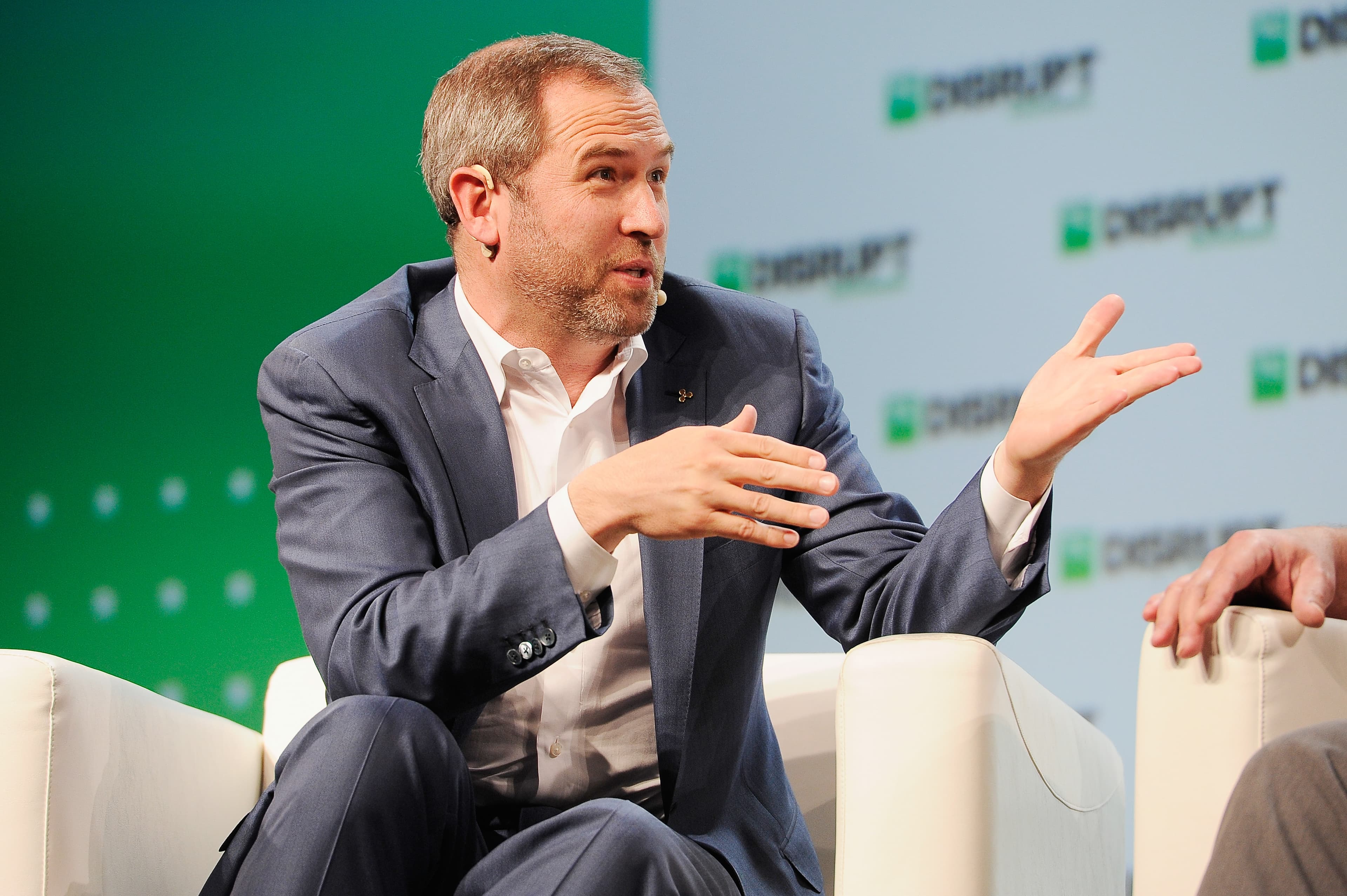
CEO, Ripple
Public Views
Experience
Documented career positions
Bradley Kent Garlinghouse (born February 4, 1971) is a prominent American business executive best known for his role as the Chief Executive Officer of Ripple, a financial technology company specializing in blockchain and cryptocurrency solutions. Throughout his career, Garlinghouse has established himself as a fixture in the technology sector, holding executive leadership positions at several major internet corporations before transitioning into the blockchain and digital asset space. Born and raised in Topeka, Kansas, Garlinghouse pursued his higher education with a focus on economics and management. He earned a Bachelor of Arts in Economics from the University of Kansas in 1995 and subsequently went on to obtain a Master of Business Administration from Harvard Business School, graduating in 1997. His academic background provided the foundation for a career marked by strategic operations and leadership in high-growth technology environments. Garlinghouse’s early professional career included roles at @Home Network and as a General Partner at @Ventures. In the early 2000s, he served as the CEO of Dialpad Communications. He later joined Yahoo!, where he served as Senior Vice President from 2003 to 2008. During his tenure at the company, he managed key divisions, including Yahoo! Mail, Yahoo! Messenger, and Flickr. He gained significant industry notoriety in 2006 for authoring an internal memo known as the "Peanut Butter Manifesto," which criticized Yahoo!'s strategic sprawl. In the document, he argued that the company was spreading its resources too thin—likening it to spreading peanut butter too thin across a slice of bread—and urged leadership to refocus on core business objectives and operational efficiency. Following his departure from Yahoo!, Garlinghouse served as a Senior Advisor at Silver Lake Partners before moving to AOL, where he acted as President of Consumer Applications from 2009 to 2011. He subsequently became the CEO and Chairman of Hightail (formerly YouSendIt), a cloud-based file collaboration service, leading the company through a period of rebranding and strategic pivot before his departure in 2014. In April 2015, Garlinghouse joined Ripple as its Chief Operating Officer, working closely with co-founder Chris Larsen. He was promoted to CEO in December 2016. Under his stewardship, Ripple has focused on utilizing blockchain technology to transform global payment infrastructure, specifically promoting the use of the digital asset XRP to facilitate faster, more cost-effective cross-border transactions. His tenure as CEO has been defined by his vocal advocacy for regulatory clarity within the United States. He has frequently engaged with policymakers and the public to debate the status of digital assets, positioning Ripple as a bridge between traditional financial institutions and the emerging ecosystem of decentralized finance. A central milestone of his leadership at Ripple was the company’s multi-year legal battle with the U.S. Securities and Exchange Commission (SEC). Initiated in December 2020, the SEC alleged that Ripple’s sales of XRP constituted an unregistered securities offering. The case became a landmark event for the cryptocurrency industry, drawing widespread attention for its potential to set legal precedents regarding the classification of digital tokens. The conflict concluded in 2025, with news of the SEC dropping its appeal, a resolution widely characterized by the company and its supporters as a significant victory for Ripple and a decisive turn in the regulatory landscape for digital assets in the United States. Beyond his role at Ripple, Garlinghouse has served on the boards of various technology companies, including Animoto, Ancestry.com, and Tonic Health, and has been an active angel investor in the tech sector. His career trajectory reflects a shift from the consolidation phase of the Web 2.0 era to the decentralization and infrastructure-building phase of the blockchain-enabled internet. He continues to be a prominent voice in fintech, known for his firm stance on regulatory policy and his commitment to the institutional adoption of blockchain technology.
AI-powered civic intelligence rating
Successfully navigated and survived the historic existential multi-year lawsuit brought by the US Securities and Exchange Commission (SEC) securing a landmark federal court ruling that the XRP token itself is not a security
Authored the famous 'Peanut Butter Manifesto' during his tenure at Yahoo! brutally and accurately diagnosing the company's lack of focus and organizational bloat
Endured immense intense scrutiny from the global cryptocurrency community regarding Ripple's massive escrow holdings of XRP with critics arguing the company artificially suppresses the price of the token by periodically dumping its reserves onto the retail market
Faced continuous fierce pushback from Bitcoin and Ethereum purists who argue that Ripple is inherently centralized and operates too closely with the legacy banking oligarchy betraying the foundational cypherpunk ethos of crypto
In December 2020, the U.S. Securities and Exchange Commission (SEC) filed a lawsuit against Ripple Labs, CEO Brad Garlinghouse, and executive chairman Chris Larsen, alleging the company raised over $1.3 billion through unregistered securities offerings of the digital asset XRP. In July 2023, a federal judge ruled that XRP was not a security when sold to the public on exchanges, and in October 2023, the SEC voluntarily dismissed all remaining individual charges against Garlinghouse and Larsen with prejudice.
Expanded the RippleNet global payment network to hundreds of financial institutions worldwide establishing major corridors for instant cross-border remittances in Japan South Korea and the UAE
Launched a massive highly liquid USD-backed stablecoin to compete directly with Tether and Circle
Earned an MBA from Harvard Business School in 1997.
Served as CEO of Dialpad Communications from 2000 to 2001.
Served as Senior Vice President at Yahoo! from 2003 to 2008, overseeing divisions including Flickr, Yahoo! Mail, and Yahoo! Messenger.
Authored the widely publicized 'Peanut Butter Manifesto' internal memo at Yahoo! in 2006, calling for greater strategic focus.
Served as President of Consumer Applications at AOL from 2009 to 2011.
Served as CEO of file-sharing company Hightail (formerly YouSendIt) from 2012 to 2014.
Joined the board of directors for video startup Animoto in 2012.
Served as a board member at Ancestry.com from 2013 to 2016.
Joined Ripple as Chief Operating Officer (COO) in April 2015.
Named a Distinguished Alumni honoree by the University of Kansas College of Liberal Arts & Sciences for the 2015-2016 academic year.
Promoted to Chief Executive Officer (CEO) of Ripple on January 1, 2017.
Included in CoinDesk's list of the most influential people in the digital assets and Web3 space in 2023.
Starting in 2018, Brad Garlinghouse and Ripple faced several class-action lawsuits, including cases filed by investors such as Vladi Zakinov and Ryan Coffey, alleging that Ripple sold XRP as an unregistered security. These lawsuits generally argued that the company misled investors regarding the asset's classification and utility, with outcomes largely paralleling the legal developments of the broader SEC litigation.
In litigation related to the class-action suits, plaintiffs alleged that in 2017, Garlinghouse made public statements claiming he was 'very long' on XRP while simultaneously selling millions of tokens. These accusations asserted that he misled investors about his financial interest and the actual utility of the cryptocurrency, though Ripple vigorously contested these claims, characterizing them as unsupported leaps of logic.