We're loading the complete profile of this person of interest including their biography, achievements, and contributions.
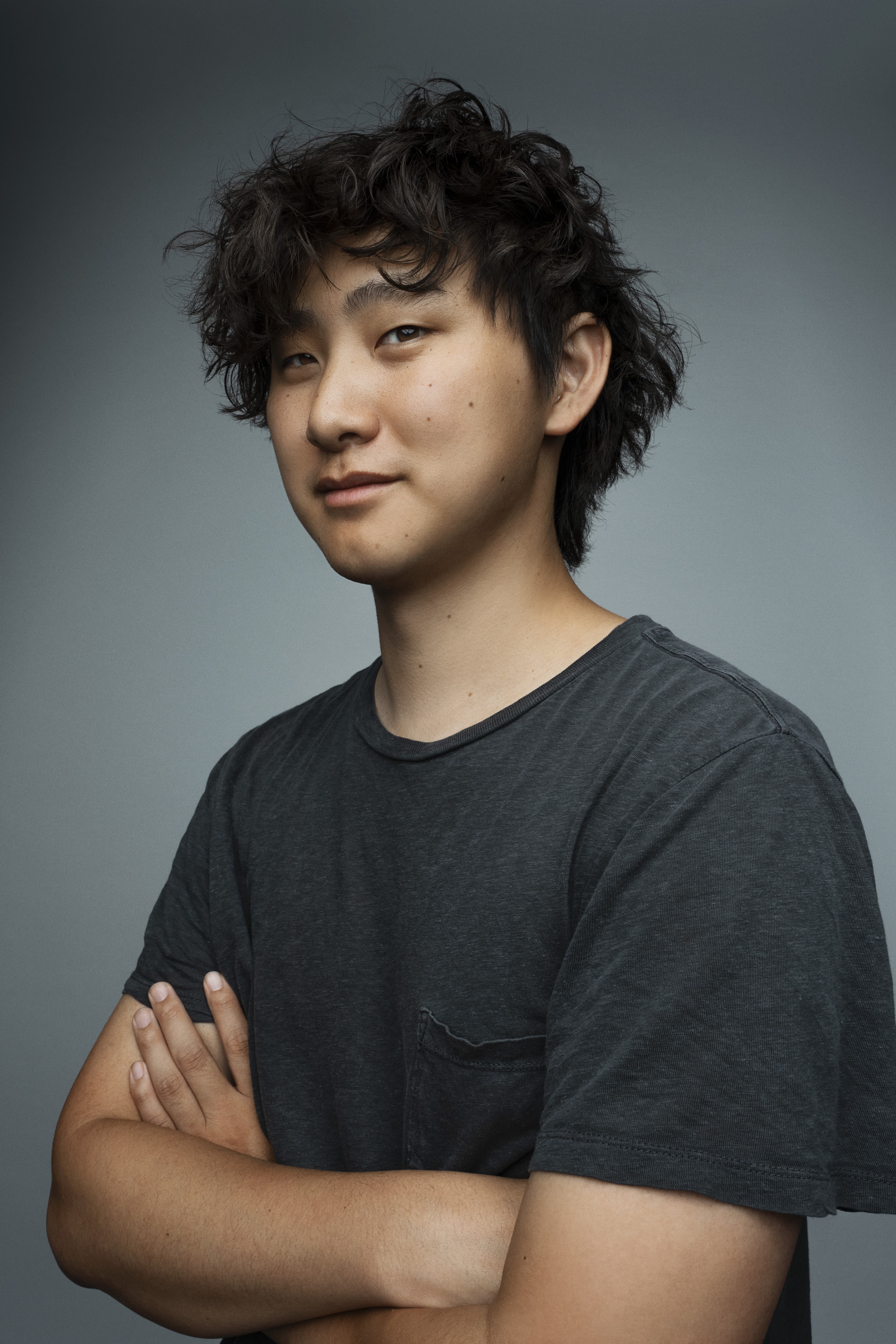
Founder & CEO, Scale AI
Public Views
Experience
Documented career positions
Alexandr Wang is an American entrepreneur and technology executive who rose to prominence as a central figure in the artificial intelligence industry. Born in January 1997 in Los Alamos, New Mexico, Wang grew up in a scientific environment as the son of parents who worked as physicists at the Los Alamos National Laboratory. This background in a hub of scientific research and development, combined with his early exposure to complex problem-solving, played a formative role in his intellectual development. From a young age, Wang demonstrated a prodigious aptitude for mathematics and computer programming, participating in national-level competitions such as the Math Olympiad Program and the United States Computing Olympiad (USACO) during his teenage years. Wang’s career trajectory in technology began while he was still a student. After graduating from Los Alamos High School, he briefly enrolled at the Massachusetts Institute of Technology (MIT) to study mathematics and computer science. However, driven by an interest in machine learning and a desire to address the practical bottlenecks facing AI development, he dropped out of MIT after his first year to join the Y Combinator startup accelerator. Before and during this period, he gained practical engineering experience working at companies such as Addepar and Quora, as well as holding a stint as an algorithm developer at the high-frequency trading firm Hudson River Trading. In 2016, at the age of 19, Wang co-founded Scale AI alongside Lucy Guo. The company was established to address a critical challenge in the machine learning ecosystem: the lack of high-quality, structured, and labeled data necessary to train advanced AI models. Scale AI developed a platform that combined machine learning with human-in-the-loop services to provide data labeling and model evaluation, effectively becoming a crucial infrastructure provider for companies ranging from autonomous vehicle developers to major technology firms. Under Wang’s leadership as CEO, Scale AI achieved rapid growth, reaching unicorn status in 2019 and eventually securing major contracts with organizations, including the United States Armed Forces, to assist in defense intelligence and the evaluation of large language models. Wang’s leadership at Scale AI brought him significant acclaim, and in 2021, he was widely cited as one of the world's youngest self-made billionaires. His net worth fluctuated with the company’s valuation, which continued to rise as AI became the dominant focus of the global technology sector. In June 2025, Wang stepped down from his position as CEO of Scale AI following a transaction in which Meta Platforms acquired a 49% stake in the company. Following this transition, Wang joined Meta as its Chief AI Officer, taking a leadership role in the company’s Superintelligence Labs. Throughout his career, Wang has received recognition for his influence on the AI industry, including appearances on the Forbes 30 Under 30 list and the Time100 Next list. His work is noted for identifying the necessity of data quality in the development of robust AI systems, a perspective that has helped shape the operational strategies of some of the world's largest corporations. Beyond his business contributions, he has been a vocal advocate for the importance of rigorous evaluation and safety in artificial intelligence, often engaging with government officials and industry leaders to discuss the responsible advancement of the field.
Founded Scale AI in 2016, building it into a $14+ billion enterprise that acts as the 'data foundry' for the entire global generative AI ecosystem
Became the world's youngest self-made billionaire at age 24
Secured massive, multi-hundred-million-dollar defense contracts with the US Department of Defense to train targeting algorithms, autonomous vehicles, and intelligence-gathering systems
Faces intense ethical and journalistic scrutiny regarding Scale AI's labor practices, specifically its reliance on 'Remotasks'—a massive, global 'ghost workforce' of gig workers in developing nations (like Kenya, the Philippines, and Venezuela) who are paid pennies an hour to label traumatic or exhausting data sets to train Silicon Valley AI models
Criticized by anti-war tech employees for fully embracing and profiting from the militarization of artificial intelligence, drawing direct comparisons to Palantir and Anduril
Sued by rival AI startups over aggressive, allegedly anti-competitive hiring practices and intellectual property disputes
Appointed to the National Artificial Intelligence Advisory Committee (NAIAC) to advise the President of the United States on AI policy
Finalist in the USA Computing Olympiad (USACO) in 2012 and 2013.
Qualified for the Math Olympiad Program in 2013.
Member of the US Physics Team in 2014.
Worked as a software engineer at Addepar and Quora, and as an algorithm developer at Hudson River Trading prior to 2016.
Co-founded Scale AI in 2016 after dropping out of the Massachusetts Institute of Technology.
Named to the Forbes 30 Under 30 list in the Enterprise Technology category in 2018.
Became the world's youngest self-made billionaire in 2021 at the age of 24.
Appointed to the board of directors of Expedia Group in 2023.
Testified before a House Armed Services subcommittee regarding AI and national security in 2023.
Named to the TIME100 AI list in 2023.
Announced the formalization of a merit, excellence, and intelligence (MEI) hiring policy at Scale AI in 2024.
Stepped down as CEO of Scale AI in June 2025 following Meta Platforms' acquisition of a 49% stake in the company.
Appointed as the Chief AI Officer at Meta Platforms in 2025 to lead its Superintelligence Labs.
In December 2024, Alexandr Wang and Scale AI were named as defendants in a class-action lawsuit filed in San Francisco Superior Court, alleging widespread wage theft, misclassification of workers as independent contractors, and failure to pay overtime wages.
The 2024 class-action lawsuit further alleged that Scale AI subjected contract workers to 'traumatizing' and disturbing content without proper support while failing to adhere to labor standards, with the complaint characterizing the company's treatment of its workforce as 'predatory.'
Scale AI has faced ongoing criticism and reports regarding its operational management, including allegations from contractors of chronic mismanagement, delayed or unpaid wages, and a lack of transparency in its data-labeling 'Tasker' programs.
In early 2026, Scale AI initiated a lawsuit against the U.S. Department of Defense in the Court of Federal Claims following a contract dispute, a move that drew public attention due to the classified nature of the proceedings.