We're loading the full news article for you. This includes the article content, images, author information, and related articles.
President William Ruto has utilized the Lunar New Year celebrations to aggressively reaffirm Kenya's strategic alignment with Beijing, signaling a shift towards
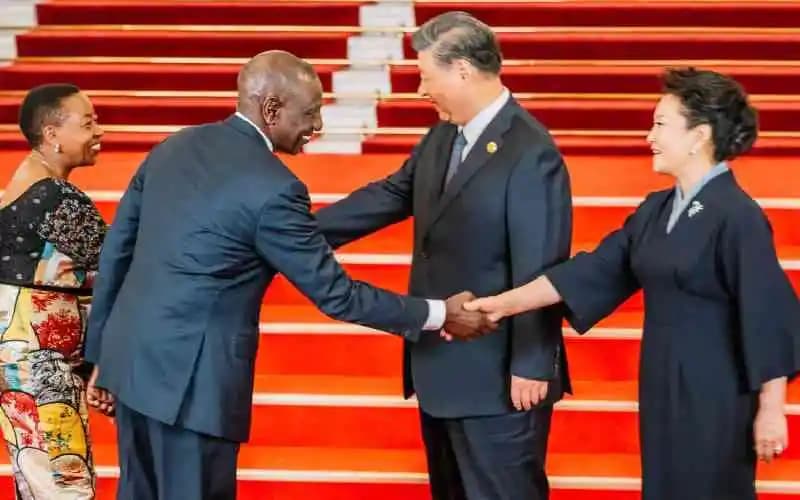
President William Ruto has utilized the Lunar New Year celebrations to aggressively reaffirm Kenya’s strategic alignment with Beijing. As the "Year of the Horse" begins, the Head of State is betting on a new era of "people-to-people" diplomacy to unlock billions in infrastructure and trade deals.
In a carefully calibrated diplomatic overture, President William Ruto has sent a robust message of goodwill to the People’s Republic of China, marking the Lunar New Year with a pledge to deepen the Nairobi-Beijing axis. The message, delivered as Chinese communities worldwide celebrated the Year of the Horse, was not merely ceremonial; it was a strategic reiteration of Kenya’s foreign policy pivot, emphasizing China as a "key development partner" and a "strong voice for the Global South."
The timing is critical. With Western donor funding facing new scrutiny and potential contraction, the Ruto administration is doubling down on its Eastern partnerships. The President’s statement explicitly referenced the outcomes of his 2025 State Visit to China, signaling that the agreements signed in Beijing—spanning green energy, manufacturing, and digital infrastructure—are now entering a critical implementation phase. For Kenya, the "Year of the Horse" symbolizes speed and perseverance, qualities the government is keen to project in its economic recovery strategy.
Historically, Kenya-China relations have been defined by mega-infrastructure projects: the Standard Gauge Railway (SGR), the Nairobi Expressway, and the Thika Superhighway. However, Ruto’s message introduces a nuanced shift towards "soft power." He highlighted 2026 as the "Year of People-to-People Exchange" under the Forum on China-Africa Cooperation (FOCAC). This signals a move beyond government-to-government loans towards fostering direct private sector engagement, tourism, and cultural exchange.
"Kenya recognizes and appreciates the contributions of the Chinese business community in Kenya," Ruto stated, acknowledging the growing influence of Chinese private enterprise in the local economy. From the bustling markets of Gikomba where Chinese goods dominate supply chains, to the tech hubs of Kilimani where Chinese firms like Huawei and Transsion are entrenched, the integration is deepening. The President is now pushing for this relationship to evolve into a two-way street, encouraging Chinese tourists to visit the Maasai Mara and Chinese universities to open doors for Kenyan students.
This diplomatic warmth comes at a time when Kenya is navigating a complex geopolitical landscape. By describing China as a "strong voice for multilateralism," Ruto is aligning Kenya with the BRICS+ narrative of a multipolar world. This is a calculated move to diversify Kenya’s economic dependencies. With the global economy facing headwinds, Nairobi is keen to secure its slice of the Chinese market, particularly for agricultural exports like avocados and tea, which have recently gained access to the vast Chinese consumer base.
Tourism Cabinet Secretary Rebecca Miano echoed the President’s sentiments, wishing the Chinese community "health, harmony, and abundant opportunity." Her ministry is actively targeting the Chinese outbound tourism market—the largest in the world—to bolster Kenya’s recovering tourism sector. The strategy is clear: entice the high-spending Chinese traveler to look beyond Europe and choose the savannahs of East Africa.
As the Year of the Horse gallops in, the pressure is on the Ruto administration to translate these warm sentiments into tangible economic outcomes. Can the promise of "people-to-people" exchange lead to real jobs for Kenya’s youth? Can the private sector deliver where government loans have faltered? As 2026 unfolds, the answers will lie not in diplomatic communiqués, but in the balance sheets of Kenyan businesses and the visitor arrival numbers at Jomo Kenyatta International Airport.
Keep the conversation in one place—threads here stay linked to the story and in the forums.
Sign in to start a discussion
Start a conversation about this story and keep it linked here.
Other hot threads
E-sports and Gaming Community in Kenya
Active 9 months ago
The Role of Technology in Modern Agriculture (AgriTech)
Active 9 months ago
Popular Recreational Activities Across Counties
Active 9 months ago
Investing in Youth Sports Development Programs
Active 9 months ago
Key figures and persons of interest featured in this article