We're loading the full news article for you. This includes the article content, images, author information, and related articles.
A feud between Ontario and Manitoba over Crown Royal whisky escalates as Premier Doug Ford boycotts the brand to protest job losses, threatening Canadian unity.
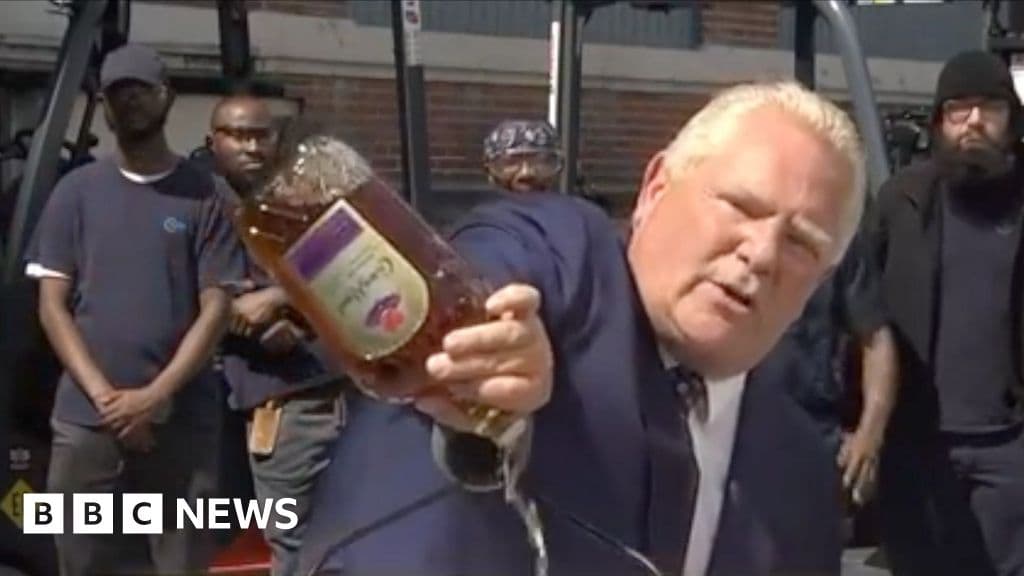
What began as a symbolic protest has escalated into a rare and awkward interprovincial dispute, exposing the tensions that run through Canada’s federation when economic nationalism collides with regional livelihoods.
Ontario Premier Doug Ford ignited the controversy after dramatically pouring a bottle of Crown Royal whisky into a sewer on live television—an act meant to denounce the brand owner’s decision to move jobs to the United States. Instead, the gesture has triggered a diplomatic row with Manitoba, where the whisky is actually produced and where hundreds of Canadian jobs are now caught in the crossfire.
Crown Royal, one of Canada’s most recognizable whisky brands, is owned by Diageo, a British multinational drinks conglomerate. Diageo has announced plans to close its Amherstburg plant in Ontario, a move Ford says will result in job losses and undermine Canada’s manufacturing base at a time of growing trade pressure from the United States.
In retaliation, the Ontario government ordered the removal of Crown Royal from provincially run liquor stores, a powerful commercial lever in a province where alcohol retail is tightly controlled.
But the move has landed far beyond Ontario’s borders.
While Amherstburg faces closure, Crown Royal is distilled in Gimli, Manitoba, where the operation employs hundreds of workers and anchors the local economy. For Manitoba officials, Ford’s boycott threatens to punish Canadian workers and communities that had no role in Diageo’s corporate decision-making.
Manitoba Premier Wab Kinew has publicly urged Ford to reverse course, warning that the Ontario boycott risks damaging Canadian unity at a critical moment.
“This is hurting a Canadian product and Canadian workers to make a point to a foreign owner,” Kinew said, calling on Ford to “do a 180.” His message is clear: economic retaliation aimed at multinational corporations must be carefully targeted—or it risks becoming self-sabotage.
Manitoba officials argue that Crown Royal’s identity as a Canadian brand is inseparable from its production base in Gimli. Undermining sales in Ontario, they say, directly threatens jobs in Manitoba while doing little to pressure Diageo’s global balance sheet.
Ford, never one to soften his language, lashed out at Diageo’s leadership, calling the decision to move jobs south of the border “dumb as a bag of hammers.” He framed the protest as a defense of Canadian workers and a warning to multinationals considering similar moves.
Yet critics argue that the premier’s approach sacrifices nuance for spectacle. By targeting the product itself rather than negotiating protections, incentives, or penalties directly with the company, Ontario risks alienating allies within Canada just as it calls for a united front against U.S. trade tariffs and protectionist policies.
The episode has become a stress test for the idea of “Team Canada”—the notion that provinces must act in concert to defend national economic interests, especially when dealing with powerful external actors.
Trade experts note that provincial fragmentation weakens Canada’s negotiating position internationally. “When provinces start undercutting each other, it sends a signal of disunity,” said one policy analyst. “Multinationals and foreign governments notice.”
The Crown Royal dispute also highlights a broader challenge: how Canada balances corporate accountability, provincial autonomy, and the realities of global ownership in an era where iconic national brands are often controlled abroad.
For now, the whisky remains off Ontario shelves, and the rhetoric continues to flow. But behind the theatrics lies a more serious question—how governments should respond when foreign-owned firms make decisions that hurt local workers without triggering collateral damage at home.
As Manitoba presses for restraint and Ontario doubles down on protest, one thing is clear: a single bottle of whisky has exposed the fragility of economic solidarity in a country that prides itself on cooperation.
Whether cooler heads prevail—or the standoff hardens—will determine if this dispute becomes a footnote in Canada’s trade politics or a cautionary tale about the limits of symbolic politics in a globalized economy.
Keep the conversation in one place—threads here stay linked to the story and in the forums.
Sign in to start a discussion
Start a conversation about this story and keep it linked here.
Other hot threads
E-sports and Gaming Community in Kenya
Active 9 months ago
The Role of Technology in Modern Agriculture (AgriTech)
Active 9 months ago
Popular Recreational Activities Across Counties
Active 9 months ago
Investing in Youth Sports Development Programs
Active 9 months ago