We're loading the full news article for you. This includes the article content, images, author information, and related articles.
Heavy downpours are forecast for Kenya’s agricultural heartlands during the upcoming long rains season, while the arid north and coastal regions face a grim outlook of continued dry spells.
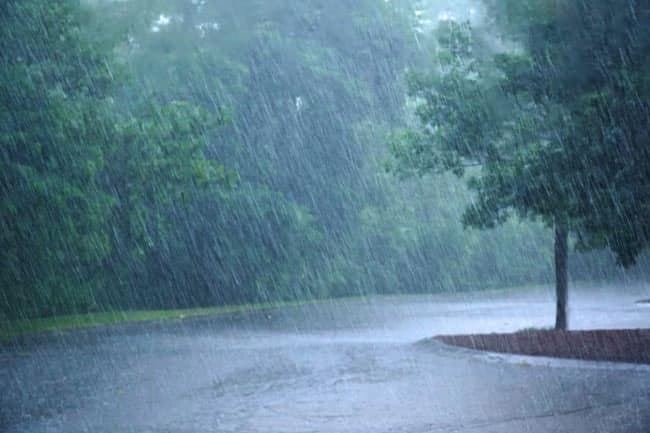
Kenya is bracing for a season of sharp climatic contrasts as the weatherman predicts intense downpours for the country’s agricultural basket while the arid north faces continued dry spells.
The Kenya Meteorological Department has released its forecast for the March-April-May long rains season, signalling a critical period for the nation’s farmers and disaster management teams. While the skies are set to open up over the Rift Valley, Lake Basin, and Central Highlands, millions in the northern frontier counties of Turkana and Mandera must prepare for a distinct lack of moisture, exacerbating fears of food insecurity in an already vulnerable region.
In a comprehensive climate outlook released by the Director of Meteorological Services, David Gikungu, the department has pinpointed specific regions that will experience above-average rainfall. The forecast is particularly favourable for the Highlands West of the Rift Valley, the Lake Victoria Basin, and the Central and South Rift Valley. These areas, traditionally the breadbasket of the nation, are expected to see sustained precipitation that could significantly boost crop production if managed correctly.
Farmers in the Highlands East of the Rift Valley, including Nairobi, Nyandarua, Nyeri, Kirinyaga, Murang'a, Kiambu, Meru, Embu, and Tharaka Nithi, have been advised to take full advantage of the season. The projection indicates that the rains will be well-distributed in time and space, providing optimal conditions for planting maize, beans, and potatoes. However, the abundance of water comes with a caveat. The department has issued a stern warning regarding the potential for lightning strikes in Western Kenya, a recurring tragedy that has claimed lives in previous wet seasons.
The forecast also extends hope to the Southeastern lowlands, covering Machakos, Kitui, and Makueni. These semi-arid lands, often prone to erratic weather, are slated for enhanced rainfall, offering a rare opportunity for water harvesting and pasture regeneration. Residents have been urged to install water storage systems immediately to bank the precious resource for the dry months that will inevitably follow.
While the rains promise a bounty for agriculture, they carry the heavy risk of destruction. The Meteorological Department has flagged the likelihood of flash floods in low-lying areas and flood plains. Urban centres with poor drainage systems, particularly Nairobi and Mombasa, remain on high alert. The forecast warns that sudden, heavy storms could lead to rapid accumulation of surface runoff, disrupting transport and damaging infrastructure.
Conversely, the outlook for the Coastal region—Mombasa, Tana River, Kilifi, Lamu, and Kwale—and the vast Northeastern counties remains grim. The prediction of depressed rainfall suggests that these areas will not recover from hydrological drought anytime soon. The disparity in weather patterns underscores the complex climate reality facing Kenya, where one half of the country battles floods while the other prays for a single drop.
As the clouds gather over the Rift, the message from the Met Department is clear: preparation is the only shield against the elements. Whether it is digging trenches in the highlands or stocking food in the north, the coming months will demand resilience and rapid adaptation from every Kenyan.
Keep the conversation in one place—threads here stay linked to the story and in the forums.
Sign in to start a discussion
Start a conversation about this story and keep it linked here.
Other hot threads
E-sports and Gaming Community in Kenya
Active 10 months ago
Popular Recreational Activities Across Counties
Active 10 months ago
The Role of Technology in Modern Agriculture (AgriTech)
Active 10 months ago
Investing in Youth Sports Development Programs
Active 10 months ago



