We're loading the full news article for you. This includes the article content, images, author information, and related articles.
The Kenya Meteorological Department has issued a stark advisory, forecasting torrential downpours and severe flooding in over 20 counties across the republic.

The Kenya Meteorological Department has issued a stark advisory, forecasting torrential downpours and severe flooding in over 20 counties across the republic.
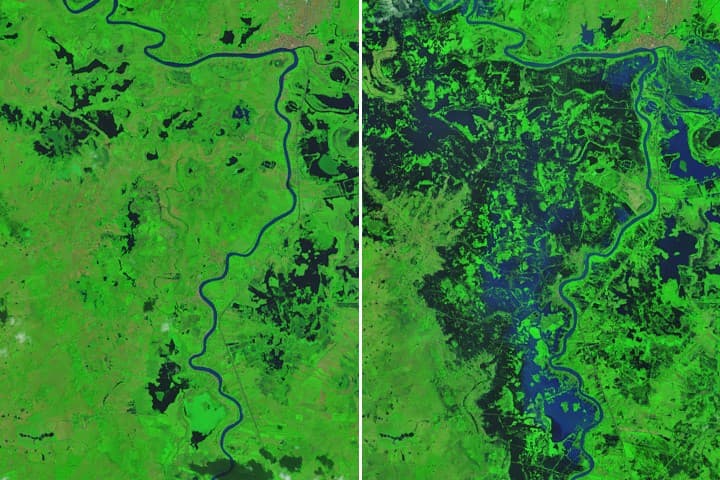
The skies over East Africa are set to open with devastating, unrelenting intensity as the weatherman places wide swathes of the country on the highest state of alert. Residents in low-lying, riparian, and historically flood-prone areas are being urgently advised to brace for relentless rains exceeding 20 millimetres within a highly concentrated 24-hour window.
This extreme, highly anomalous weather event poses a severe, immediate threat to national infrastructure, agricultural outputs, and human life. As the worsening global climate crisis continually exacerbates the unpredictability and violence of seasonal rains, the Kenyan government's disaster preparedness, emergency response mechanisms, and county-level resilience are about to be put to the ultimate, unforgiving test.
The Kenya Meteorological Department, via Message Update No. Two under Advisory No. 01/2026, issued a stark warning on Wednesday, projecting the heavy rainfall to persist relentlessly from the evening of February 25 through to Tuesday, March 3. The advisory places multiple vital agricultural and economic regions on high alert, citing a moderate to high probability of catastrophic flooding.
The sprawling list of counties marked as critical areas of concern reads like a roll call of Kenya's food basket. The threat looms largest over Migori, Nyamira, Bungoma, Busia, Kakamega, Vihiga, West Pokot, Baringo, Elgeyo Marakwet, Trans Nzoia, Nandi, Uasin Gishu, Nakuru, Siaya, Kisumu, Homa Bay, Kisii, Kericho, and Bomet. These regions, primarily situated in the Highlands West of the Rift Valley and the Lake Victoria Basin, are expected to bear the absolute brunt of the deluge.
While the intensity of the downpours is projected to marginally ease beginning Sunday, March 1, in the Southeastern lowlands, the Coastal region, and the Highlands East of the Rift Valley—including the capital, Nairobi—the western corridors will experience no such reprieve. The sustained downpour threatens to rapidly overwhelm existing drainage systems and cause rivers, particularly the Nyando and Nzoia, to burst their banks.
The impending floods arrive at a critically vulnerable juncture for the Kenyan economy. With the agricultural sector preparing for the planting season, waterlogged soils and washed-away topsoil could catastrophically delay planting schedules, severely threatening the nation's food security and driving up inflation on basic commodities. Furthermore, the destruction of rural road networks will isolate communities, cutting them off from essential medical and commercial supplies.
From a humanitarian perspective, the risk of mass displacement is exceptionally high. Previous flood cycles in regions like Budalangi and the Kano plains have resulted in thousands of Internally Displaced Persons (IDPs) crammed into poorly sanitised rescue camps. This environment serves as a volatile breeding ground for waterborne diseases such as cholera and typhoid, placing an immense burden on already stretched county health facilities.
In light of the dire forecast, the focus sharply pivots to the proactive measures being deployed by the Ministry of Interior and national disaster management agencies. County governments, recently chastised by the Parliamentary Budget Office for reckless spending, are now under the microscope to demonstrate effective utilisation of their emergency contingency funds.
Citizens residing in precarious areas are being urged to immediately relocate to higher, safer ground and absolutely avoid attempting to cross swollen rivers, a leading cause of flood-related fatalities. The tragic reality of climate change means that these extreme weather events are no longer once-in-a-generation anomalies but frequent, deadly occurrences.
As the dark clouds gather over the Rift Valley, the true measure of Kenya's infrastructural resilience will be laid bare. The coming days require unprecedented coordination between the meteorological department, emergency responders, and local administrators to ensure that the predicted natural disaster does not morph into an unmanageable, large-scale national tragedy.
Keep the conversation in one place—threads here stay linked to the story and in the forums.
Sign in to start a discussion
Start a conversation about this story and keep it linked here.
Other hot threads
E-sports and Gaming Community in Kenya
Active 9 months ago
The Role of Technology in Modern Agriculture (AgriTech)
Active 9 months ago
Popular Recreational Activities Across Counties
Active 9 months ago
Investing in Youth Sports Development Programs
Active 9 months ago