We're loading the full news article for you. This includes the article content, images, author information, and related articles.
Unseasonal and extreme rainfall triggers catastrophic flooding along the Sinú River, submerging thousands of homes and vast tracts of farmland.
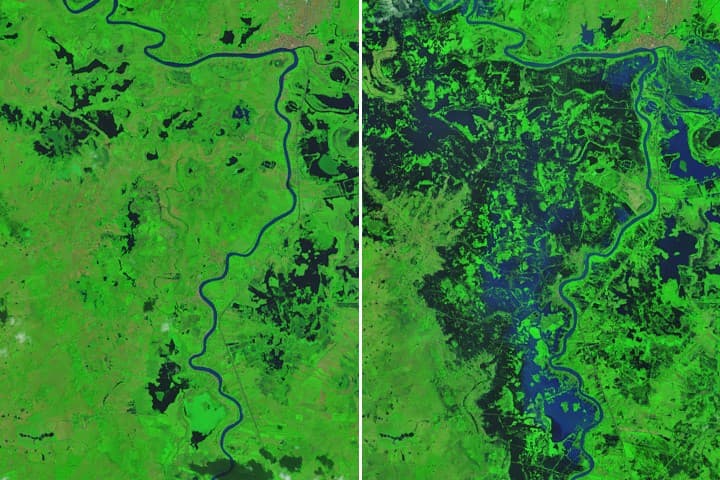
A bizarre and highly destructive meteorological anomaly has plunged the northern agricultural departments of Colombia into a massive humanitarian and economic crisis.
The unprecedented inundation occurring during what is traditionally the driest phase of the year highlights the rapidly accelerating, chaotic nature of global climate change. This disaster not only disrupts local food security but serves as a grim warning to agricultural economies globally—including those in East Africa—regarding the catastrophic unpredictability of shifting weather patterns.
Historically, February represents the peak of the dry season in Colombia's Córdoba department. It is a critical operational window where ranchers graze livestock on drying floodplains and farmers meticulously prepare vast tracts of land for the upcoming planting cycles. However, the seasonal rhythm was violently upended in early February 2026. An highly unusual cold front, originating in the Caribbean Sea, aggressively pushed southward, forcing massive volumes of moisture-laden air directly into northern Colombia and against the imposing Andes mountains.
The atmospheric collision resulted in several consecutive days of apocalyptic downpours. Data retrieved from NASA's Integrated Multi-satellite Retrievals for Global Precipitation Measurement (IMERG) indicated horrifying rain rates, peaking at 1.7 centimeters per hour near the city of Lorica on February 1. Certain localized sectors absorbed an impossible 4 to 7 centimeters of rainfall per day. Unable to contain the monumental volume of water, the vital Sinú River catastrophically breached its banks.
The resulting floodwaters have essentially erased the local geography. False-color satellite imagery captured by the Operational Land Imager on Landsat 9 reveals a horrifying transformation. Dark, toxic floodwaters now completely cover what were previously highly productive pasturelands and complex wetland ecosystems. Entire rural communities situated west of the river have been effectively cut off from mainland rescue operations.
The United Nations Office for the Coordination of Humanitarian Affairs has confirmed the staggering scope of the disaster. Preliminary governmental damage assessments indicate that over 80 percent of the Córdoba department is currently submerged. The physical destruction has displaced upwards of 11,000 vulnerable families, annihilating thousands of residential structures and critically compromising municipal infrastructure.
The economic devastation is profound. Over 150,000 hectares of prime agricultural land have been totally inundated, essentially wiping out the region's entire annual harvest before the seeds could even germinate. The destruction of this critical farming and cattle corridor will undoubtedly trigger localized food shortages and severe hyperinflation in regional commodity markets.
For nations observing from afar, such as Kenya—which recently battled its own catastrophic, unseasonal El Niño flooding that destroyed highways and displaced thousands in regions like Tana River—the Colombian crisis is highly relatable. It underscores the urgent, mandatory requirement for developing nations to invest billions into climate-resilient infrastructure, early warning meteorological systems, and robust disaster capitalism frameworks to absorb these inevitable climate shocks.
As the month draws to a close, meteorological reports offer very little hope for immediate relief, with late-February satellite passes indicating that the floodwaters remain stubbornly widespread and stagnant.
"The rhythms of the earth have been broken, leaving an entire agricultural economy drowning in the season of dust," reported a local environmental observer.
Keep the conversation in one place—threads here stay linked to the story and in the forums.
Sign in to start a discussion
Start a conversation about this story and keep it linked here.
Other hot threads
E-sports and Gaming Community in Kenya
Active 9 months ago
The Role of Technology in Modern Agriculture (AgriTech)
Active 9 months ago
Popular Recreational Activities Across Counties
Active 9 months ago
Investing in Youth Sports Development Programs
Active 9 months ago