We're loading the full news article for you. This includes the article content, images, author information, and related articles.
The death of veteran minister William Lukuvi leaves a profound void in Tanzania's government, impacting legislative coordination and party unity.

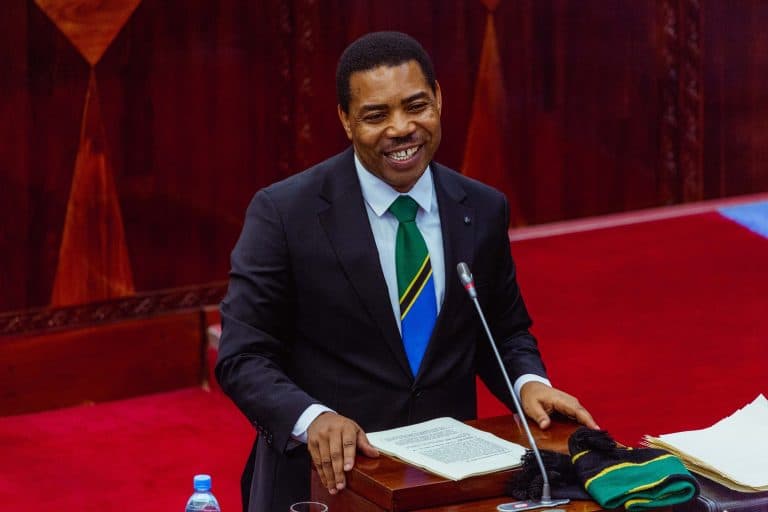
The silence at the National Assembly grounds in Dodoma on Friday spoke louder than the tributes offered by the thousands in attendance. As Prime Minister Mwigulu Nchemba stood before the casket of William Vangimembe Lukuvi, the atmosphere was not merely one of grief, but of profound institutional unease—a recognition that the engine room of Tanzania’s government has lost one of its most essential, and experienced, architects.
The death of William Lukuvi at age 70, following a sudden cardiac event at Benjamin Mkapa Hospital on Wednesday, marks a significant inflection point for the ruling Chama Cha Mapinduzi party and the broader Tanzanian administration. Serving as the Minister of State in the Prime Minister’s Office for Policy, Parliament, Coordination, and Persons with Disabilities, Lukuvi was more than a cabinet member he was the primary conduit between the executive branch and the legislature, a role that required both granular legislative mastery and deep political intuition.
To understand the magnitude of Lukuvi’s departure, one must look past his title. In the Tanzanian system, the office he held is often referred to as the government’s clearinghouse. It is here that policy is translated into law and where the friction between executive ambition and parliamentary oversight is managed. Lukuvi, a veteran of over three decades in public service, possessed a reputation for an aggressive, hands-on style that smoothed the passage of complex government business.
His tenure was characterized by a pragmatic approach to governance. Whether overseeing land reform initiatives or navigating the delicate balance of the 4R philosophy—reconciliation, resilience, reform, and rebuilding—introduced by President Samia Suluhu Hassan, Lukuvi operated as a stabilizing force. Analysts note that his ability to de-escalate internal disputes made him an indispensable ally for successive administrations. For a government currently navigating the challenges of rapid economic expansion and infrastructure modernization, the loss of an operator who understood the historical precedent of every legislative hurdle is a profound tactical deficit.
Prime Minister Nchemba’s public tribute revealed the personal and professional depth of their relationship. The Prime Minister spoke candidly about Lukuvi’s influence during his early years, particularly when Nchemba was first appointed Deputy Minister for Finance. In a system where administrative continuity is often disrupted by shifting political tides, Lukuvi provided a consistent reference point.
This mentorship dynamic was critical for Nchemba. The Prime Minister highlighted how Lukuvi’s efficiency allowed the government to execute complex operations, such as extensive field tours across local government authorities, by effectively handling the coordination workload in the capital. Data regarding the government’s operational tempo underscores this point: coordinating national policy across diverse regions requires a level of institutional memory that Lukuvi had cultivated since his entry into parliament in 1995. His passing leaves junior ministers and new cabinet appointees without a primary sounding board for policy formulation.
Within the Chama Cha Mapinduzi party, Lukuvi was widely viewed as a quintessential loyalist and a master strategist who could command respect from both conservative and reformist wings. His absence creates an immediate vacuum, particularly as the administration prepares for future election cycles. The party now faces the challenge of identifying a successor who can replicate his unique ability to manage, rather than silence, dissent within the house.
Political observers in Dar es Salaam suggest that the realignment required to fill his role will be delicate. The President now faces the urgent task of appointing an individual who possesses not only the policy expertise but also the deep-rooted political capital required to maintain order during legislative sessions. In a parliament that has seen the loss of several senior members in recent months, the government cannot afford a prolonged period of internal adjustment.
Beyond the borders of Tanzania, Lukuvi’s death reverberates through the East African Community. As the region grapples with harmonizing trade policies and security arrangements, the stability of Tanzania—the region’s largest economy—remains paramount. His advocacy for pragmatism and his role in managing policy coordination ensured that Tanzania remained a predictable, if sometimes complex, partner in regional negotiations. When a key architect of such policy departs, it forces neighboring nations to recalibrate their expectations regarding the speed and consistency of Tanzanian legislative implementation.
As the nation prepares for the state honors in Iringa next Tuesday, the focus will inevitably shift from mourning to the future. The void left by a career spanning thirty years is not easily filled by a single appointment. The administration must now prove that its systems are robust enough to withstand the loss of its most reliable operational hand. For the citizens of Tanzania, the question is not who will occupy his office, but who will possess the political wisdom to guide the nation’s legislative agenda through the turbulent years ahead.
Keep the conversation in one place—threads here stay linked to the story and in the forums.
Sign in to start a discussion
Start a conversation about this story and keep it linked here.
Other hot threads
E-sports and Gaming Community in Kenya
Active 10 months ago
The Role of Technology in Modern Agriculture (AgriTech)
Active 10 months ago
Popular Recreational Activities Across Counties
Active 10 months ago
Investing in Youth Sports Development Programs
Active 10 months ago
Key figures and persons of interest featured in this article