We're loading the full news article for you. This includes the article content, images, author information, and related articles.
A watershed moment looms in global environmental jurisprudence as the United States Supreme Court agrees to hear a high-stakes climate accountability lawsuit against oil giants, a ruling that could fundamentally reshape the battle for climate reparations in vulnerable East African nations.

A watershed moment looms in global environmental jurisprudence as the United States Supreme Court agrees to hear a high-stakes climate accountability lawsuit against oil giants, a ruling that could fundamentally reshape the battle for climate reparations in vulnerable East African nations.
The highest court in the United States has officially intervened in the City of Boulder's ambitious lawsuit targeting Suncor Energy USA and the monolithic ExxonMobil Corporation. The core legal argument rests on whether federal laws pre-empt local claims regarding environmental destruction.
This legal showdown is of paramount importance globally. If the conservative-leaning Supreme Court sides with the fossil fuel titans and dismisses the lawsuit, it could instantly decapitate a burgeoning wave of municipal climate litigation. Such a ruling would effectively shield major polluters from the financial consequences of the global climate chaos they have demonstrably engineered.
The lawsuit driven by the City of Boulder, Colorado, represents an aggressive, decentralized legal strategy. Local communities, burdened by the astronomical, mounting costs of adapting to extreme weather, are utilizing state-level tort laws to extract damages directly from the corporate entities most responsible for greenhouse gas emissions. Mayor Aaron Brockett has staunchly defended the municipality's absolute right to demand corporate accountability.
Conversely, the fossil fuel industry's sophisticated defense relies heavily on federal pre-emption. They argue that regulating emissions is a matter of national policy, not a patchwork of local lawsuits. This argument is dangerously compounded by the recent, controversial rollback of foundational Environmental Protection Agency (EPA) endangerment findings, further weakening the federal mandate to restrict climate-warming pollution.
While the legal minutiae will be dissected in Washington, the most visceral impacts of this case resonate thousands of miles away. The African continent contributes a mathematically negligible fraction—less than four percent—to historical global greenhouse gas emissions, yet it bears the absolute, brutal brunt of the resulting climate volatility.
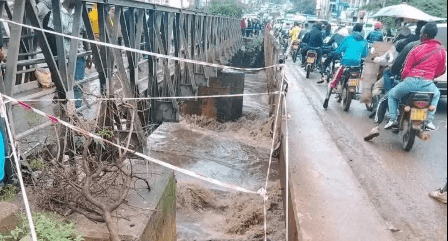
The connection to local realities in East Africa is undeniable. The devastating, multi-year droughts devastating pastoralists in the Horn of Africa, the recent catastrophic flooding washing away critical bridges in Migori, and the shifting agricultural seasons destroying Kenyan livelihoods are direct symptoms of the carbon pollution at the heart of the Boulder lawsuit.
Why does a municipal lawsuit in Colorado matter in Nairobi? Because international environmental law relies heavily on established precedent. If local US jurisdictions succeed in holding Big Oil financially liable for specific climate damages, it establishes a powerful legal and moral framework that developing nations can leverage to demand international climate reparations.
Kenya has already positioned itself at the vanguard of this fight. Through initiatives like the Nairobi Declaration championed during the Africa Climate Summit, the region is actively pushing for a restructured global financial architecture. A victory for Boulder would provide immense legal leverage to African nations demanding that the polluter definitively pays for the resulting damage.
To secure a sustainable future for the Global South, the international community must rapidly move beyond empty rhetoric and operationalize genuine climate justice mechanisms. The most urgent priorities include:
While the legal arguments will be intensely debated in the hallowed halls of Washington, the ultimate consequences of this Supreme Court decision will be profoundly felt in the parched fields and flooded valleys of East Africa.
Keep the conversation in one place—threads here stay linked to the story and in the forums.
Sign in to start a discussion
Start a conversation about this story and keep it linked here.
Other hot threads
E-sports and Gaming Community in Kenya
Active 9 months ago
The Role of Technology in Modern Agriculture (AgriTech)
Active 9 months ago
Popular Recreational Activities Across Counties
Active 9 months ago
Investing in Youth Sports Development Programs
Active 9 months ago