Loading News Article...
We're loading the full news article for you. This includes the article content, images, author information, and related articles.
/
/
We're loading the full news article for you. This includes the article content, images, author information, and related articles.
A landmark Government-to-Government agreement redirects $1.6 billion in funding, sidelining the traditional NGO model and demanding greater accountability and increased health spending from Nairobi.
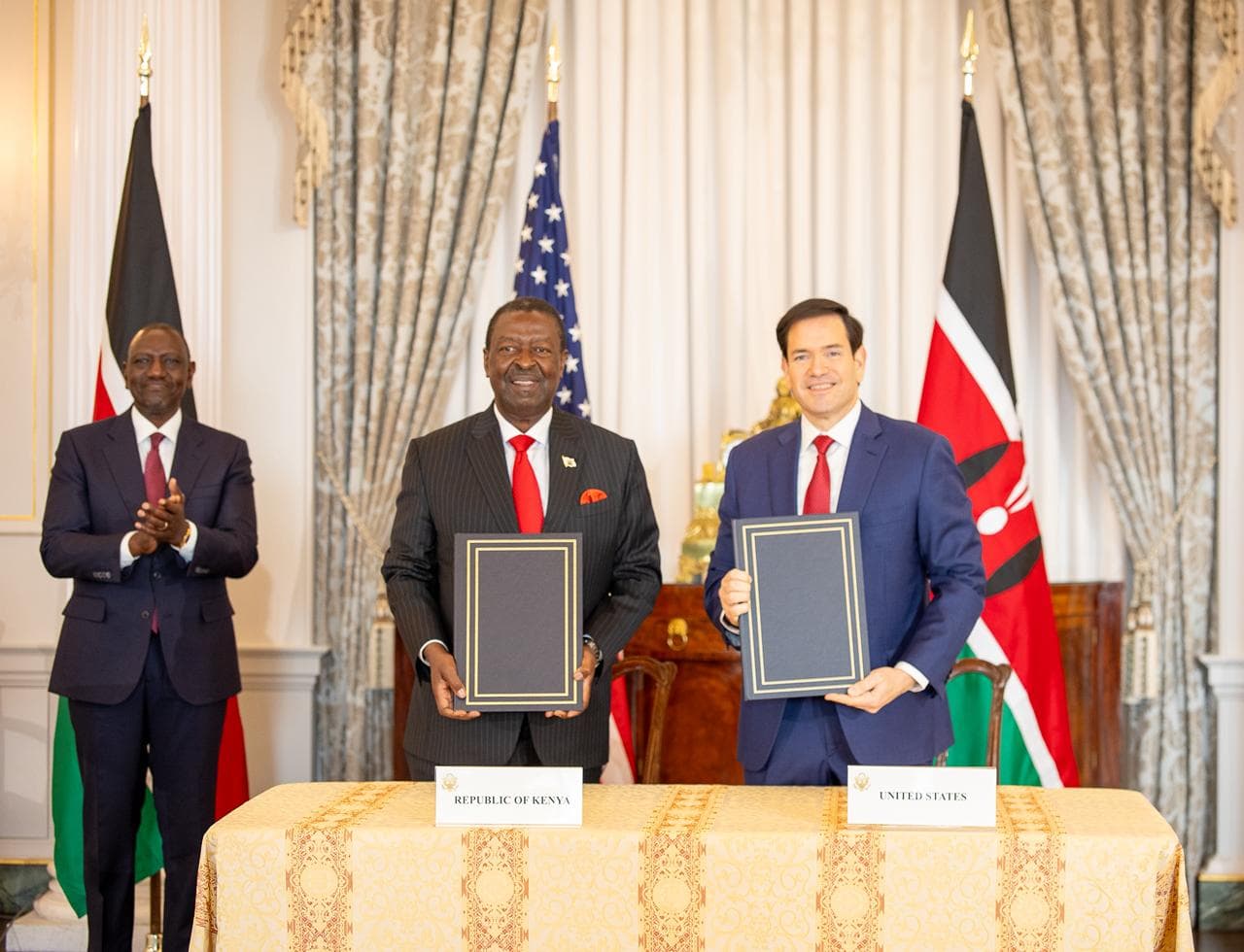
Kenya and the United States have fundamentally reshaped their long-standing health partnership, signing a deal that channels $1.6 billion (approx. KES 207 billion) directly to the government, a stark departure from the decades-old model of funding non-governmental organizations (NGOs).
The five-year Health Framework of Cooperation, signed in Washington, is the first of its kind under the new America First Global Health Strategy. It aims to dismantle what US officials have termed the "NGO industrial complex," shifting focus towards sustainability, direct accountability, and ensuring that American foreign aid serves mutual interests.
"We are not going to spend billions of dollars funding the NGO industrial complex while close and important partners like Kenya either have no role to play or have very little influence over how healthcare money is being spent," emphasized US Secretary of State Marco Rubio at the signing. He noted that Kenya was chosen as the inaugural partner due to its stable institutions and the strong bilateral relationship.
This direct funding comes with stringent conditions. The US investment is contingent upon Kenya progressively increasing its own national and county health budgets over the next four fiscal years. This move is designed to wean the local health sector off donor dependency and build a self-reliant system.
The agreed schedule for Kenya's additional contributions is as follows:
This new approach will see critical functions like the procurement of medical commodities and the payment of frontline health workers gradually transitioned from US oversight to Kenyan government systems like the Kenya Medical Supplies Authority (KEMSA). For context, Kenya's total health budget for the 2025/26 fiscal year was KES 138.1 billion.
For the average Kenyan, this policy shift is intended to translate into more reliable and locally-owned healthcare. By strengthening government bodies and requiring increased domestic investment, the deal aims to bolster Universal Health Coverage (UHC) and improve services from local dispensaries to national referral hospitals.
However, the transition is not without risks. Critics of the broader US strategy warn that sidelining experienced NGOs, which often operate in hard-to-reach areas, could disrupt existing health programs if government systems are not prepared to absorb the new responsibilities efficiently.
The success of this high-stakes pivot now rests on Nairobi's ability to meet its ambitious budget commitments and prove that government channels can deliver health outcomes more effectively than the donor model it is replacing.
Keep the conversation in one place—threads here stay linked to the story and in the forums.
Other hot threads
E-sports and Gaming Community in Kenya
Active 6 months ago
Popular Recreational Activities Across Counties
Active 6 months ago
The Role of Technology in Modern Agriculture (AgriTech)
Active 6 months ago
Investing in Youth Sports Development Programs
Active 6 months ago