We're loading the full news article for you. This includes the article content, images, author information, and related articles.
The Pentagon is integrating xAI's advanced models into its 'GenAI.mil' platform, a move signaling a deeper fusion of Big Tech and defence with potential ripple effects on global security partnerships, including those in Kenya.
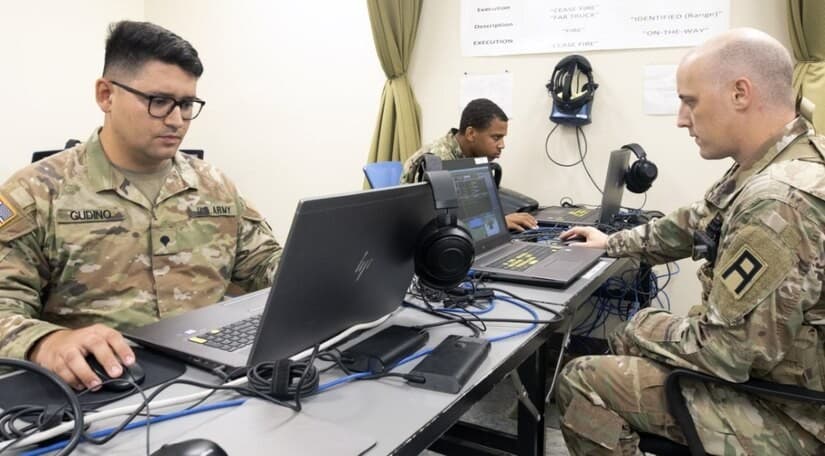
The United States military is set to incorporate artificial intelligence systems from Elon Musk's xAI company into its operations, marking a significant step in the Pentagon's push to harness cutting-edge technology. The Grok family of AI models will be added to a bespoke platform known as GenAI.mil, which was recently launched to provide AI tools to the department's three million military and civilian personnel.
This integration signals a profound shift in modern military strategy, emphasizing technological superiority and data-driven decision-making. For Kenya, a key security partner to the U.S. in the fight against extremism, this evolution in American military capability could reshape future collaborations, intelligence sharing, and joint operational tactics in the East African region.
The agreement with xAI will see its 'Grok for Government' suite of tools join Google's Gemini model on the GenAI.mil platform. According to a statement from the U.S. Department of War—a secondary title for the Department of Defense authorized by a 2025 executive order—the initial deployment is slated for early 2026. The system will be certified to handle "Controlled Unclassified Information (CUI)," streamlining administrative and logistical workflows.
Furthermore, the platform will grant personnel access to real-time global insights from Musk's social media platform, X, aiming to provide a "decisive information advantage." This move is part of a broader, aggressive adoption of AI championed by the Trump administration. In a recent video, Secretary of Defense Pete Hegseth hailed the initiative as "the future of American warfare."
The Pentagon's collaboration with xAI is part of a larger trend of engaging major Silicon Valley firms. In July 2025, the department awarded contracts worth up to $200 million (approx. KES 25.8 billion) each to xAI, Google, OpenAI, and Anthropic to bolster the military's AI capabilities. This highlights a robust, bipartisan consensus in Washington on the necessity of integrating AI into national security.
This push is not without scrutiny. For years, figures like U.S. Senator Elizabeth Warren have raised concerns about potential conflicts of interest, particularly regarding former Google CEO Eric Schmidt's influential role in shaping the Pentagon's AI policy while having financial stakes in AI companies. These debates underscore the complex ethical and competitive landscape as the lines between public defence and private technology continue to blur.
While the initial applications of Grok within the Pentagon appear focused on data management rather than direct combat, the long-term ambition is clear. As one official noted, the goal is to deploy powerful AI capabilities directly to the workforce to dominate the "digital battlefield." For nations like Kenya, navigating the currents of global power, this technological arms race is a development to watch closely, as the future of international security is increasingly written in code.
Keep the conversation in one place—threads here stay linked to the story and in the forums.
Sign in to start a discussion
Start a conversation about this story and keep it linked here.
Other hot threads
E-sports and Gaming Community in Kenya
Active 10 months ago
The Role of Technology in Modern Agriculture (AgriTech)
Active 10 months ago
Popular Recreational Activities Across Counties
Active 10 months ago
Investing in Youth Sports Development Programs
Active 10 months ago
Key figures and persons of interest featured in this article