We're loading the full news article for you. This includes the article content, images, author information, and related articles.
In a historic escalation of Middle Eastern hostilities, the United States and Israel have executed unprecedented, coordinated military strikes across Iranian territory, prompting emergency advisories from the Kenyan government.
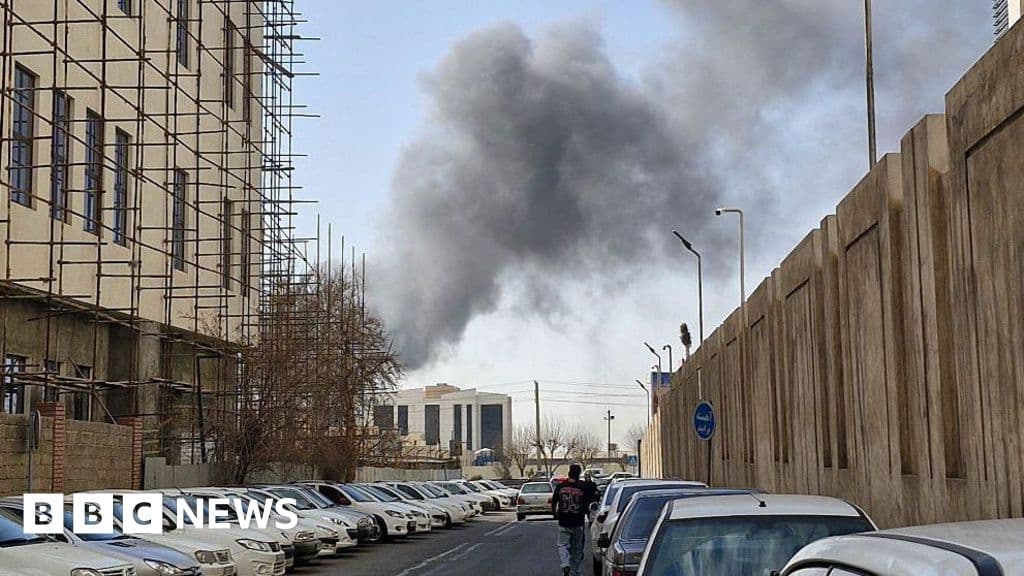
The United States and Israel have launched coordinated, massive military strikes against the Islamic Republic of Iran, dramatically escalating regional hostilities and drawing immediate concern from the Kenyan government.
This unprecedented joint operation, conducted in the early daylight hours to maximize tactical surprise, fundamentally alters the geopolitical landscape of the Middle East. For East Africa, the ripple effects are already being felt through disrupted trade routes, aviation chaos, and diplomatic anxiety regarding the safety of thousands of Kenyans working in the Gulf.
Dubbed "Operation Epic Fury" by the US Department of Defense and "Operation Roaring Lion" by Israeli forces, the strikes targeted heavily fortified military installations and regime strongholds across multiple Iranian cities. Explosions shattered the morning calm in Tehran, Isfahan, Qom, Karaj, and Kermanshah. The Times of Israel confirmed that the offensive was preemptive, aimed at crippling Iran's ballistic missile infrastructure and nuclear development capabilities. U.S. President Donald Trump addressed the world shortly after the first wave of munitions hit their targets, describing the campaign as an "ongoing, massive operation" designed to dismantle an "imminent threat."
Tragically, the human cost of the conflict has been immediate and devastating. Independent sources, including Premium Times, report that at least 40 pupils were killed after a school in Iran was hit during the bombardments, triggering urgent calls for the evacuation of Tehran. While Iranian media maintains that top officials, including President Masoud Pezeshkian, are secure, independent satellite imagery reveals significant damage to critical compounds in the capital.
Iran's Islamic Revolutionary Guard Corps (IRGC) did not wait long to respond. Tehran initiated waves of retaliatory ballistic missile strikes targeting US military installations in Iraq and allied Gulf nations, as well as multiple locations within Israel. Interceptor rockets illuminated the skies over Jerusalem, while explosions were reported in the United Arab Emirates, Bahrain, Qatar, and Kuwait. In the UAE, officials confirmed that shrapnel from an intercepted Iranian missile caused at least one fatality, escalating fears that the Gulf states are now fully embroiled in the crossfire.
In Nairobi, the administration has moved swiftly to address the fallout. The Ministry of Foreign Affairs (MFA) released a stark statement expressing "deep concern" over the evolving situation. Principal Secretary Korir Sing'Oei emphasized the urgent need for de-escalation, urging all parties to return to UN Charter-based mechanisms to resolve the dispute.
More pressing is the fate of the Kenyan diaspora. The Kenyan Embassy in Doha, Qatar, issued an immediate security alert to its citizens living in the region, advising them to remain vigilant, restrict movement, and strictly adhere to local government directives. With an estimated hundreds of thousands of Kenyans employed across the Gulf—particularly in the UAE, Qatar, and Saudi Arabia—the conflict poses a direct threat to East African livelihoods and crucial diaspora remittance flows, which account for a significant portion of Kenya's foreign exchange earnings.
The economic ramifications for Kenya are expected to be severe. The immediate closure of UAE and Qatari airspace has severed vital logistical arteries. Dubai, a central trading hub for Kenyan entrepreneurs importing textiles, electronics, and automotive parts, is now temporarily inaccessible. Furthermore, Kenyan farmers who rely heavily on cargo flights to export fresh produce and cut flowers to Middle Eastern markets are facing catastrophic supply chain bottlenecks. Should the conflict become protracted, the resulting spike in global crude oil prices could trigger a devastating inflationary wave in Kenya, driving up the cost of fuel, electricity, and basic commodities.
As the international community holds its breath, the stakes have never been higher. The coming days will determine whether this conflagration can be contained or if it will spark a broader regional war. "We are doing this not for now, but for the future," U.S. President Trump stated, a sentiment that offers little comfort to the families bracing for the fallout. For Kenya, the immediate priority remains the safe navigation of its citizens through the eye of a volatile and expanding storm.
Keep the conversation in one place—threads here stay linked to the story and in the forums.
Sign in to start a discussion
Start a conversation about this story and keep it linked here.
Other hot threads
E-sports and Gaming Community in Kenya
Active 9 months ago
The Role of Technology in Modern Agriculture (AgriTech)
Active 9 months ago
Popular Recreational Activities Across Counties
Active 9 months ago
Investing in Youth Sports Development Programs
Active 9 months ago