We're loading the full news article for you. This includes the article content, images, author information, and related articles.
A new high-stakes pact forces the scandal-hit agency to adopt military-grade tracking and geo-fencing by 2026—or risk losing control of vital American-funded medicines forever.
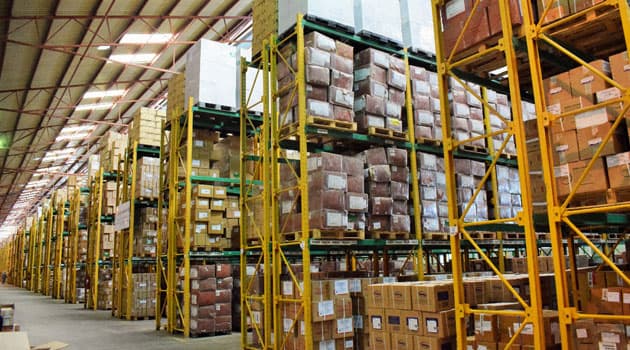
NAIROBI — The Kenya Medical Supplies Authority (KEMSA) has been handed a strict ultimatum: digitize, lock down, and clean up, or risk losing out on a critical partnership that keeps millions of Kenyans alive.
In a move that signals a cautious return of trust from Washington, a new Cooperation Framework signed this week sets the stage for KEMSA to take over the procurement and distribution of US-funded laboratory commodities by December 31, 2026. But this transfer, valued at nearly KES 2 billion (approx. US$ 15.4 million) annually, comes with strings attached that are tighter than ever before.
For the wananchi waiting in line at a dispensary in Turkana or a clinic in Kibera, this is not just bureaucratic shuffling. It is a direct attempt to stop the "ghost supply" phenomenon—where drugs leave the warehouse but never reach the patient.
The agreement is a litmus test for KEMSA, an agency still working to shed the reputation of the "COVID billionaires" scandal and recent indictments involving the diversion of HIV test kits. Under the new deal, the US government will transition its parallel supply chain systems back to KEMSA, but only if the agency implements a rigorous digital security overhaul.
“The Government of Kenya intends to fully implement a system based on Global Standards 1 (GS1) for tracing commodities funded by the U.S. Government,” the pact states.
This is a significant shift. For years, USAID has often bypassed KEMSA, using private contractors to ensure aid reaches its destination. This new framework offers KEMSA a path to reclaim its mandate, provided it can prove that American taxpayer money won't vanish into the pockets of cartels.
The conditions set by the US are technical and non-negotiable. The "digital padlock" strategy involves two main components:
“KEMSA will also be expected to reinforce its logistics security through geo-fenced electronic locks, electronic proof-of-delivery systems, and strengthened monitoring and evaluation mechanisms,” the agreement notes.
The clock is already ticking. The transition is phased, with the ultimate deadline set for the end of 2026. If KEMSA fails to have these systems operational, the transfer of responsibility—and the associated funding—could stall.
Health economists argue that while the initial cost of this technology is high, the cost of theft is higher. In previous years, the theft of antiretrovirals and malaria kits has forced patients to buy free government drugs at private chemists, a burden many Kenyan families cannot afford.
This deal represents a final opportunity for KEMSA to prove it can serve the Kenyan people with integrity. If the digital padlocks hold, the flow of medicine improves. If they break, the US may close the door on direct partnership for good.
Keep the conversation in one place—threads here stay linked to the story and in the forums.
Sign in to start a discussion
Start a conversation about this story and keep it linked here.
Other hot threads
E-sports and Gaming Community in Kenya
Active 9 months ago
The Role of Technology in Modern Agriculture (AgriTech)
Active 9 months ago
Popular Recreational Activities Across Counties
Active 9 months ago
Investing in Youth Sports Development Programs
Active 9 months ago
Key figures and persons of interest featured in this article