We're loading the full news article for you. This includes the article content, images, author information, and related articles.
Washington's diplomatic snub of the first G20 on African soil raises questions over the future of US-Africa trade relations, including potential ripple effects on Kenya's vital textile exports under the AGOA pact.

The United States government has officially announced it will boycott the G20 Leaders' Summit in Johannesburg, scheduled for Friday, November 22, and Saturday, November 23, 2025, EAT. In a statement released on Friday, November 7, 2025, U.S. President Donald Trump declared the decision to hold the summit in South Africa "a total disgrace," citing what he termed the persecution of white Afrikaner farmers and the illegal confiscation of their land.
President Trump, who had previously indicated he would not attend, confirmed that no U.S. government official, including Vice President JD Vance who was slated to go in his place, will be present. The Trump administration has consistently accused the South African government of allowing and encouraging violence against its white minority farmers, a claim that has now escalated into a full diplomatic boycott of a major international forum.
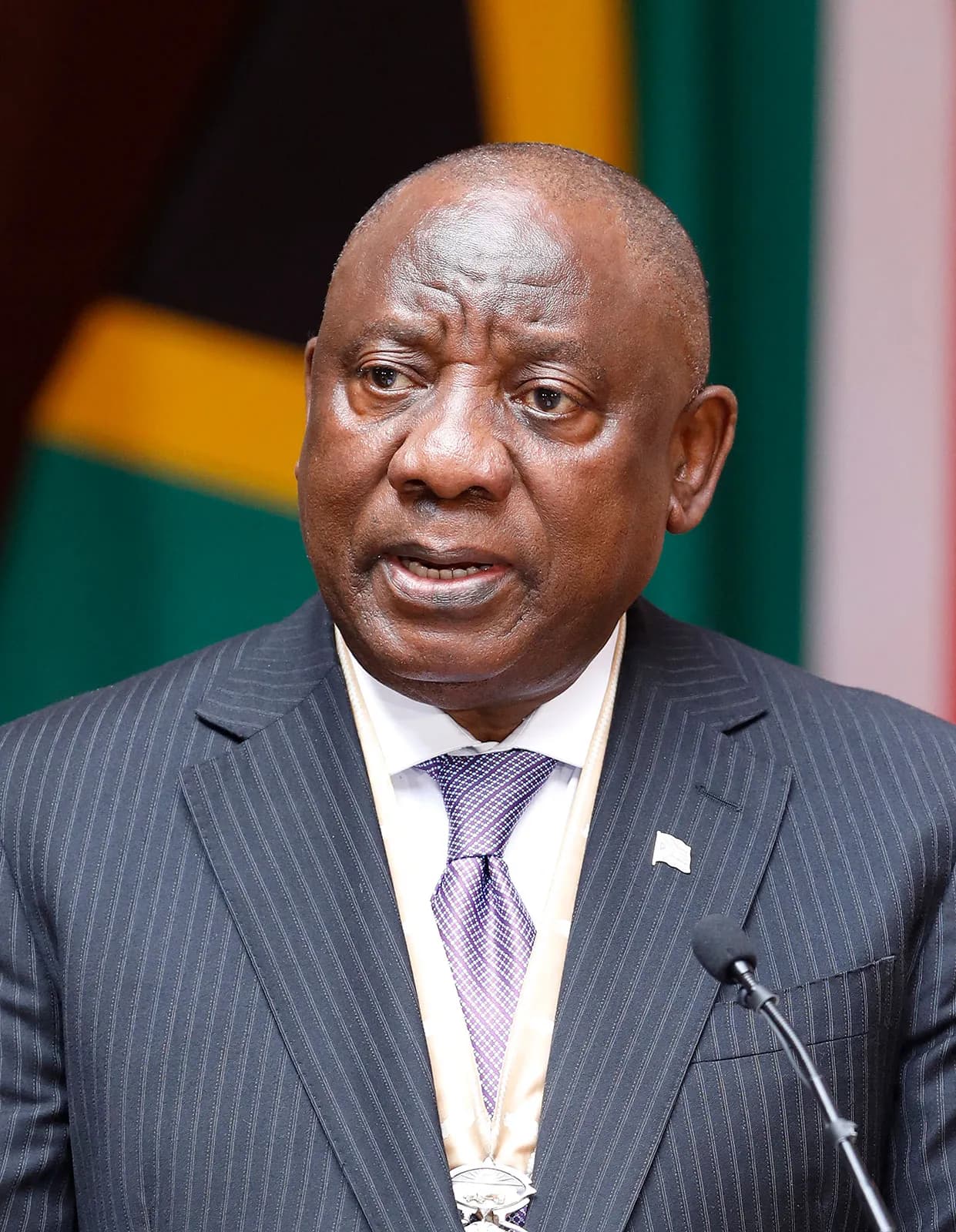
The South African government has vehemently and repeatedly rejected these accusations. President Cyril Ramaphosa has personally conveyed to President Trump that the information regarding targeted persecution of Afrikaners is "completely false." Officials in Pretoria have pointed to the fact that white South Africans, on average, continue to have a much higher standard of living than the Black majority, more than three decades after the end of apartheid.
The U.S. claims center on two key issues: violent crime against farmers and land reform policies. An analysis of available data provides critical context to these assertions.
According to the South African Police Service (SAPS) annual report for the 2023/2024 financial year, there were 49 murders recorded on farms. Research by the Institute for Security Studies (ISS), a respected African non-profit organization, corroborates that while farm attacks are a serious crime problem, they represent a small fraction—approximately 0.2%—of all murders nationally. The ISS analysis concludes that the primary motive in nearly all farm attacks is robbery, not racial or political ideology.
Furthermore, official statistics do not support the narrative that victims are exclusively white. In a May 2025 briefing on the fourth quarter crime statistics for the 2024/2025 financial year, South Africa's Police Minister, Senzo Mchunu, stated that of the six farm murder victims recorded between January and March 2025, five were Black. Minister Mchunu asserted that the history of farm murders has been "distorted" and that Black victims have consistently been a significant component of this crime category.
The second pillar of the U.S. accusation relates to land reform. In January 2025, President Ramaphosa signed into law the Expropriation Act. This legislation allows the state to expropriate property for a "public purpose" or in the "public interest," which includes land reform. While the act does allow for the possibility of "nil compensation" in specific, limited circumstances—such as for abandoned land—it mandates that any expropriation must be subject to a court's decision on what is "just and equitable." The South African government has stated the law aligns its land policies with the constitution and is not a tool for arbitrary land confiscation.
The diplomatic fallout between Washington and Pretoria carries significant potential consequences for the wider African continent, including Kenya. The primary concern revolves around the future of the African Growth and Opportunity Act (AGOA), a cornerstone of U.S.-Africa trade policy that provides eligible sub-Saharan African countries with duty-free access to the U.S. market for thousands of products. The current AGOA framework is set to expire in September 2025.
President Trump's "America First" policy has signaled a preference for bilateral trade deals over multilateral agreements like AGOA. The escalating tensions with South Africa, a major AGOA beneficiary and a leading voice on the continent, could complicate negotiations for the pact's renewal. The Kenya Association of Manufacturers (KAM) has expressed growing concern, warning that a failure to extend AGOA could lead to severe economic disruption, job losses, and reduced market access for Kenyan goods.
The textile and apparel industry in Kenya is particularly vulnerable. In 2024, apparel exports to the U.S. under AGOA were valued at KSh 60.6 billion and supported over 66,000 direct jobs. The recent imposition of a separate 10% tariff on Kenyan goods by the Trump administration has already heightened the urgency for clarity on the future of the trade relationship. Analysts suggest that the uncertainty may push Kenya and other East African nations to deepen trade ties with other partners, such as China, as evidenced by President William Ruto's recent state visit to Beijing.
The U.S. boycott of the first-ever G20 summit on African soil is seen by international observers as a move that could cede geopolitical influence. Foreign policy experts have warned that the U.S. absence creates a vacuum that rivals like China and Russia could exploit to shape the global agenda. The move may also strengthen alternative global forums like BRICS, which now includes an expanded roster of Global South nations and is actively promoting the use of local currencies in trade to counter the dominance of the U.S. dollar.
While the U.S. administration has framed its decision as a principled stand on human rights, the G20 summit in Johannesburg is expected to proceed. The agenda, set by the South African presidency, focuses on themes of "Solidarity, Equality, and Sustainability," aiming to address global economic challenges, debt sustainability for low-income countries, and climate finance. The absence of the world's largest economy from these discussions will undoubtedly be felt, marking a significant moment of fragmentation in international economic cooperation.
Keep the conversation in one place—threads here stay linked to the story and in the forums.
Sign in to start a discussion
Start a conversation about this story and keep it linked here.
Other hot threads
E-sports and Gaming Community in Kenya
Active 9 months ago
The Role of Technology in Modern Agriculture (AgriTech)
Active 9 months ago
Popular Recreational Activities Across Counties
Active 9 months ago
Investing in Youth Sports Development Programs
Active 9 months ago
Key figures and persons of interest featured in this article