We're loading the full news article for you. This includes the article content, images, author information, and related articles.
A Nairobi court has comprehensively dismantled a high-profile cybercrime prosecution, acquitting a Moi University student who was aggressively pursued by the state for allegedly circulating a fabricated image of a presidential funeral procession on social media.
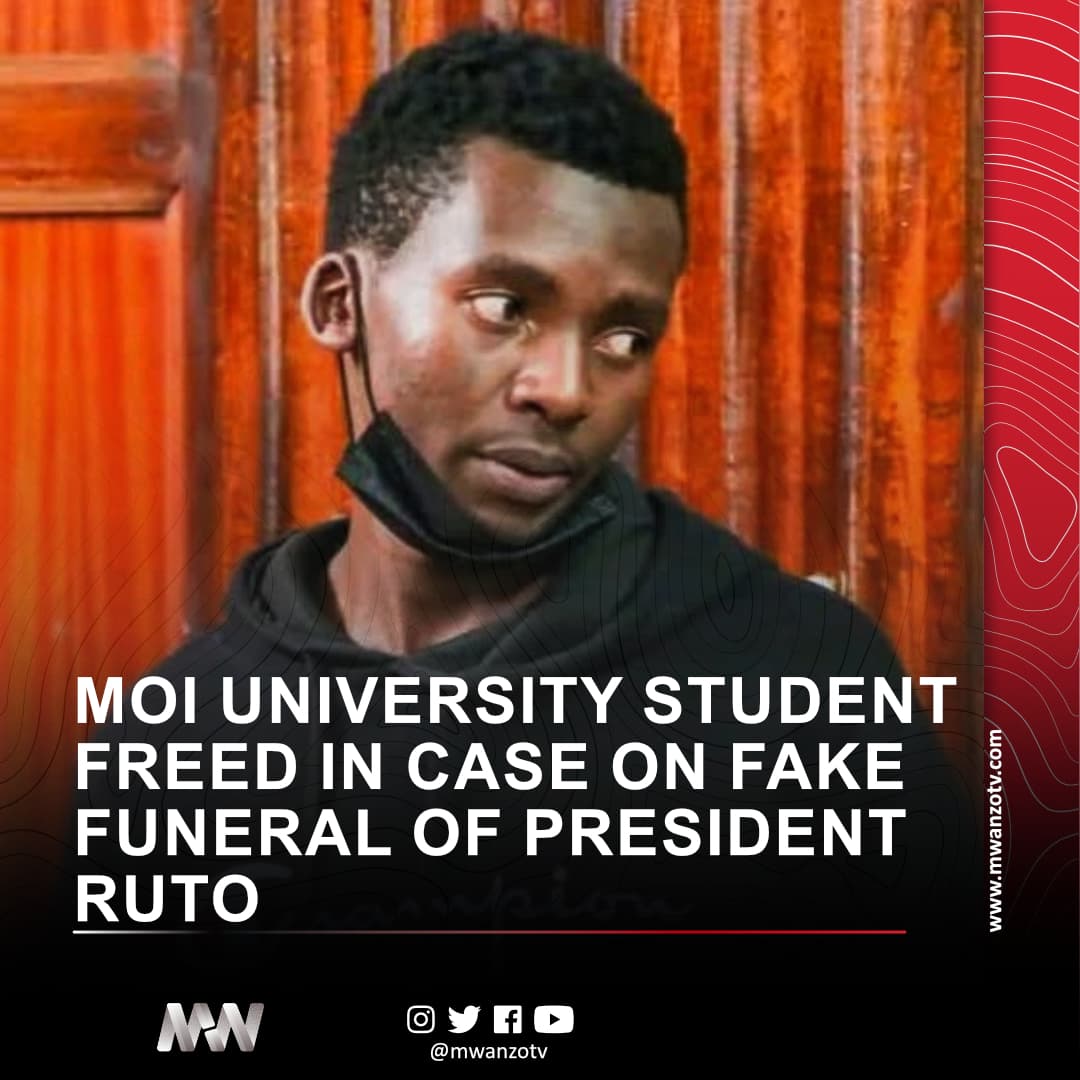
A Nairobi court has comprehensively dismantled a high-profile cybercrime prosecution, acquitting a Moi University student who was aggressively pursued by the state for allegedly circulating a fabricated image of a presidential funeral procession on social media.
The aggressive crackdown on digital dissent by the Kenyan state suffered a humiliating defeat as the Milimani Law Courts formally acquitted David Mokaya, a twenty-four-year-old finance student at Moi University. The collapse of this highly publicized cybercrime case exposes profound flaws in the investigative methodologies of the national police and raises urgent questions regarding the weaponization of the law to stifle political satire.
This verdict is a watershed moment for digital rights in East Africa. It firmly establishes that the mere mention of the Head of State does not grant the security apparatus a blank check to bypass constitutional safeguards and trample over the procedural rights of private citizens.
The ordeal for the young student began late in the year 2024, when an inflammatory image circulated on the social media platform X, operating under the pseudonym Landlord. The post depicted a digitally altered coffin draped in the national flag, accompanied by a caption falsely declaring that the body of President William Ruto was leaving the Lee Funeral Home. Authorities swiftly arrested Mokaya in Eldoret, charging him with the deliberate publication of false information designed to cause public panic.
However, as the trial progressed before Principal Magistrate Caroline Nyaguthii, the case presented by the prosecution rapidly unraveled. The court delivered a scathing critique of the Directorate of Criminal Investigations, highlighting an astonishing disregard for basic digital forensics protocols. The state utterly failed to provide the essential technical linkages required to secure a conviction in a modern cybercrime trial.
The magistrate identified several fatal deficiencies in the evidence of the state:
The illegal extraction of data from the devices of the student proved to be the ultimate undoing of the prosecution. By bypassing the necessity of a court order to compel information from telecommunications providers like Safaricom, the police rendered their own evidence constitutionally inadmissible. The magistrate sharply reminded law enforcement that the elevated political status of the supposed victim does not suspend the rule of law.
Defense attorney Danstan Omari brilliantly framed the entire prosecution as a flimsy attack on freedom of expression, arguing that citizens possess an unalienable right to engage in political satire, regardless of how distasteful the administration might find it. The defense also successfully established reasonable doubt by demonstrating that the accused managed multiple social media accounts for commercial purposes, meaning numerous individuals potentially had access to the platforms.
While the acquittal represents a victory for justice, the human cost of the ordeal cannot be overstated. Following the delivery of the judgment, the profound psychological toll was evident as the young finance student openly wept in the dock. The defense counsel revealed that Mokaya had suffered severe mental trauma and shock since his abrupt arrest and subsequent prosecution.
The collapse of the Ruto funeral post case serves as a definitive warning to state prosecutors: the digital realm is not a zone of suspended rights. Moving forward, the state must deploy rigorous, legally compliant forensic techniques rather than relying on intimidation tactics when pursuing alleged cybercrimes against the political elite.
"It is the duty of the State to establish all elements of the offense. In this case, that burden has not been met," Magistrate Nyaguthii ruled, striking a blow for digital liberty.
Keep the conversation in one place—threads here stay linked to the story and in the forums.
Sign in to start a discussion
Start a conversation about this story and keep it linked here.
Other hot threads
E-sports and Gaming Community in Kenya
Active 9 months ago
The Role of Technology in Modern Agriculture (AgriTech)
Active 9 months ago
Popular Recreational Activities Across Counties
Active 9 months ago
Investing in Youth Sports Development Programs
Active 9 months ago