We're loading the full news article for you. This includes the article content, images, author information, and related articles.
The UK is facing the biggest hit to growth from the Iran war out of the G20 major economies, according to an influential global policy group.
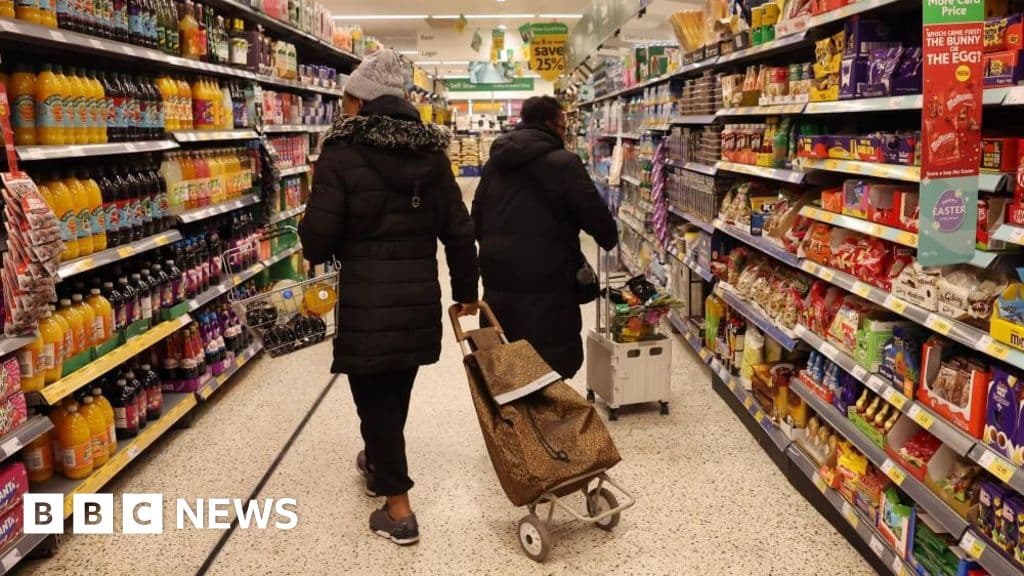
The United Kingdom stands on the precipice of a significant economic contraction as the escalating conflict involving Iran sends shockwaves through the global financial architecture. According to the latest projections from the Organisation of Economic Co-operation and Development (OECD), the British economy is now braced for the most severe growth downgrade among the G20 nations, a development that signals the profound reach of geopolitical instability into domestic markets.
This downturn is not merely a localized fiscal struggle but a reflection of a globalized system reacting to volatile energy corridors and disrupted supply chains. For policymakers in London, the challenge is immediate: how to manage the dual threats of stagnation and persistent inflation that threaten to erase the modest gains made over the past year. As the OECD warns of a prolonged period of uncertainty, the fallout is already reverberating far beyond the borders of Europe, hitting emerging markets and impacting international trade flows, including those vital to the East African economy.
The latest OECD data paints a sobering picture of the UK's immediate economic trajectory. Growth, previously forecasted at a modest 1.2 percent, has been slashed to just 0.7 percent for the year. This revision places the United Kingdom in a precarious position compared to its G7 peers, with only Italy projected to exhibit weaker growth performance. The shift reflects a growing consensus among international economists that the conflict between the United States, Israel, and Iran has fundamentally altered the risk calculus for the British economy.
Inflation, which the Bank of England has fought to tame over the last several quarters, is now expected to accelerate to 4 percent. This is a sharp deterioration from earlier estimates of 2.5 percent. Even with the hope of a cooling off in 2027, the medium-term outlook remains stubbornly elevated at 2.6 percent. The following data highlights the drastic recalibration of the UK's economic outlook:
The primary transmission mechanism for this economic distress is the global energy market. The OECD report explicitly cites the risk of significant energy shortages should the conflict continue to disrupt critical maritime routes. When oil and gas prices spike, the inflationary pressure is immediate transport costs rise, manufacturing margins compress, and household disposable income evaporates under the weight of surging utility bills.
Beyond energy, the organization has identified a critical second-order risk: the fertilizer market. The production of essential fertilizers is heavily dependent on natural gas—a commodity currently caught in the crosshairs of geopolitical maneuvering. If current price volatility persists, the downstream effects on global food security will be unavoidable. A sustained rise in fertilizer costs, currently estimated by analysts to potentially drive a 15 to 20 percent increase in input costs for farmers globally, could lead to suppressed crop yields by the next harvest cycle, further fueling global food price inflation.
For observers in Nairobi, the British economic contraction is far from an abstract geopolitical event. The United Kingdom remains a pivotal partner for Kenya, acting as a top-tier destination for Kenyan horticultural exports and a primary source of foreign exchange via remittances. When the British pound weakens or the UK consumer tightens their purse strings due to domestic inflation, the impact is felt directly in the Kenyan economy.
The flow of remittances, which provides a lifeline for thousands of households across the country, is particularly sensitive to these fluctuations. In 2025 alone, diaspora inflows from the UK were estimated at over KES 75 billion (approximately $580 million). A contraction in UK growth risks stalling wage growth for the Kenyan diaspora in London and Manchester, potentially lowering the total value of these monthly transfers. Furthermore, as the UK market accounts for nearly 25 percent of Kenya's flower exports, any sustained reduction in British purchasing power threatens the margins of Kenyan farmers operating in the Naivasha and Kericho regions.
Economists at the University of Nairobi suggest that while direct trade exposure is manageable, the psychological impact on investors and the contagion effect on global commodity prices create a high-risk environment. The imperative for Kenyan policymakers, therefore, is to diversify export destinations and strengthen trade ties with emerging markets in Asia and the broader African Continental Free Trade Area to insulate the local economy from Western volatility.
The UK government's official forecaster, the Office for Budget Responsibility, had previously set a growth target of 1.1 percent for the year, a figure now widely considered optimistic in light of the deteriorating international security situation. The discrepancy between the OBR’s earlier, more hopeful assessment and the OECD’s current, stark reality check underscores the speed at which the economic landscape has shifted.
The OECD’s forecast is explicitly conditioned on the assumption that the energy market disruption will begin to ease by the summer, with oil and gas prices stabilizing. However, this is a fragile assumption. Should the conflict escalate, drawing in further regional actors or expanding to wider geographic zones, the current projections may prove to be an optimistic floor rather than a ceiling. As global markets brace for what could be a prolonged period of geopolitical realignment, the United Kingdom faces a difficult road ahead, with the consequences of its economic slowdown being felt in homes, businesses, and government offices from London to Nairobi.
Keep the conversation in one place—threads here stay linked to the story and in the forums.
Sign in to start a discussion
Start a conversation about this story and keep it linked here.
Other hot threads
E-sports and Gaming Community in Kenya
Active 10 months ago
The Role of Technology in Modern Agriculture (AgriTech)
Active 10 months ago
Popular Recreational Activities Across Counties
Active 10 months ago
Investing in Youth Sports Development Programs
Active 10 months ago



