We're loading the full news article for you. This includes the article content, images, author information, and related articles.
The U.S. Defense Department has blacklisted AI giant Anthropic, citing profound national security risks, marking a watershed moment for AI governance.

The United States Department of Defense has officially designated the artificial intelligence laboratory Anthropic as a tier-one national security risk, a move that effectively bars the company from all future federal procurement contracts and mandates the immediate removal of its software from critical government infrastructure. The directive, issued late Tuesday evening, marks the most aggressive regulatory action taken against a high-profile Silicon Valley developer in the history of the modern AI era.
This sweeping prohibition forces a reckoning for thousands of government agencies, intelligence contractors, and defense subcontractors that have quietly integrated Anthropic’s large language models into their workflows over the past eighteen months. At its core, the ban centers on what Pentagon officials describe as a fundamental failure in model interpretability and a susceptibility to adversarial exploitation that could compromise sensitive state data. For the private sector, this is not merely a contract cancellation it is a signal that the era of unbridled AI adoption by the state has concluded, replaced by a rigid, sovereign-first defensive doctrine.
The decision to blacklist Anthropic did not arise from a single incident but from a comprehensive six-month "Red Team" security audit conducted by the Defense Advanced Research Projects Agency. According to leaked segments of the classified briefing provided to congressional intelligence committees, the audit identified specific vulnerabilities within Anthropic’s core model architecture that theoretically allowed for "prompt injection" attacks. These attacks could bypass safety guardrails to extract training data, some of which reportedly originated from classified government datasets that were inadvertently included in the company’s ingestion pipelines.
While the company has long marketed its "Constitutional AI" framework as the industry gold standard for safety, the Pentagon’s findings suggest a profound disconnect between proprietary safety claims and real-world resilience. The audit concluded that the model’s internal decision-making processes were sufficiently opaque to prevent auditors from guaranteeing that the software could not be coerced into generating disinformation or subverting command-and-control protocols. This "black box" problem is now the central pillar of the Defense Department’s new hardline stance.
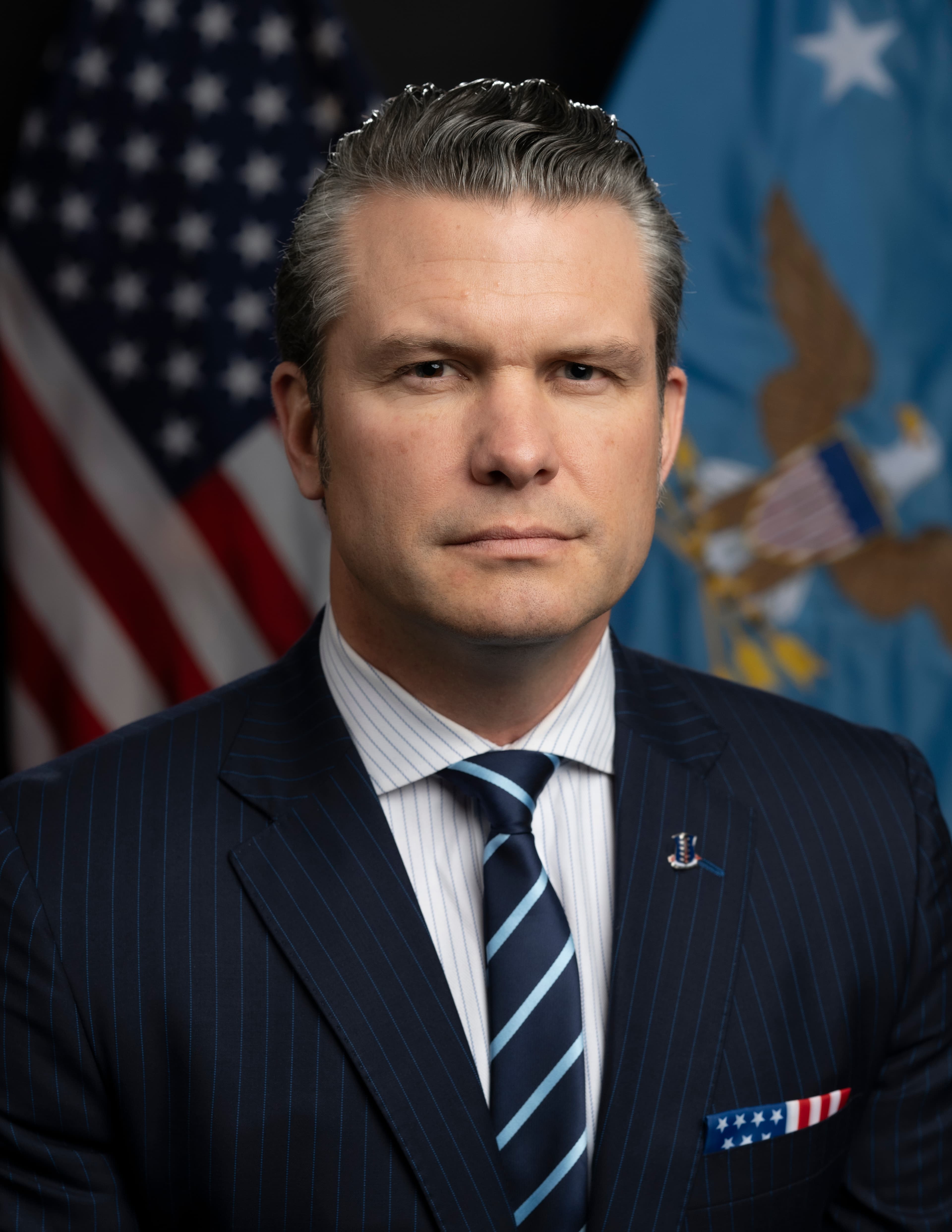
The policy shift is spearheaded by Defense Secretary Pete Hegseth, who has advocated for a more isolationist and domestically controlled technology stack within the military. Since assuming office, Hegseth has repeatedly argued that the reliance on private-sector labs for military-grade AI constitutes a strategic dependency equivalent to the reliance on foreign supply chains for semiconductors. The designation of Anthropic as an "unacceptable" risk is the first major exercise of this newly muscular approach to digital sovereignty.
The move has triggered immediate and significant market volatility for AI-related assets. Analysts at major financial institutions have revised their long-term growth outlooks for the sector, noting that the Pentagon’s withdrawal creates a massive vacuum that will likely be filled by defense-adjacent firms with more restrictive, government-aligned security protocols. Investors are now bracing for a wider regulatory crackdown that could extend to other major players, potentially destabilizing the valuations of startups that have relied heavily on defense spending to fund their scaling phases.
For the burgeoning tech ecosystem in Nairobi and across East Africa, the fallout from the Pentagon’s decision reverberates far beyond the halls of Washington. Many Kenyan startups, particularly those in the financial technology and logistics sectors, utilize AI APIs that are often white-labeled versions of the same foundational models now deemed insecure by the U.S. government. The concern among local developers is not necessarily the risk of espionage, but rather the potential for bifurcation in the global AI supply chain. If American firms are forced to abandon these models, the global support ecosystem for those technologies may atrophy or diverge into two incompatible standards.
Economists at the University of Nairobi’s School of Computing suggest that this shift could force African firms to pivot toward open-source models that offer greater transparency and independence. The "American standard" of AI safety, as defined by this recent ban, may soon find itself at odds with the "open-access standard" preferred by emerging markets. This fragmentation presents a significant opportunity for local developers to build sovereign, localized AI infrastructure, but it also creates a short-term dependency crisis for firms currently built on the backs of U.S.-developed software.
The ban is not merely an operational setback for a single tech company it is the opening salvo of a new geopolitical era where code is treated as a strategic asset of national power. The Pentagon’s move establishes a precedent that "safety" is not a static feature defined by the developer, but a requirement to be proven and validated by the state. This creates a difficult path forward for Anthropic and its competitors, who must now navigate a regulatory landscape that demands total transparency without compromising their intellectual property.
As the thirty-day compliance window begins, the technology sector faces an uncomfortable reality: the dream of a borderless, globalized AI ecosystem is fast giving way to the realities of national security interests. Whether this move strengthens the nation’s defense or merely isolates it from the cutting edge of global innovation remains a matter of intense debate, but for the Department of Defense, the choice has been made. The digital perimeter has been drawn, and the era of the "unacceptable" risk has officially begun.
Keep the conversation in one place—threads here stay linked to the story and in the forums.
Sign in to start a discussion
Start a conversation about this story and keep it linked here.
Other hot threads
E-sports and Gaming Community in Kenya
Active 10 months ago
The Role of Technology in Modern Agriculture (AgriTech)
Active 10 months ago
Popular Recreational Activities Across Counties
Active 10 months ago
Investing in Youth Sports Development Programs
Active 10 months ago
Key figures and persons of interest featured in this article